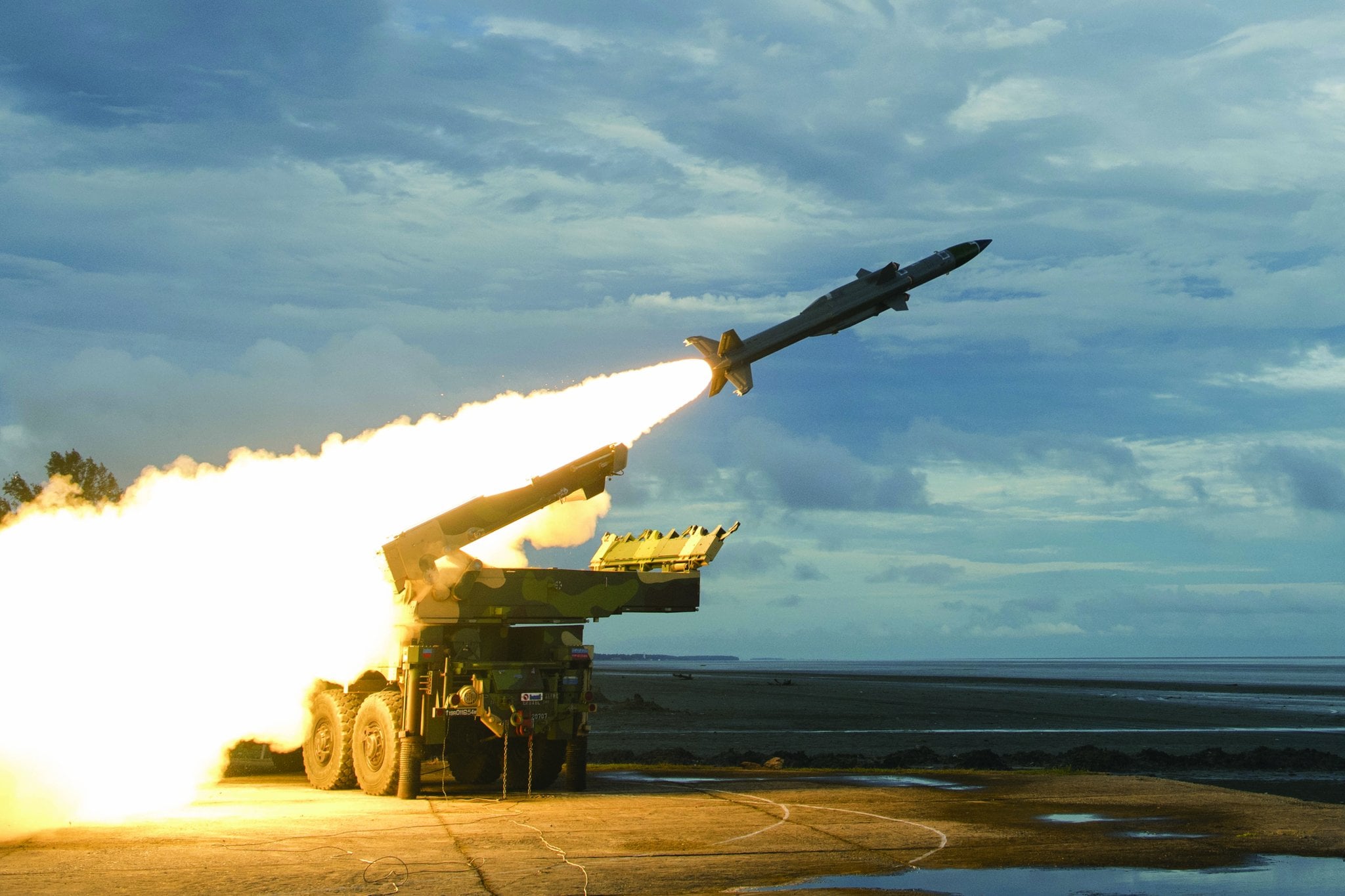
India has exported its Akash surface-to-air missile (SAM) system to Tajikistan and Turkmenistan, Defence Secretary Rajesh Kumar Singh confirmed in early October 2026, giving New Delhi its first air defense customers in Central Asia. Singh did not disclose contract values, battery numbers or delivery schedules, and neither Dushanbe nor Ashgabat has commented publicly on the sales.
The deals open a market long supplied by Moscow. Both countries still rely heavily on Soviet-era and Russian air defense equipment, including S-125 and S-300 family systems, but Russia’s war in Ukraine has absorbed much of its capacity to export air defense hardware. China has moved fastest to fill the gap: Turkmenistan paraded a newly acquired Chinese FK-2000 system in Ashgabat on September 27, 2026, and Tajikistan has displayed the Chinese HQ-17AE. Before Akash, India had sold no defense equipment to either country.
Inside the Akash Air Defense System: Radar, Range, and Guidance
Developed by the Defence Research and Development Organisation (DRDO) under the Integrated Guided Missile Development Programme, Akash entered service with the Indian Air Force in 2014 and the Indian Army in 2015. Bharat Dynamics Limited (BDL) manufactures the missile, while Bharat Electronics Limited (BEL) builds the radar. According to India’s Ministry of Defence, the system engages aerial targets at ranges of 4.5 km to 25 km and altitudes from 100 m to 20 km, can engage multiple targets simultaneously, and incorporates protection against electronic jamming.
Publicly available specifications indicate a missile roughly 5.8 m long, 350 mm in diameter and weighing about 720 kg at launch, carrying a 60 kg prefragmented warhead with a proximity fuze. Propulsion is the defining feature: a solid booster accelerates the missile before an integral ramjet sustainer takes over, holding supersonic speed through the terminal phase rather than coasting. That matters against crossing or maneuvering targets near the edge of the envelope, where conventional solid-rocket interceptors bleed energy.
A standard battery pairs one Rajendra 3D passive electronically scanned array (PESA) radar with four self-propelled launchers carrying three missiles each, plus a battery control center. Open-source data credits Rajendra with tracking 64 targets and guiding up to eight missiles against four targets in ripple fire. The baseline missile relies on command guidance for its entire flight, which keeps the airframe simple and affordable but makes the fire control radar a single point of failure: suppress Rajendra and the battery is blind.
Akash-1S, Akash Prime, and Akash-NG: The Unconfirmed Export Configuration
Which variant Tajikistan and Turkmenistan bought remains unconfirmed. Reporting in August 2026 indicated that both countries were negotiating for the Akash-1S, which adds an indigenous active radio-frequency seeker for terminal homing on top of mid-course command guidance. The seeker improves accuracy against maneuvering targets and reduces dependence on the ground radar in the endgame, directly addressing the baseline system’s main vulnerability.
Akash Prime, which also uses an active seeker and has been optimized for low-temperature, high-altitude operation according to publicly available information, would suit Tajikistan, where more than 90 percent of the territory is mountainous. The longer-range Akash-NG, which replaces the ramjet with a dual-pulse solid rocket motor and roughly halves missile weight, is not reported to be part of either deal.
Singh said Akash is expected to fill a mid-layer role in Turkmenistan, complementing its existing Chinese systems. That raises an integration problem: no common command-and-control or datalink architecture links Indian, Chinese and Russian-origin batteries, so Akash units are likely to operate as standalone sectors in the near term. Indian officials say the system was used effectively during the four-day conflict with Pakistan in May 2025, a combat record New Delhi now markets abroad, though detailed intercept data has not been released.
The Armenia Precedent and India’s Expanding Defense Export Base
Armenia offers the closest template. Yerevan became the first foreign Akash customer in 2022 through a reported $720 million contract with BDL. It received its first battery, comprising four launchers and a Rajendra radar, in November 2024, with a second delivery reported in July 2025. The SAM purchase was followed by Indian multiple-launch rocket systems, counter-drone systems and anti-tank missiles, and Armenia has reportedly signed nearly $2 billion in Indian defense contracts since 2020, making it New Delhi’s largest buyer.
The Central Asian sales feed a broader export surge. India’s defense exports reached a record 38,424 crore rupees, about $4.1 billion, in fiscal year 2025-26, a 62.66 percent increase, with equipment going to more than 80 countries, according to the Ministry of Defence. New Delhi targets 50,000 crore rupees by 2030. The BrahMos supersonic cruise missile, developed jointly with Russia, remains the flagship, with a shore-based anti-ship system being delivered to the Philippines and talks underway with Indonesia.
India’s security footprint in Tajikistan predates the sale: New Delhi refurbished Ayni Airbase in the early 2000s, though Dushanbe later opened the facility to Russian forces instead.
Analysis: A handful of Akash batteries will not alter the regional air defense balance, but the identity of the buyers matters. Tajikistan is a member of the Russia-led Collective Security Treaty Organization (CSTO) and hosts Russia’s 201st Military Base, yet it has now sourced air defense equipment from both China and India, a measure of how far Moscow’s export capacity has eroded. For India, Akash serves as an entry product: if the Armenian pattern holds, a combat-tested, relatively low-cost SAM opens the door to radar, artillery and rocket system sales. The constraint is logistics. India has no direct land corridor to Central Asia, which will complicate spares, missile resupply and training, while China can deliver faster and at greater scale. New Delhi’s pitch rests on being the third option between Moscow and Beijing.
The next indicators are official confirmation from Dushanbe or Ashgabat, disclosure of battery numbers and the exported variant, and the first public appearance of Akash launchers at a Central Asian parade. Follow-on orders for Indian radars or artillery would signal that the Armenian model is replicating. Whether Akash-NG reaches the export market will determine how durable this foothold proves.