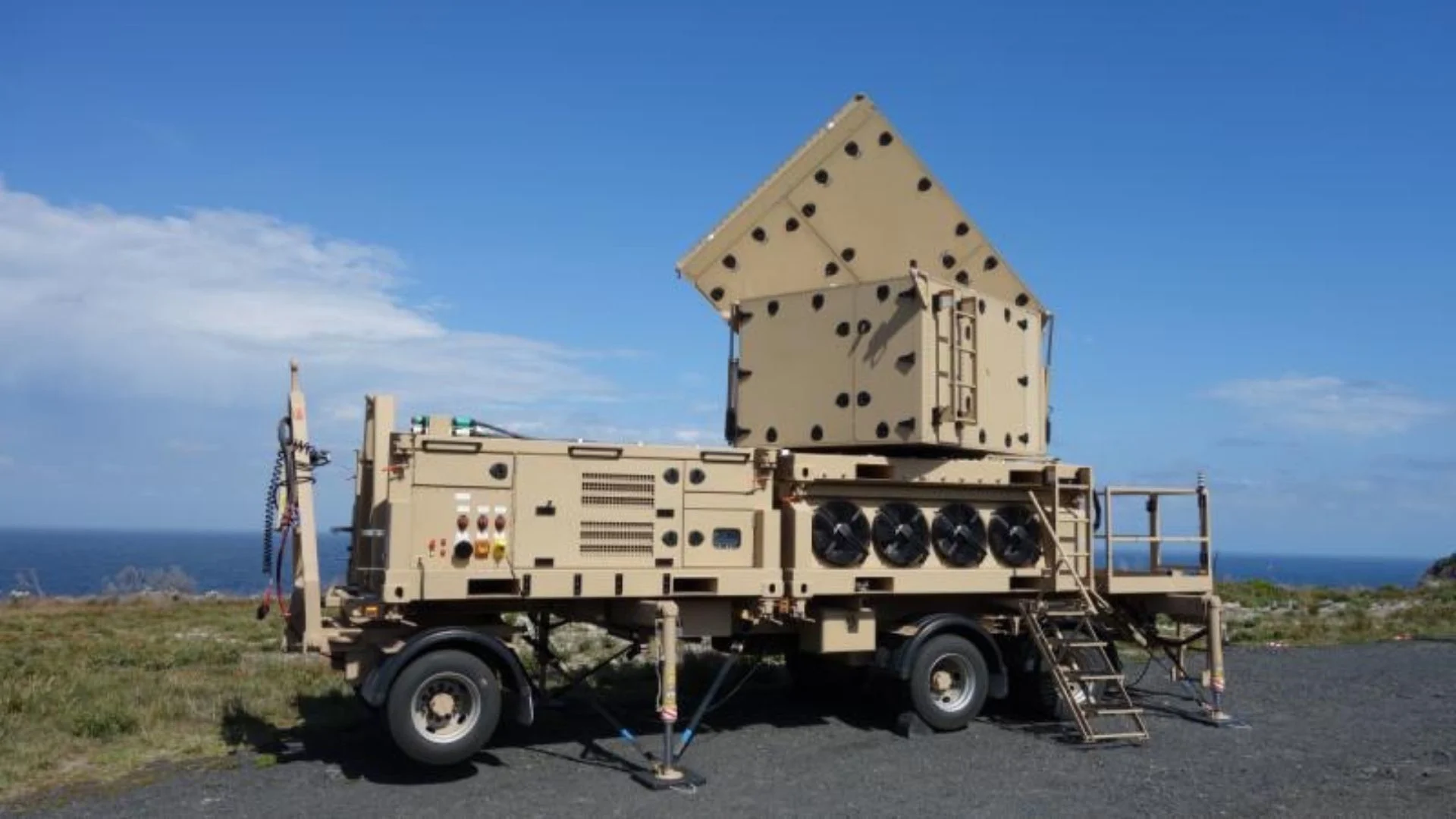
Australia’s Department of Defence on October 15, 2026, detailed how its A$2.4 billion, six-year investment in Project Air 6500 will be spent: replacing the Royal Australian Air Force’s legacy air battle management system, building major facilities at RAAF Base Darwin and buying fleets of deployable command vehicles. The core deliverable is the Joint Air Battle Management System (JABMS), the integrated air and missile defense (IAMD) command and control (C2) backbone that Lockheed Martin Australia is building as Defence’s strategic partner.
The funding itself is not new. Deputy Prime Minister and Defence Minister Richard Marles and Defence Industry Minister Pat Conroy announced the A$2.4 billion (about US$1.7 billion) second tranche of Air 6500 on September 9, 2026, alongside an A$1.32 billion contract for Lockheed Martin Australia to advance and sustain JABMS. The 2026 National Defence Strategy named missile defense a critical requirement for the Australian Defence Force (ADF), and the 2026 Integrated Investment Program allocates A$30 billion over the decade to a layered IAMD system.
Air 6500 Tranche 2B: What A$2.4 Billion Buys for JABMS
Chief of Air Force Air Marshal Stephen Chappell set out five lines of effort: replacing legacy C2 systems, constructing major facilities at RAAF Base Darwin, acquiring deployable vehicle fleets, sustaining capabilities already delivered and integrating Defence’s emerging air and missile defense systems. Defence has not disclosed how the funding divides across those lines or the number of vehicles. Its project page for the first Darwin package lists a new operations support facility, two shelters for medium and heavy vehicles and supporting infrastructure inside the 114 Mobile Control and Reporting Unit compound. The Lockheed Martin Australia contract accounts for A$1.32 billion; the remainder is not itemized publicly.
Chappell linked the deployable fleets to resilience, saying mobile C2 centers will let the ADF conduct agile operations. Publicly available program records indicate the system being replaced traces to Project Air 5333 Vigilare, a Boeing Defence Australia network that reached final operational capability in 2013 and fuses data links, sensor and intelligence feeds into the Recognised Air Picture.
Tranche 2B follows Tranche 2A, approved in 2023, which produced the JABMS minimum viable capability: a prototype, two joint tactical operations centers and one persistent operations node for test and evaluation, plus an Air 6500 integration laboratory in Adelaide. Lockheed Martin Australia signed the A$500 million head contract on April 24, 2024, after beating Northrop Grumman Australia for the role.
How JABMS Links Hobart-Class Destroyers, F-35As and Land 6504
Defence describes JABMS as connecting sensors, effectors and decision-makers across the maritime, land, air, space and cyber domains into a common operating picture. Air Vice-Marshal Martin Nussio, head of the Air Defence and Space Systems Division in the newly formed Defence Delivery Group, said the project provides the “resilient command and control architecture” needed to fold Defence’s growing air and missile defense assets into one network.
Three platform families anchor the plan. Publicly available specifications indicate the Royal Australian Navy’s three Hobart-class destroyers field the Aegis combat system with the AN/SPY-1D(V) radar and Standard Missile interceptors. The RAAF operates 72 F-35A Lightning II fighters. The third is the future Medium Range Ground-Based Air Defence (MRGBAD) capability, flagged as a priority in the 2026 Integrated Investment Program and now progressing through Project Land 6504.
Land 6504 superseded the earlier Land 6502 Phase 1. Defence issued a Notice to Industry on September 25, 2026, with responses due October 12. The Army’s current ground-based air defense relies on the Kongsberg-Raytheon National Advanced Surface-to-Air Missile System (NASAMS), fielded under Land 19 Phase 7B. In July 2026, the Taipan Strike 26 live-fire demonstration at the Woomera Test Range combined a CEA Technologies radar, a virtualized Aegis Weapon System and a mobile launcher that fired an SM-2 against a representative target.
Air 6500 is also funding four CEA Technologies High Power Phased Array Radars to feed JABMS and replace current tactical air defense radars, according to the Australian National Audit Office.
Lockheed Martin Australia’s Workforce and the Sovereign IAMD Industrial Base
Defence presents Air 6500 as a test of the 2026 Defence Industry Development Strategy, which holds that Australia must be able to design, sustain and evolve its capabilities at home rather than only acquire them. Officials say the Lockheed Martin Australia partnership is meant to keep critical IAMD engineering expertise in the country.
The government says the program supports more than 360 skilled jobs in the Hunter Region of New South Wales and in South Australia. Lockheed Martin Australia plans to grow its JABMS engineering workforce from 360 to more than 400 by the end of 2027, and is spending A$85.9 million of its own funds on an Air Power Precinct in the Hunter, due to open in 2028, to support IAMD resilience work. Its industry team has included Boeing Defence Australia, Leidos Australia, Raytheon Australia, C4i, Shoal Group and Silentium Defence.
Analysis: Air 6500 decides whether the A$30 billion IAMD program yields an integrated defense or a set of separate batteries. Defeating salvoes of high-speed missiles depends on fusing tracks across sensors and assigning the right interceptor on compressed timelines. Integration is therefore the core risk, and the national audit office has reported that major risks tied to high-complexity integration persist as the minimum viable capability matures. Industrial concentration is the second issue. Lockheed Martin Australia builds the C2 layer and also backed the Aegis-based MRGBAD prototype tested at Woomera, an advantage heading into Land 6504. That could shorten fielding timelines, but Defence will need to show that the open, extensible architecture it describes for JABMS accepts non-Lockheed effectors on equal terms. Siting major C2 infrastructure at Darwin also brings it closer to the northern approaches, making the deployable vehicles a hedge against strikes on fixed sites.
The next decision point is Land 6504. With the industry notice closed on October 12, Defence is expected to follow with a formal tender; options discussed publicly include Aegis-based, Hanwha L-SAM, Rafael Barak MX and MBDA CAMM-ER solutions. Defence expects construction of the first Darwin package to start by mid-2027 and finish by late 2029, subject to parliamentary approval, but has not published a final operational capability date for JABMS. Other measurable markers are Lockheed Martin Australia’s end-2027 workforce target and the Air Power Precinct’s 2028 opening.