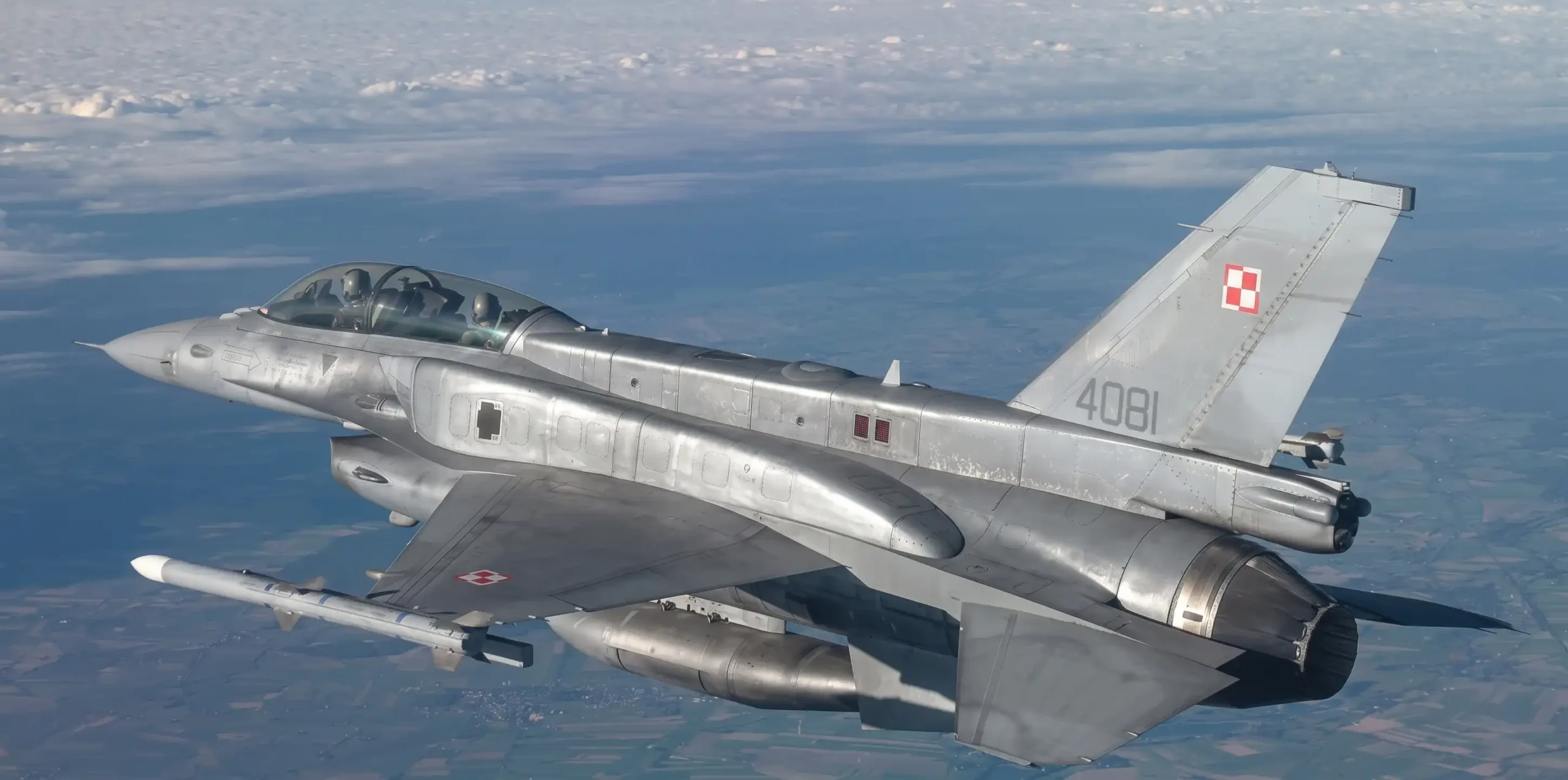
Poland’s Operational Command of the Armed Forces (DORSZ) scrambled military aircraft into Polish airspace and brought ground-based air defense and radar reconnaissance units to readiness on the morning of October 18, 2026, as Russia struck targets in western Ukraine with unmanned aerial vehicles. Acting through the Air Operations Center, Air Component Command, the command activated the forces at its disposal and described the measures as preventive, aimed at protecting airspace adjacent to the threatened regions. The Polish Air Navigation Services Agency said Lublin and Rzeszów airports suspended flight operations to give military aviation freedom of action.
The activation followed a fresh Russian strike on Rivne and its surrounding area on Sunday morning and an overnight raid that Ukraine’s Air Force said involved one Iskander-M ballistic missile and 180 strike drones. Ukrainian air defenses shot down or suppressed 152 drones by 8:00 a.m., with impacts recorded at 20 locations. It is the latest in a string of October activations, including October 7, October 8, October 10 and two separate alerts on October 16, as Russian strikes on Volyn, Rivne and Lviv oblasts intensify. A drone attack on Lutsk killed four people on October 14.
Poland Scrambles Military Aircraft as Lublin Object Search Continues
The alert followed an unresolved incident overnight. Around 2:00 a.m., police received two reports from residents who heard a loud object pass, one near the Zemborzyce Reservoir just south of Lublin and the other in neighboring Łęczna County. DORSZ said it was investigating a detected radar signal alongside the witness accounts and dispatched a ground search-and-rescue team from the Territorial Defence Forces (WOT), supported by police and the Military Gendarmerie. No debris had been found by Sunday morning. The command has not confirmed an airspace violation.
The search lands in a year of documented intrusions. On July 30, 2026, a Russian Kh-101 cruise missile entered Polish airspace and impacted near Tarnawa-Kolonia, roughly 100 km from the Ukrainian border, leaving a crater about 10 m wide. On September 23, a Russian Mi-8 helicopter crossed into Polish airspace from the direction of Kaliningrad, penetrating about 300 m for 42 seconds. The reference point remains the night of September 9 to 10, 2025, when 19 to 23 drones entered Poland, allied aircraft destroyed up to four, Warsaw invoked Article 4 of the North Atlantic Treaty and NATO launched Operation Eastern Sentry.
Halting civil traffic at Lublin and Rzeszów, the latter a primary logistics node for Western aid to Ukraine, is now a standard component of each activation. It clears airspace for quick reaction alert (QRA) fighters and supporting aircraft operating close to the border. The cost is cumulative: Polish customs officials reported truck waits of up to 40 hours at Lublin Voivodeship crossings this week as repeated air raid alerts halted processing.
Jet-Powered Geran Drones Compress Polish Air Defense Reaction Time
The technical driver behind Warsaw’s posture is Russia’s shift to jet-powered strike drones. The Geran-5 entered operational use in January 2026 with a reported cruise speed of 450 to 600 km/h, and the Geran-4 appeared in May 2026, according to open-source assessments. Publicly available specifications put the propeller-driven Geran-2, the Shahed-136 derivative that dominated earlier campaigns, at roughly 185 km/h. At 600 km/h, a jet Geran covers 100 km in ten minutes. Lviv sits about 70 km from the Polish frontier, so a drone that strays from a western Ukrainian target through navigation error, jamming or deliberate routing can reach Polish airspace within minutes of being tracked. Ukraine’s Air Force now breaks out jet-powered drones in its tallies: 26 of 180 launched overnight into October 18.
Poland has adjusted its force posture accordingly. On October 1, 2026, the Polish Air Force placed its 12 KAI FA-50GF light fighters on QRA duty at the 23rd Tactical Air Base in Mińsk Mazowiecki, after acquiring AIM-9 Sidewinder missiles and 20 mm cannon ammunition absent from the original deliveries. Maj. Gen. Ireneusz Nowak listed the Geran-4 and Geran-5 among their potential targets. The move offloads short-range interceptions from the 48 F-16C/D Block 52+ fighters and the F-35A fleet, which received its ninth aircraft on October 1, and preserves AIM-120 AMRAAM stocks for higher-end threats. The FA-50GF still lacks an active electronically scanned array (AESA) radar and beyond-visual-range missiles, confining it to infrared and gun engagements that demand close pursuit of a 600 km/h target, often over populated terrain.
Analysis: Russia’s concentration of jet-powered drones on western Ukraine has turned Polish air defense activations from occasional events into a near-daily operational cycle, and the burden falls on readiness rather than engagement. Each sortie, radar surge and airport closure consumes flight hours, crew availability and civil aviation capacity without a shot fired. The same strain is visible on the southern flank: on October 17, two Romanian F-16s from the 86th Air Base at Borcea shot down two drones over Romania’s territorial waters, a day after Bulgaria asked NATO for combat aircraft and counter-drone systems following Russian strikes in the Black Sea. Eastern Sentry is shifting from a deterrent signal to a sustained air policing workload that fighter patrols alone cannot absorb at acceptable cost.
The immediate open question is whether search teams near Lublin recover debris. Beyond that, the tempo of Russian strikes on Volyn and Rivne, the share of jet-powered drones in each wave, and the delivery of 36 FA-50PL fighters with AIM-120 integration, now scheduled between mid-2027 and early 2029, will determine how long Poland can sustain this alert cycle.