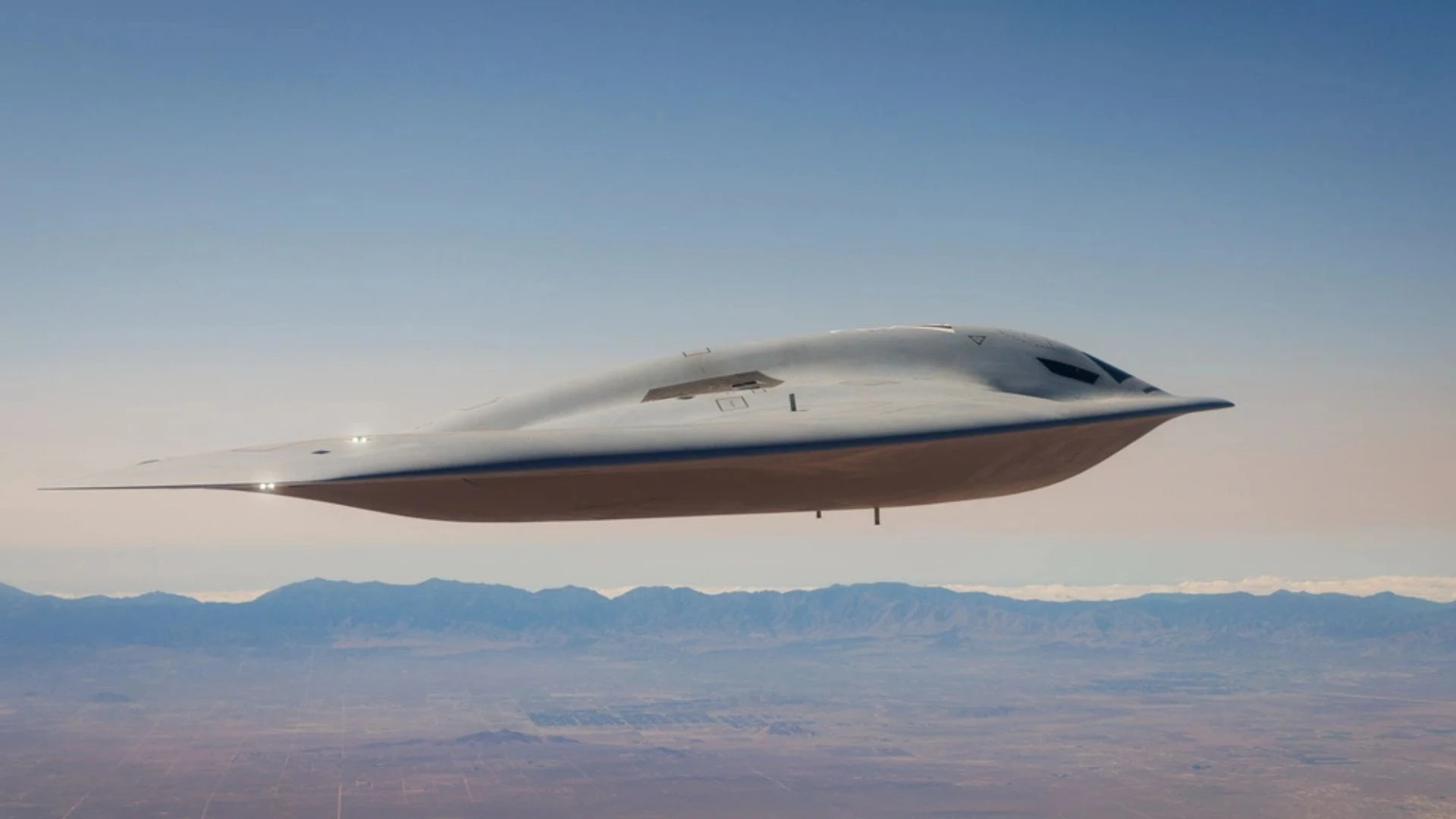
Senior US Air Force leaders, Northrop Grumman executives and Texas civic officials met in Abilene, Texas, on October 8, 2026, to coordinate Dyess Air Force Base’s transition to the B-21 Raider stealth bomber, with base planners outlining approximately $2 billion in infrastructure investment to prepare the installation as the aircraft’s third main operating base.
The summit, hosted by the Abilene Chamber of Commerce’s Military Affairs Council, comes as the B-21 program moves from flight test toward fielding. Ellsworth Air Force Base, South Dakota, will serve as the first main operating base and formal training unit, with its first aircraft due in 2027. On October 3, 2024, the Department of the Air Force signed the Record of Decision placing the second main operating base at Whiteman Air Force Base, Missouri, and the third at Dyess. In February 2026, the service and Northrop Grumman agreed to raise annual B-21 production capacity by 25%, applying $4.5 billion in fiscal 2025 reconciliation funding, a move that compresses the timeline for every base in the sequence.
Dyess AFB B-21 Beddown and the $2 Billion Infrastructure Plan
William Beuschel, deputy chief of the Dyess AFB B-21 Program Integration Office, told attendees the planned projects total approximately $2 billion and will require extensive coordination among the Air Force, the US Army Corps of Engineers and industry partners. He identified construction timelines, workforce availability and regional infrastructure as the key variables. The Air Force has not publicly broken the figure down by project or fiscal year, and it has not disclosed when the first B-21 will arrive at Dyess or how many aircraft the base will receive.
The scope reflects the mission set assigned to Dyess in the 2024 Record of Decision. Beyond B-21 operations squadrons, the base is slated to host a Weapons Generation Facility, the B-21 Weapons Instructor Course and an operational test and evaluation squadron. That makes Dyess the center for B-21 tactics development and operational testing, not just a third flying location. Weapons Generation Facility is the Air Force designation for secure nuclear weapons storage and maintenance infrastructure, which would return a nuclear-related mission to an installation whose current B-1B Lancer fleet no longer carries nuclear weapons.
Col. Robert Sturgill, commander of the 7th Bomb Wing and the installation, named housing availability, construction capacity and community resources as priorities requiring continued coordination with local partners. An afternoon panel took up housing, child care, health care and workforce development, while US Rep. Jodey Arrington of Texas’ 19th Congressional District urged the community to turn its long-standing advocacy for Dyess into concrete preparations for the new mission.
B-21 Raider Capabilities and Production Status Ahead of Fielding
Lt. Gen. Mark Pye, deputy director of Critical Major Weapon Systems for the Department of War, described the B-21 as a generational advance in bomber capability, citing its range, payload flexibility and survivability in contested environments. “Successfully fielding the B-21 will require relentless teamwork and ruthless prioritization for years to come,” Pye said.
Hard performance data has not been publicly released. Publicly available information indicates the B-21 is a flying-wing penetrating bomber designed to carry both conventional and nuclear weapons into defended airspace, built on an open systems architecture to ease future upgrades, with Pratt & Whitney publicly identified as its engine supplier. The first aircraft flew in November 2023 and a second test aircraft followed in 2025. The program demonstrated aerial refueling from a KC-135 Stratotanker in 2026, and in July 2026 the Air Force confirmed the aircraft will operate with a two-pilot crew. The service plans a fleet of at least 100 aircraft; published estimates place the unit cost at roughly $700 million.
Chris Adams, Northrop Grumman sector vice president and general manager of the B-21 program, gave the industry perspective on development progress and workforce collaboration. Northrop has committed $2.5 billion of its own capital to added production capacity, mostly in the 2027 to 2029 window, and, with the Department of the Air Force, broke ground on September 29 on a new final assembly line at Air Force Plant 42 in Palmdale, California.
Sustaining B-1B Readiness While Preparing Airmen for the Raider
Commanders framed the transition as a readiness problem as much as an acquisition one. Maj. Gen. Ty Neuman, commander of Eighth Air Force and the Joint-Global Strike Operations Center, said: “Modernization cannot come at the expense of readiness, and taking care of our Airmen is essential to sustaining both.” At Dyess, that means keeping B-1B squadrons mission-ready through the construction surge.
Maj. Gen. Peter Bonetti, director of Strategic Plans, Programs and Requirements at Air Force Global Strike Command, said the B-21 “will require some of the most highly trained and specialized Airmen in our force,” and tied retention directly to the quality of life offered by the surrounding community. Col. Tim Griffith, deputy commander of the 509th Bomb Wing at Whiteman, drew on the B-2 Spirit experience, stressing experienced Airmen, technical expertise and operational security. “People are more important than hardware,” Sturgill said.
Analysis: The summit signals that the pacing item for the B-21’s third base is shifting from the factory to the installation. A 25% production increase and a new assembly line mean airframes could become available faster than infrastructure, cleared maintainers and local housing can absorb them. Dyess carries outsized weight because its Weapons Instructor Course and operational test squadron will shape how the entire fleet fights. The B-2 lessons Griffith cited apply directly: a small, highly classified bomber fleet depends on a narrow pool of specialists, and losing them to housing or child care shortfalls would erode combat capability faster than any slip in airframe deliveries.
The next hard milestone is the first operational B-21 arrival at Ellsworth in 2027, followed by Whiteman. For Dyess, the indicators to watch are the phasing of the roughly $2 billion construction program in upcoming military construction budgets, Army Corps of Engineers contract awards, and any Air Force announcement of an arrival date or aircraft allocation, none of which has been made public. How long the B-1B will operate alongside the Raider at Dyess also remains unresolved.