Lockheed Martin completed its acquisition of Ultra Maritime on October 26, 2026, bringing the Braintree, Massachusetts-based anti-submarine warfare (ASW) specialist into its Rotary and Mission Systems (RMS) business area. The company signed the definitive agreement on July 6, 2026, to buy Ultra Maritime from Cobham Ultra, a portfolio company of private equity firm Advent International, for $3.45 billion. The closing announcement did not restate the purchase price.
The deal closed inside the fourth-quarter window Lockheed Martin set in its quarterly filings, which said the purchase would be funded with cash on hand. Ultra Maritime builds sonar, sonobuoys, torpedo defense, radar, electronic warfare and autonomous maritime sensing systems, and has cited a workforce of more than 2,300 across the United States, Canada, the United Kingdom and Australia. Advent, which took Ultra Electronics private in 2022, says it invested about $170 million in Ultra Maritime’s product development and manufacturing, including a fully independent sonobuoy production capability, while annual revenue grew roughly 17% per year. The transaction lands as the US Navy rebuilds expendable ASW inventories against quieter submarine fleets.
What the Ultra Maritime Acquisition Adds to Lockheed’s ASW Portfolio
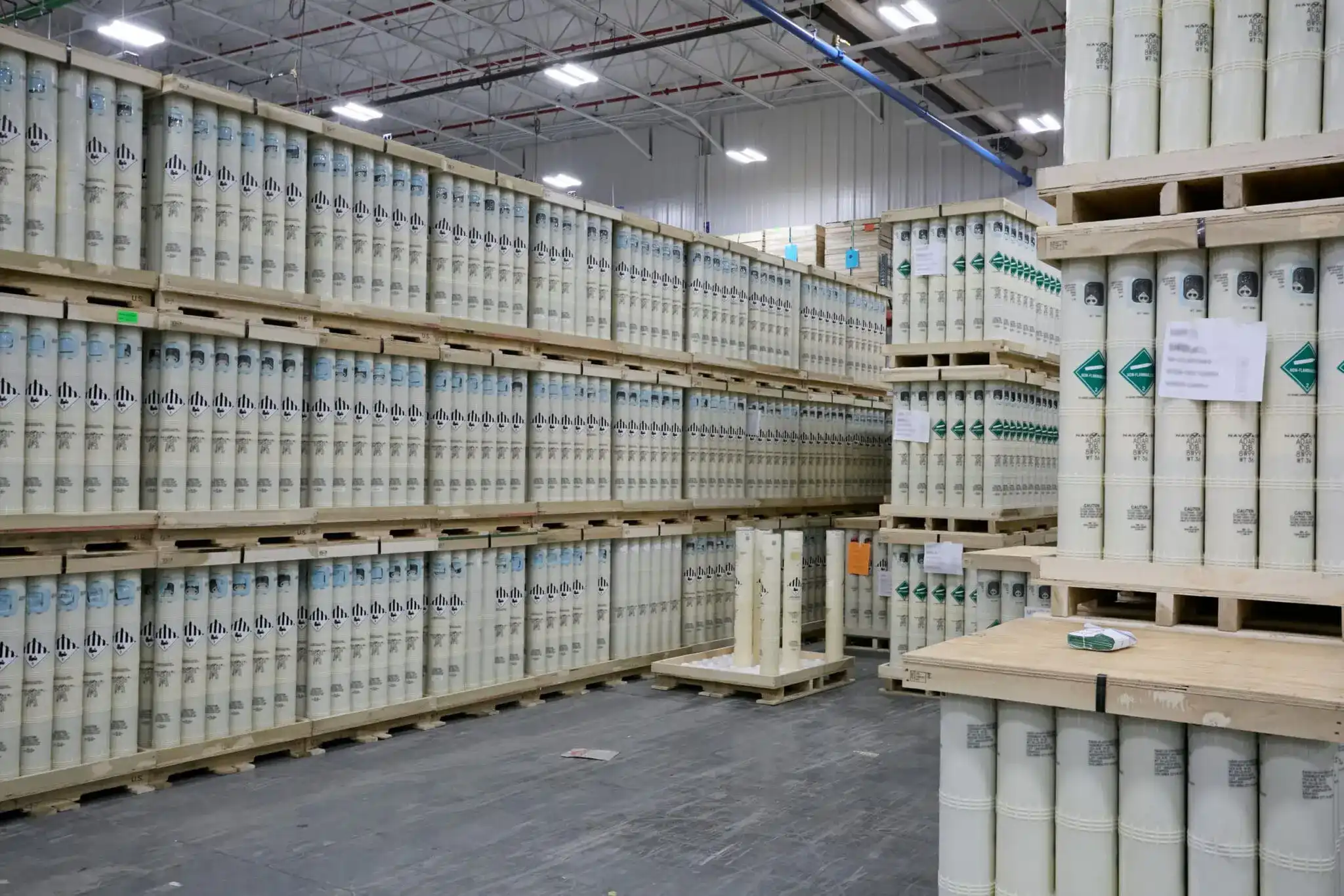
Sonobuoys sit at the center of the purchase. In April 2026, the Navy awarded Ultra Maritime a sole-source, firm-fixed-price low-rate initial production (LRIP) contract for the AN/SSQ-125B, the active source buoy in multistatic sonobuoy fields, where it transmits while separate receiver buoys listen. The award covers training, peacetime operations, testing and inventory sized for major combat operations under the naval munitions requirements process. Earlier LRIP awards covered the AN/SSQ-53H passive and wideband buoy, worth $99.9 million in September 2024, and the AN/SSQ-62G active directional buoy, worth $49 million in June 2024. Production runs through the company’s Columbia City, Indiana, sonobuoy site.
Publicly available specifications indicate standard A-size sonobuoys measure 4.875 inches in diameter and 36 inches in length, a common form factor loaded aboard the P-8A Poseidon and the MH-60R Seahawk. That is the operational link. Sikorsky, an RMS unit, builds the MH-60R, and Lockheed Martin is prime contractor on the AN/SQQ-89A(V)15 surface ship undersea warfare combat system, which fuses hull-mounted sonar, multi-function towed array and sonobuoy data aboard Aegis destroyers. RMS now owns the expendable sensor, a launch platform and the shipboard processing chain. Abroad, Ultra Maritime holds a £40 million ($54.3 million) February 2026 contract for Royal Navy Merlin Mk2 sonobuoys.
Towed Arrays and Torpedo Defense Across Allied Frigate Programs
Stephanie C. Hill, president of RMS, framed the closing around fleet demand: “Securing the undersea domain starts with giving sailors the tools and confidence to find, track and deter threats that put ships and crews at risk.” Lockheed Martin singled out Ultra Maritime’s towed sonar arrays and hull-mounted sonar alongside its sonobuoys. In June 2025, the Royal Netherlands Navy and the Belgian Navy selected its Low-Frequency Active Passive Sonar (LFAPS) under a C$200 million contract for four ASW frigates, pairing the Sea Lancer in-line horizontal projector array with the Sea Sabre towed-body variable depth sonar. The first Dutch ship is due in 2029, the first Belgian ship in 2030.
Canada shows how much of the relationship was already intertwined. Lockheed Martin Canada is combat systems integrator for the Royal Canadian Navy’s River-class destroyers, supplying Aegis, the SPY-7 radar and the CMS 330 combat management system, while Ultra Maritime acts as ASW lead, supplying hull-mounted sonar, a CA$89 million three-shipset Surface Ship Torpedo Defense (SSTD) order and lifecycle support awarded in June 2026. The 7,800-tonne destroyers are planned in a class of up to 15. Ultra Maritime will also supply SSTD for Australia’s Hunter-class frigates, and is developing the next-generation Acoustic Device Countermeasure (ADC) MK6 for the US Navy under a February 2026 contract, aimed at torpedoes that defeat legacy decoys and re-acquire targets.
Autonomy Partnerships and Antitrust History Shape RMS Integration
Ultra Maritime also brings 2025 partnerships with Anduril Industries, pairing its Sea Spear deployable acoustic array with Anduril’s Dive XL autonomous vehicle, Seabed Sentry payload system and Lattice software for distributed seabed sensing, and with General Atomics Aeronautical Systems on unmanned airborne ASW. Lockheed Martin has not said whether those agreements continue unchanged.
Sonobuoy consolidation carries history. In March 2018, Ultra Electronics and Sparton abandoned a $234 million merger after Department of Justice staff said it would recommend blocking a deal that combined the only two qualified Navy sonobuoy suppliers. Their ERAPSCO joint venture, formed in 1987, dissolved on September 30, 2023, and Sparton now belongs to Elbit Systems of America. Lockheed Martin’s purchase merges no sonobuoy producers, but it places the holder of sole-source Navy sonobuoy contracts inside a prime contractor.
RMS absorbs the unit from a recovering base. Third-quarter 2026 RMS sales reached $4.511 billion, up 3%, with operating profit of $524 million and an 11.6% margin, after 2025 reach-forward losses on helicopter programs for Canada and Türkiye and $45 million in unfavorable third-quarter adjustments on Heavy Lift and Seahawk. Lockheed Martin has not disclosed Ultra Maritime’s revenue.
Analysis: This is vertical integration in a consumable market. Sonobuoys are expended by the hundreds in a sustained ASW campaign, and Navy LRIP contracts already size orders for major combat operations, giving Lockheed Martin a war-surge revenue stream tied to helicopters and combat systems it already sells. The 2018 antitrust objection rested on supplier count, which this deal leaves unchanged. The sharper question for allied navies, several of which field combat systems from Lockheed Martin’s rivals, is whether Ultra Maritime remains an open merchant supplier or tilts toward its new parent’s integrated offers.
Lockheed Martin has not said whether Ultra Maritime keeps its brand or leadership inside RMS. Near-term markers include the AN/SSQ-125B path from LRIP to full-rate production, ADC MK6 development, Dutch and Belgian frigate deliveries from 2029 and the River-class lead ship in the early 2030s. Lockheed Martin’s next quarterly report should give the first view of the unit’s contribution to RMS sales and margins.