The U.S. Navy is raising the maximum value of an existing contract with Northrop Grumman by approximately $97 million to sustain production of the FMU-139D/B electronic bomb fuze, the company announced on October 29, 2026. The fuzes are built at the Naval Industrial Reserve Ordnance Plant at Allegany Ballistics Laboratory (ABL) in Rocket Center, West Virginia.
The ceiling increase comes as the Department of Defense and allied air forces work to rebuild and sustain ready stockpiles of air-delivered munitions, a demand signal Northrop explicitly cited in its announcement. The company did not disclose the contract number, the number of additional fuzes covered, or any revised period of performance. Defense Department contract records show the Navy awarded Northrop a $197.5 million firm-fixed-price, indefinite-delivery/indefinite-quantity contract in September 2024 for full-rate production of 56,000 FMU-139D/B fuze systems, with work expected to run through December 2029. Whether the new increase modifies that vehicle has not been confirmed.
How the FMU-139D/B Electronic Bomb Fuze Replaced Three Legacy Designs
The FMU-139D/B is a general-purpose electronic fuze that controls when and how a bomb functions, with impact and impact-delay settings tailored to the target. It is installed on Mk 80-series and BLU-100-series general-purpose bombs, including weapons fitted with Joint Direct Attack Munition (JDAM) guidance kits, and is carried by U.S. Navy, U.S. Air Force and allied aircraft.
Naval Air Systems Command (NAVAIR) selected Orbital ATK in October 2015 for first article testing, qualification and production of the FMU-139D/B under a contract estimated at $426 million, before Northrop acquired the company in 2018. The Navy authorized full-rate production in January 2019. The fuze replaces three legacy designs, the FMU-139C/B, the FMU-152 Joint Programmable Fuze and most FMU-143s, all of which relied on mechanical mechanisms to safe and arm the weapon. The D/B uses an electronic safe-and-arm architecture instead, which allows 100 percent of its electronic functionality to be tested before delivery.
The Defense Department has run more than 50 sled tests over several years to confirm the fuze’s functionality, and Northrop describes it as effective against structures that require high-velocity impact performance, which is what allows it to serve penetrator weapons as well as general-purpose bombs. For ordnance crews on carrier decks and expeditionary airfields, one fuze across both mission sets means fewer part numbers to store, certify and train on.
Allegany Ballistics Laboratory Production Capacity Reaches 85,000 Fuzes a Year
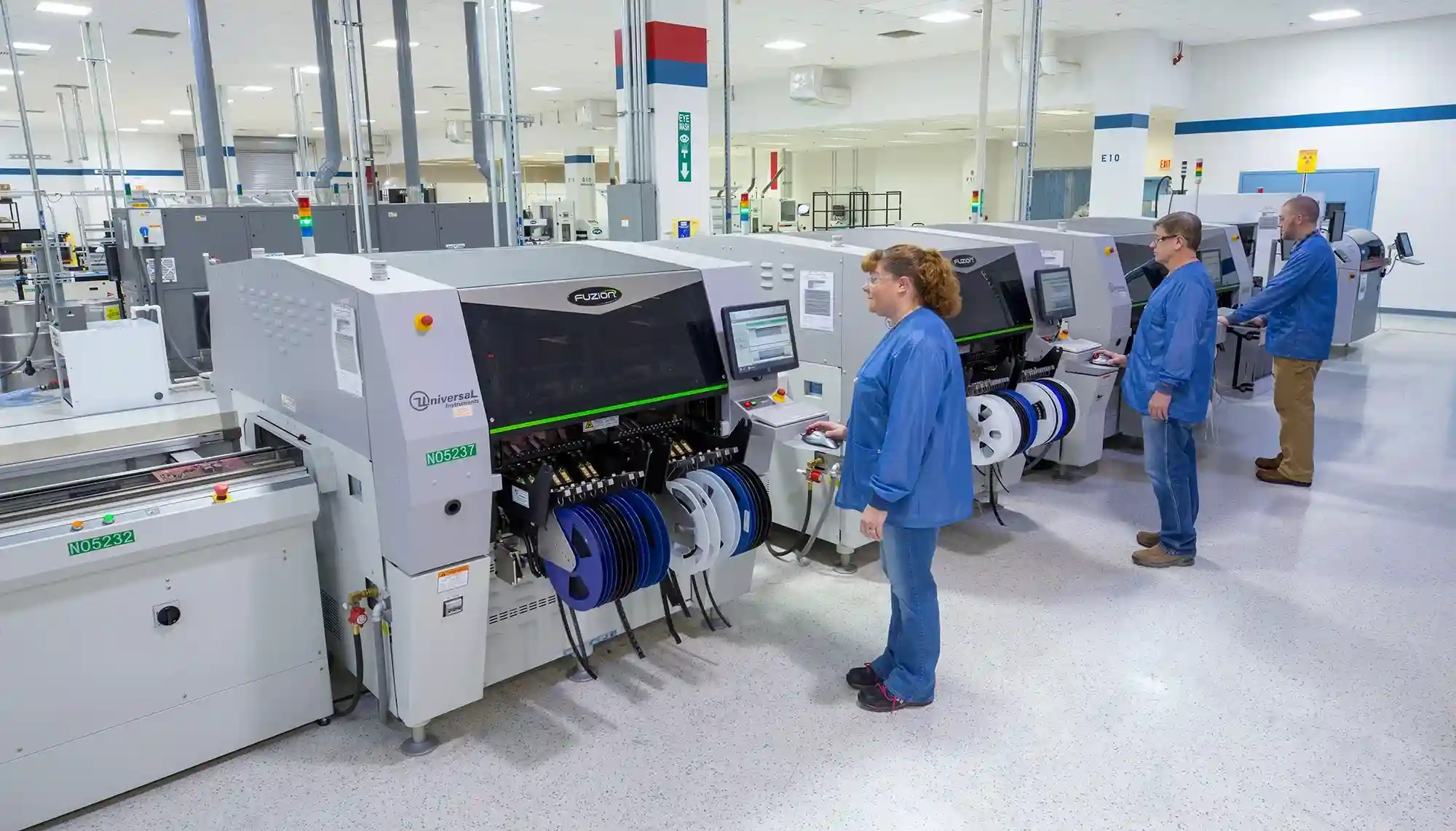
Earlier this year, Northrop delivered its 200,000th FMU-139D/B. Following investments in automation and advanced manufacturing, ABL can now produce as many as 85,000 fuzes annually, and the company has described the line as roughly 70 percent automated. For scale, the September 2024 contract covered 56,000 fuze systems with work running through December 2029, well below the plant’s stated annual ceiling.
Foreign demand is adding to the load. In May 2026, the State Department approved a possible $373.6 million sale to Ukraine of 1,200 KMU-572 and 332 KMU-556 JDAM tail kits, with FMU-139 fuze systems, support equipment and spare parts, for which Boeing is the principal contractor. Northrop also lists multiple international customers for the FMU-139D/B. The company says it is the only one bringing metals, electronics, composites and energetics capabilities together on a single campus, which allows integrated fuze and warhead design.
Analysis: Fuzes rarely draw attention, but they gate the munitions stockpile. A JDAM tail kit and a Mk 84 bomb body are useless without a qualified fuze, which ties part of any surge in precision-guided bomb inventories to Rocket Center’s output. A $97 million increase is modest against the broader munitions budget, yet it shows the Navy funding the enabling component rather than only bomb bodies and guidance kits. The flip side is concentration: with FMU-139D/B production based at ABL, the plant’s capacity becomes a strategic variable for both U.S. and allied magazine depth.
The next indicators will be the individual delivery orders placed under the raised ceiling, which should reveal fuze quantities, the split between U.S. services and Foreign Military Sales customers, and whether annual output moves toward the 85,000-unit capacity. Fiscal 2027 munitions appropriations will determine how much of that capacity the Pentagon actually buys.