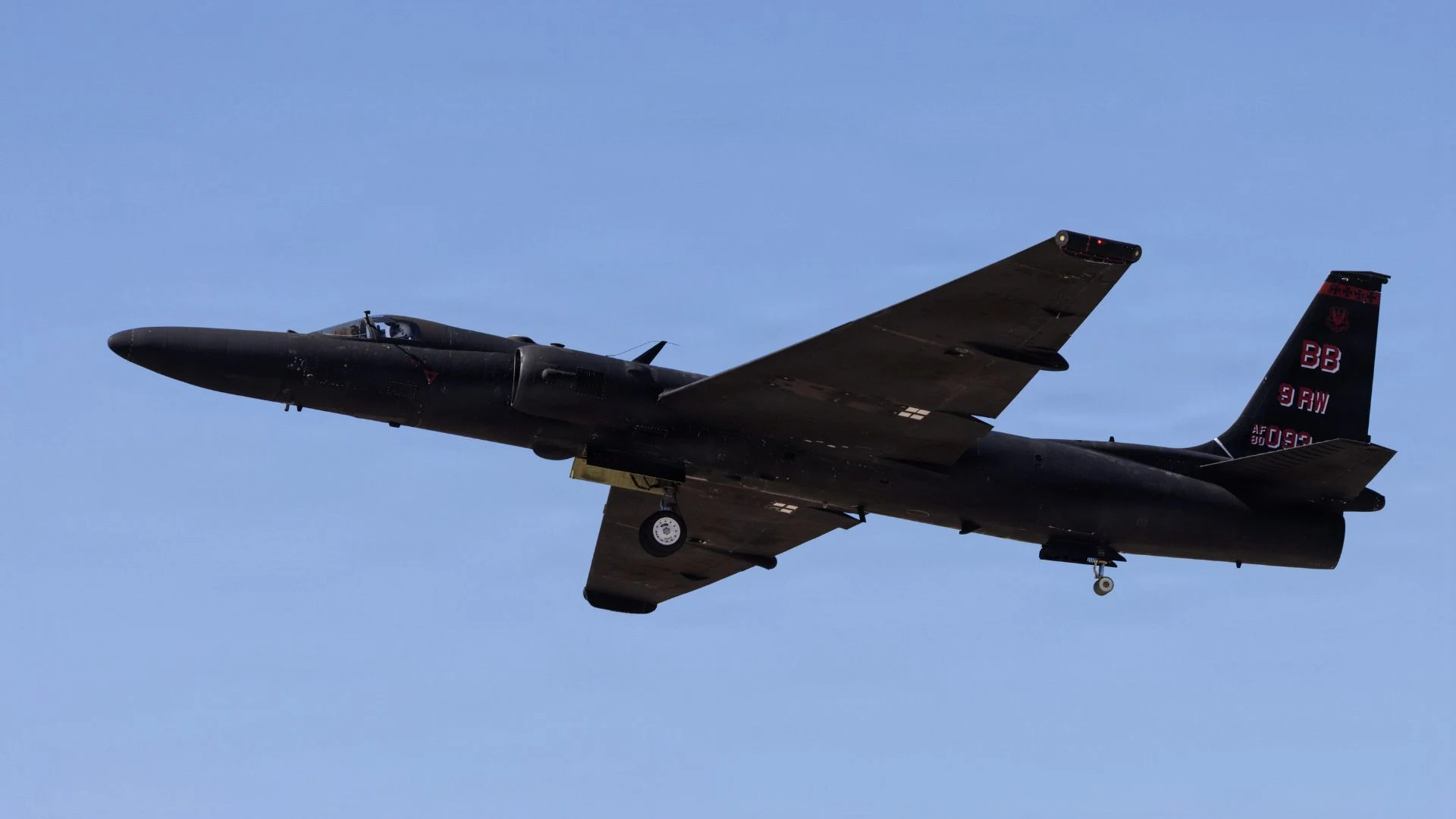
The U.S. Air Force is canvassing industry for companies able to repair and sustain the Advanced Synthetic Aperture Radar System-2 (ASARS-2), the imaging radar carried by the U-2 Dragon Lady, even as the service asks Congress to retire its entire U-2 fleet by the end of fiscal 2027. The Air Force Life Cycle Management Center (AFLCMC) posted sources sought notice FA8528-26-R-ASARS2 on October 22, 2026, and amended it on October 28, moving the response deadline from November 13 to November 18 at 3 p.m. Eastern.
The notice itself resolves most of the apparent contradiction. The Air Force states it anticipates soliciting a two-year extension of the existing five-year support and sustainment contract, currently performed by Raytheon under contract FA8528-20-D-0023, on a sole-source basis, with the period ending September 30, 2028. That date falls a full year after the planned retirement deadline of September 30, 2027, and Congress has repeatedly blocked the Dragon Lady’s exit.
Why the Air Force Needs ASARS-2 Radar Support Through 2028
The request is market research, not a solicitation, and carries no contract value. Its function is procedural: before extending a sole-source contract, the government must show it looked for alternatives. The notice makes clear why few exist. “The Government does not own or have access to the data for the ASARS-2 sensor,” it states, adding that the Air Force holds neither data rights nor system specifications. Raytheon, now part of RTX, has supplied ASARS for the U-2 since the 1980s.
The capability survey is built around that gap. Respondents must explain whether they possess the drawings and technical data needed to sustain the radar, how they would operate without them, and whether they can reverse engineer the sensor and its components. A new entrant would have to qualify flight hardware without the original design package, a high bar for a system slated to stop flying within a year.
The scope is broad. Contract logistics support covers engineering, spares repair and failure resolution on the radar and its ground support equipment. Depot maintenance support teams would handle mission software updates, Diminishing Manufacturing Sources (DMS) engineering, configuration management, technical manuals, calibration and integration with other ASARS-related systems on the U-2. Cybersecurity requirements include NIST SP 800-171, NIST SP 800-53, Intelligence Community Directive 503 and the Cybersecurity Maturity Model Certification process. Clearance levels remain undetermined.
Inside the ASARS-2 Radar: Components, Modes and the 2B Upgrade
The notice describes the ASARS-2A version as a high-resolution, all-weather, day-night, long-range mapping radar that detects and locates fixed and moving ground targets by combining Synthetic Aperture Radar (SAR) imagery with Ground Moving Target Indicator (GMTI) data. It normally operates in a tethered mode, transmitting collected data by datalink for near-real-time exploitation. The baseline ASARS-2 entered service in the 1980s, and the Air Force received the first ASARS-2A as its replacement in 2001.
The attached parts list offers a rare unclassified view of the radar’s architecture: 15 line items, including two Receiver Exciter Controller variants (REC-140 and REC-150), the OBP-120 On-Board Processor, the transmitter, an Electronically Scanned Antenna, power supplies, a liquid cooling system and a sensor storage array, plus ground support equipment.
Altitude is what makes the sensor valuable. Flying above 70,000 feet, the U-2 can point ASARS-2 deep into territory it does not overfly, giving commanders standoff imagery through cloud and darkness. The next iteration, ASARS-2B, swaps in an active electronically scanned array; Raytheon said in 2019 that it doubles the surveillance range of the ASARS-2A while retaining its imagery resolution. The Air Force’s fiscal 2021 budget request justified the 2B by citing obsolete front-end components on the 2A, and a Pentagon reprogramming approved in February 2024 added $10 million to ASARS-2B development after processor, antenna and receiver exciter integration problems. The notice does not specify which ASARS-2 versions the extension would cover.
Congress, the 23-Aircraft Fleet and the U-2 Retirement Timeline
The Air Force’s fiscal 2027 budget proposes retiring the remaining 23 U-2s, including three two-seat TU-2S trainers, by the end of the fiscal year as part of a plan to divest 149 aircraft, and zeroes out U-2 operation and maintenance funding. A May 2026 force structure report judged the platform no longer viable for future high-end conflict and cited safety risks, diminishing manufacturing capacity and material shortages.
Lawmakers have pushed back each year. Fiscal 2026 appropriations capped divestment at eight aircraft, and the first airframe, tail 80-1085, went to storage at Davis-Monthan Air Force Base, Arizona, in December 2025. The House Appropriations Committee’s draft fiscal 2027 bill, released in June 2026, would bar retiring more than two U-2s in fiscal 2027 and provide $81 million for programmed depot maintenance to fully restore four aircraft. Final fiscal 2027 defense appropriations have not been enacted, and the Pentagon is operating under a continuing resolution through December 11. The fleet remains operational: maintainers at Beale Air Force Base, California, launched U-2s under simulated attack during Exercise Dragon Shield in January, and a U-2 flew over South Korea during Freedom Flag 26-2 on October 23, 2026.
Analysis: The notice is less a vote of confidence in the U-2 than an admission of how little room the Air Force has. Without data rights, it cannot compete ASARS-2 sustainment or let the contract lapse while Congress may still order the fleet to keep flying. A two-year sole-source extension offers a hedge against legislative uncertainty and covers a drawdown that may stretch past 2027. The sensor’s line is also outliving the airframe: ASARS-2B is part of the sensor suite for the U.S. Army’s High Accuracy Detection and Exploitation System (HADES) business jets, which keeps Raytheon’s radar sustainment base relevant after the last U-2 lands. The broader lesson is that acquisition terms that left the government without technical data still dictate sole-source sustainment four decades later.
Industry responses are due November 18, and the notice becomes inactive on December 3. The next indicators will be a sole-source justification for the Raytheon extension, the final fiscal 2027 retirement cap and which ASARS-2 versions the extension will cover.