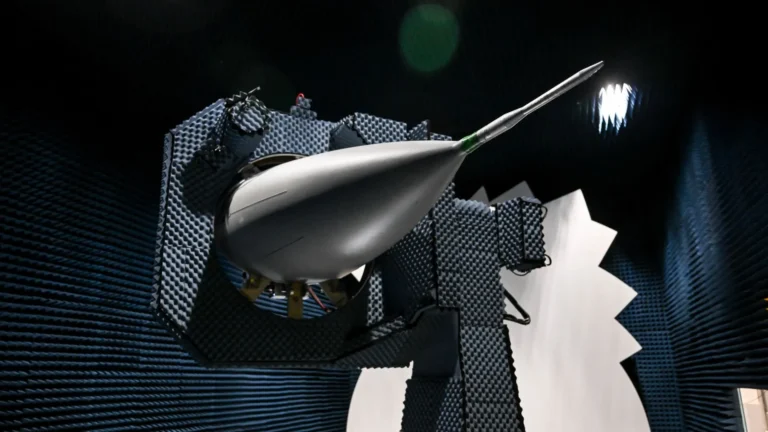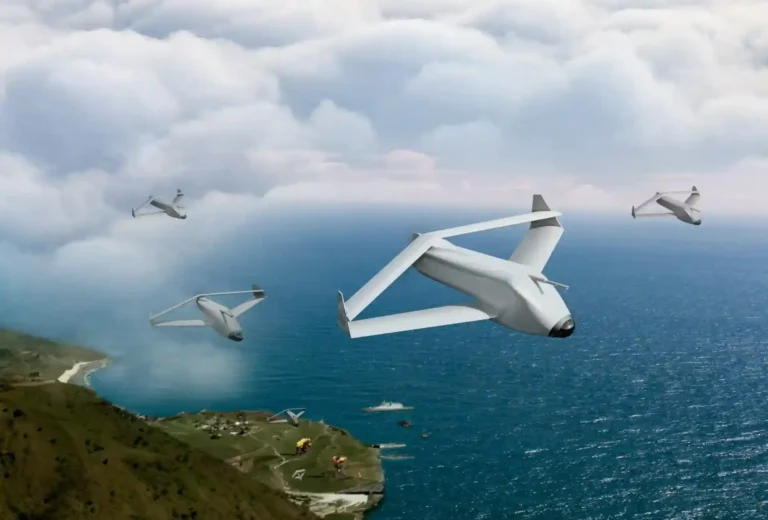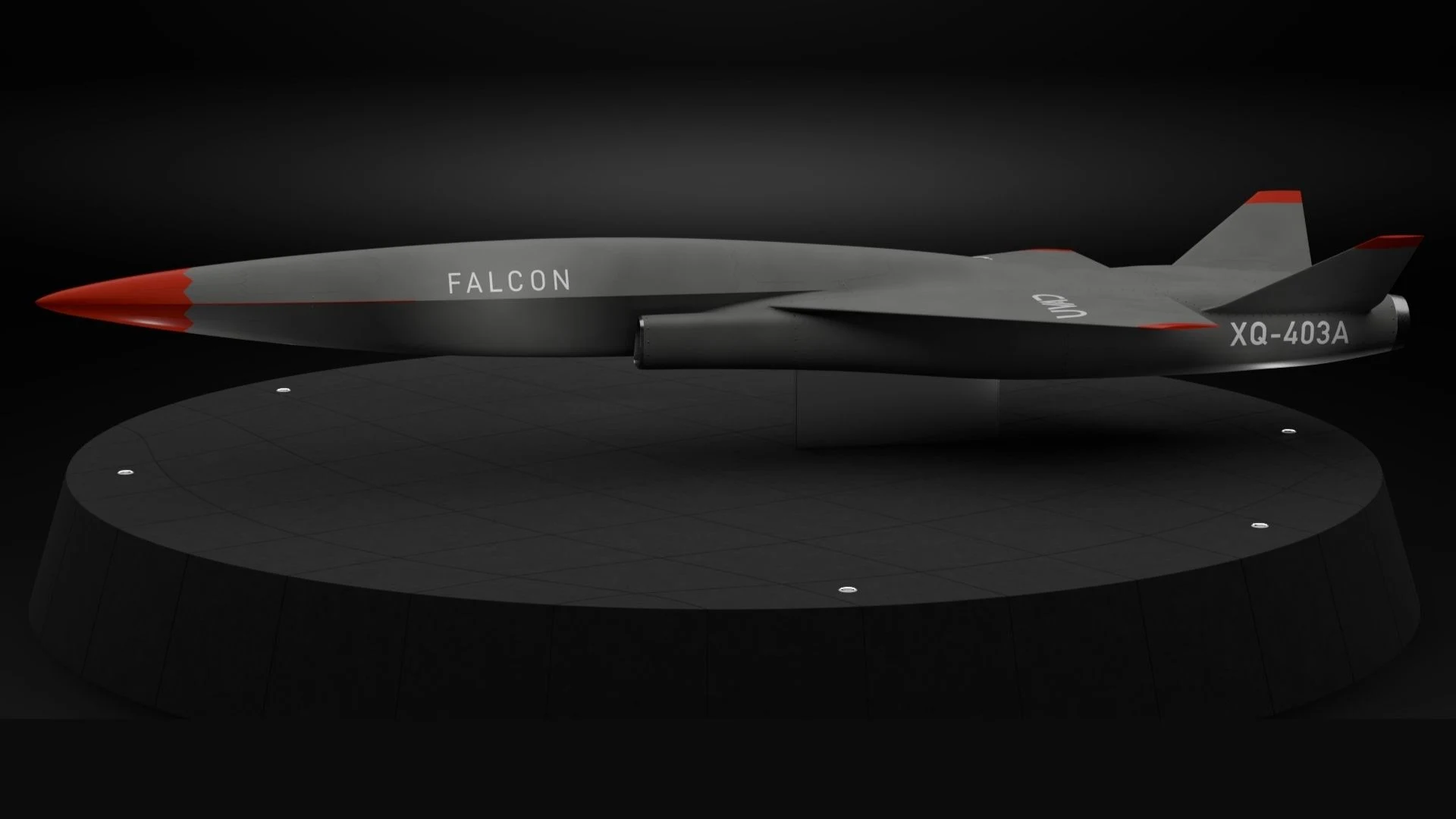
Safran Power Units will supply the propulsion system for the Falcon, a reusable supersonic uncrewed aerial vehicle (UAV) developed by Canada’s UVAD Technologies Inc., the companies announced at Euronaval in Paris on November 3, 2026. The Falcon will fly on two Safran turbojet engines, which the partners say will deliver supersonic speed at low and medium altitudes with rapid deployment and recovery.
The agreement gives UVAD’s program an established engine supplier as armed forces look for cheaper ways to rehearse against fast threats. The spread of supersonic anti-ship and cruise missiles has pushed air, naval, and missile defense units to train more often against high-speed targets, yet most supersonic targets in service are expendable and costly to fire. UVAD positions the Falcon as an affordable, recoverable alternative and describes it as Canada’s only supersonic uncrewed aircraft program in development, aimed initially at aerial target, threat-replication, and test and evaluation missions.
Falcon Supersonic UAV Airframe, Propulsion, and Performance Envelope
Neither company has disclosed which engine model will equip the Falcon, its thrust rating, or the value of the supply agreement. Safran Power Units, known as Microturbo until 2016 and now a subsidiary of Safran Helicopter Engines, builds the TR40 and TR60 turbojet families for missiles and target drones. Its Grand Prairie, Texas, facility has delivered more than 1,000 turbojets to US military aerial target programs and assembles engines for the Kratos BQM-167 and BQM-177 targets; Safran announced plans on September 30, 2026, to double the site’s capacity. Safran Power Units CEO Ghislaine Doukhan said the engine choice will strengthen the Falcon in terms of “supersonic flight, robustness, and cost-effectiveness.”
The latest announcement does not update the airframe specifications that UVAD and its German partner released in 2025. Publicly available figures indicate a maximum takeoff weight of 450 kg, a length of 5.8 meters, a wingspan of 2.2 meters, and a payload capacity of up to 50 kg. UVAD has claimed a top speed of Mach 1.6 at altitude and Mach 1.3 at low level, a ceiling of about 10,000 meters, and an endurance of roughly 30 minutes. Earlier disclosures indicated that the twin engines are intended to sustain supersonic flight without afterburners, that the onboard systems draw about 4 kW of electrical power, and that satellite communications are planned.
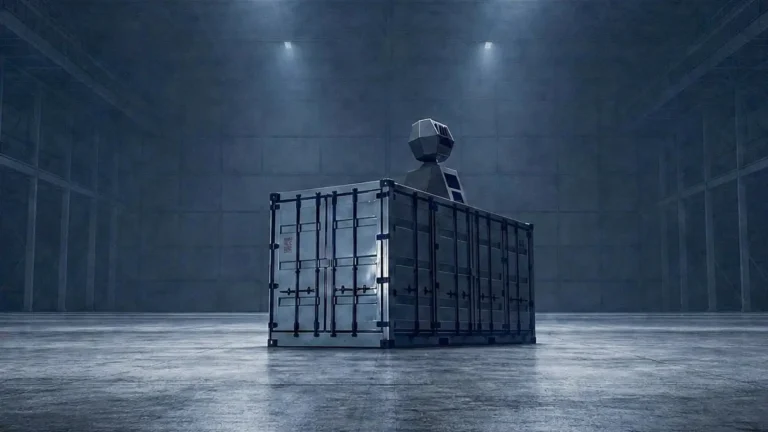
The twin-engine layout serves the target mission directly. Dry supersonic thrust from two small turbojets avoids the fuel penalty of afterburning and keeps the airframe in the 450 kg class, which supports the containerized concept UVAD has promoted: a pneumatic catapult that removes the need for a runway, and parachute recovery for reuse. UVAD’s partners have also cited air launch from an Airbus A400M. For range operators, that means a target fielded at remote sites with a small crew and flown again rather than consumed.
Reusable Supersonic Targets and the Missile Defense Training Gap
The Falcon’s case rests on cost per sortie. The benchmark supersonic sea-skimming target in US service, Northrop Grumman’s GQM-163A Coyote, uses a solid-fuel ducted-rocket ramjet and, according to publicly available specifications, flies beyond Mach 2.5; each one is expended on a single shot. The Falcon will not replicate that velocity, but a recoverable Mach 1.3 to 1.6 target could absorb a larger share of routine tracking and engagement drills, reserving costly high-end expendable targets for qualification events. UVAD CEO David Birkett said the two firms share “a common vision for high-performance, affordable defence systems.”
Autonomy is the second pillar. According to the companies, the Falcon’s autonomous flight system will allow a single operator to oversee several drones at once. That enables the multi-target saturation scenarios that integrated air and missile defense crews must rehearse, without adding range personnel.
UVAD stages development through its Alpine Swift, a flight-proven subsonic system the company uses as a technology pathfinder to validate key systems in flight before integrating them into the supersonic airframe. UVAD operates facilities in Alberta and British Columbia. In Europe, Munich-based INTEC Industrie-Technik announced a partnership with UVAD in 2025 to market the Falcon and has said it would consider local production if German or European orders materialize.
UVAD also presents the Falcon as a technology foundation for future Autonomous Collaborative Platform (ACP) applications, though decoy and loyal wingman configurations floated earlier by its partners do not feature in the current announcement.
Analysis: The partnership matters less for the engine itself than for program credibility. A first supersonic airframe from a Canadian firm carries obvious propulsion risk, and Europe’s leading supplier of small turbojets for missiles and targets reduces that risk while offering allied customers a familiar support chain. The timing also fits demand: supersonic anti-ship and land-attack missiles are now a standard planning assumption for NATO navies, and Red Sea operations since late 2023 have shown how quickly fleets expend interceptors. The open question is whether the Falcon can deliver its advertised performance at a per-sortie cost low enough to change training patterns.
The companies expect the program to enter flight testing in 2027, following a ground test campaign in 2026. That places first flight at the later end of the late 2026 or early 2027 window UVAD’s partners cited in 2025. Key unknowns remain the engine designation and thrust class, unit and per-sortie costs, and whether a launch customer in Canada, Germany, or elsewhere in NATO will commit before the Falcon demonstrates supersonic flight.