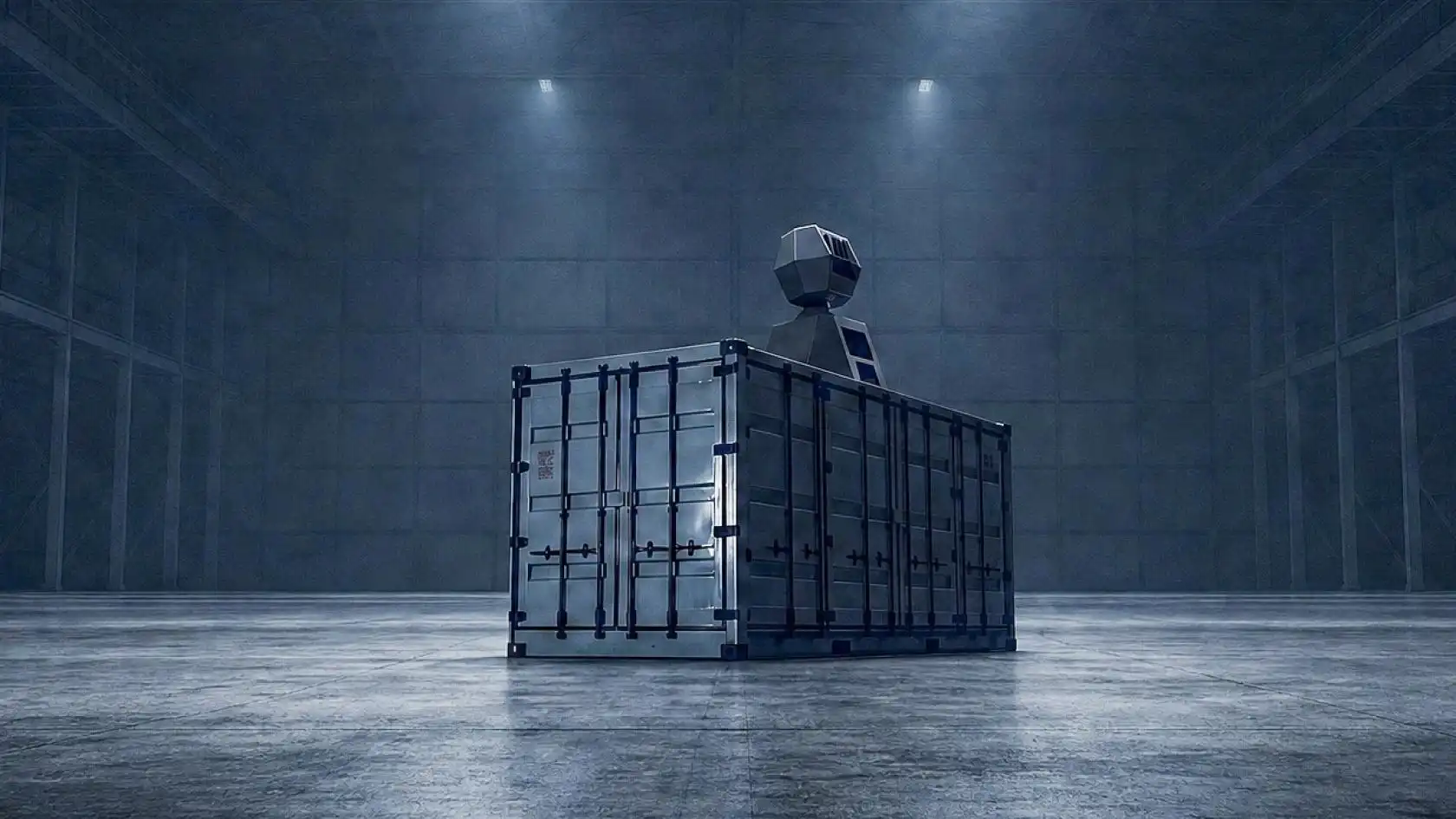
Thales unveiled its Maritime Modular Capability, a containerized naval mission system that packages surveillance, fire control, navigation and communications functions inside a single 20 ft container, at the Euronaval 2026 exhibition in Paris on November 3, 2026. The company says the demonstrator is ready for field testing and can be installed on crewed ships, on uncrewed or lightly crewed platforms, or deployed ashore.
The launch reflects a broader shift in European naval planning toward mission modularity, in which sensors and effectors are decoupled from the hull so that capability can be refreshed on a shorter cycle than the multi-decade service life of a warship. Thales frames the product as a building block for what it calls “Hybrid Navy” fleets, which combine conventional combatants with smaller crewed and uncrewed vessels. The UK Ministry of Defence published the Royal Navy’s Maritime Modularity Concept in February 2023, and the Royal Navy’s Type 26 frigates are being built with a mission bay designed to hold 20 ft containers, while the Type 31 class includes mission bays that allow the ships to be re-equipped for different tasks.
Inside the Maritime Modular Capability 20 ft Container
Thales describes the configuration as a “system of systems” that integrates a complete set of its own technologies within one standard 20 ft container. Publicly available ISO specifications put that envelope at roughly 6.06 m long, 2.44 m wide and 2.59 m high, which makes the module compatible with commercial handling equipment, road transport and the mission bays designed into new frigate classes such as the Type 26.
The demonstrator covers three functional areas:
- Surveillance and reconnaissance, with a sensor suite that includes radars, sonars and electronic warfare systems;
- Fire control, with remote management through the TACTICOS Combat Management System;
- Navigation and communications.
Thales has not disclosed which radar, sonar or electronic warfare models are fitted to the demonstrator, nor the module’s weight, power draw, cooling requirements or the effectors its fire control chain is meant to direct. Those parameters will determine which host platforms can realistically carry the container, particularly smaller uncrewed surface vessels where deck space, stability margins and electrical generation are limited.
TACTICOS Integration and the Hybrid Navy Concept
The choice of TACTICOS as the fire control and management layer is the most operationally relevant detail in the announcement. TACTICOS is the naval combat management system developed by Thales’ above-water systems business in Hengelo, the Netherlands, and is in service with a broad international user base, according to publicly available company information. Building the container around an established combat management system gives navies that already operate TACTICOS a path to add sensors without introducing a separate command and control architecture, and it enables remote management of the module when it is mounted on an uncrewed host.
Thales states the system can be reconfigured to match evolving mission requirements and extended with further capabilities to meet customer needs. “Navies increasingly need the ability to integrate and update capabilities throughout a vessel’s lifecycle. Thales’ Maritime Modular Capability will deliver that flexibility,” said Erik-Jan Raatgerink, Strategy Director Above Water Systems at Thales.
The company has pursued modularity on several fronts. At Euronaval 2022, it signed a memorandum of understanding with Danish firm CUBEDIN to integrate Thales anti-submarine and mine warfare technologies into reconfigurable modular vessels. In March 2026, it introduced the Expeditionary PathMaster, a scalable mine countermeasures system built around a portable operations centre for mixed crewed and uncrewed operations.
Analysis: Putting radar, sonar, electronic warfare and a combat management link into one container shifts the value proposition from individual sensors to integrated mission packages that can move between hulls. For navies short of crews and hulls, that offers a route to add surveillance capacity to auxiliaries, patrol vessels or uncrewed platforms without full combat system refits. The constraint is integration: a container still needs power, cooling, data links and structural fittings on the host, and Thales has not said which module-to-ship interface standard the container is built to.
Thales has positioned the demonstrator for field testing but has not named a launch customer, a test platform or a trial schedule. The next indicators to watch are the publication of the module’s sensor fit and mass, a first at-sea trial on an uncrewed or auxiliary platform, and whether the system is offered against mission bay requirements on new European frigate and patrol vessel programs.