The U.S. Army is requesting $1.6 billion in discretionary funding for the Indirect Fire Protection Capability Increment 2 (IFPC Inc 2) in its fiscal year 2027 budget, roughly double its $831 million FY2026 request, according to a Congressional Research Service (CRS) update dated November 18, 2026. The update also confirms the Army has reopened competition for a second interceptor and shed both directed-energy variants once meant to complement the system.
IFPC is a mobile, ground-based system built to defeat cruise missiles, uncrewed aerial systems (UAS), and rocket, artillery, and mortar (RAM) threats against fixed and semi-fixed sites, filling the gap between short-range air defense (SHORAD) and the Patriot and Terminal High Altitude Area Defense (THAAD) systems. Increment 2 grew out of a failed interim fix: after Congress ordered cruise missile defense batteries in the FY2019 National Defense Authorization Act (NDAA), the Army bought two Iron Dome batteries, struggled to integrate them into its command and control architecture, and Congress waived the final two in the FY2021 NDAA.
IFPC Increment 2 Launcher, Interceptors, and Fielding Schedule
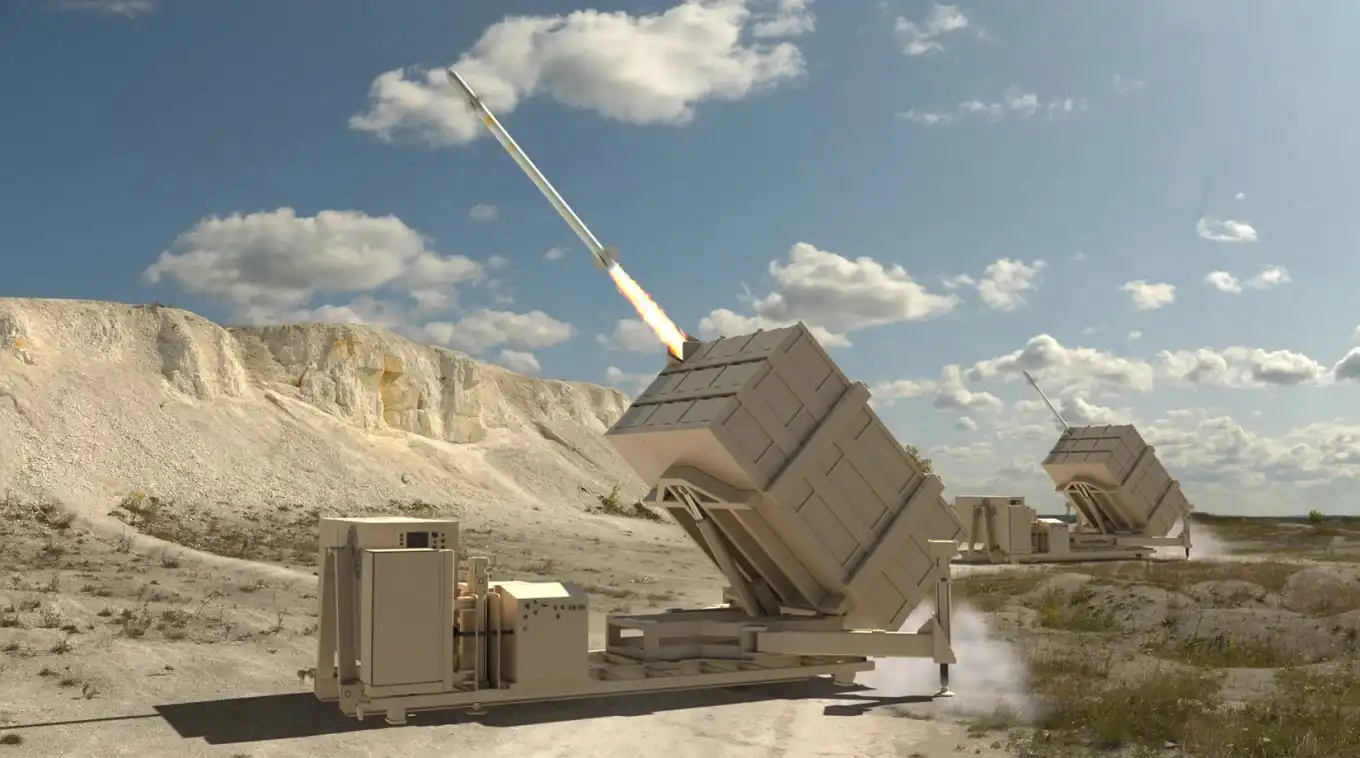
On September 24, 2021, the Army awarded Dynetics, a Leidos subsidiary, a three-year prototype other transaction authority (OTA) agreement for 16 launcher prototypes, 60 interceptors, and associated all-up-round magazines. The launcher, known as Enduring Shield, uses an open architecture designed to accept additional missile types and holds 18 interceptors. Its baseline round is the ground-launched AIM-9X Sidewinder. The system can reportedly also employ the AGM-114L Longbow Hellfire, and the Army has tested the Tamir interceptor used by Iron Dome. The system is designed to integrate with the Army’s Integrated Battle Command System (IBCS).
In November 2024, Dynetics won an IFPC Inc 2 production contract worth up to $4.1 billion, followed by a $617 million FY2026 production order for launchers, retrofitted prototype launchers, magazines, and services, due by November 30, 2029. The FY2026 request sought 62 launchers, 148 AIM-9X missiles, and 24 magazines; CRS does not break out FY2027 quantities.
Nine battalions are planned from FY2026 to FY2033, starting with the 1-51st Air Defense Artillery (ADA) at Joint Base Lewis-McChord, Washington, and ending at Fort Hood, Texas. Guam is the near-term operational priority. A 2023 slip of eight months to a year, tied to the Guam push, moved initial operational test and evaluation from FY2025 to FY2026. The Army told CRS in February 2026 that Guam remains on track, with first shipments in the first quarter of FY2027 and all 20 launchers emplaced by the third quarter ahead of initial operational capability (IOC). Those units will protect Army sites only.
Second Interceptor Race Reopens as Directed Energy Variants Exit IFPC
One Army official has reportedly said the service needs a second round that is “more capable” against lower flying, supersonic cruise missiles. It reportedly envisions “an AIM-120D-like capability” packaged in smaller rounds that fit the 18-round launcher. Lockheed Martin received a prototyping OTA in October 2025, and in September 2026 the Army advanced Lockheed and a Boeing-Anduril team to Phase 2, which covers detailed design, integration, and a competitive capability demonstration. In October 2026, the Army reopened the competition to previously eliminated companies as part of a broader push to shorten acquisition timelines, and separately picked Furientis, Singularity Defense Corporation, Wardstone, and Zone 5 Technologies to demonstrate candidates through the xTech|Disrupt Fires initiative, each receiving $1 million ahead of a live demonstration planned for September 2027. Development is planned through 2029-2030 before low-rate initial production.
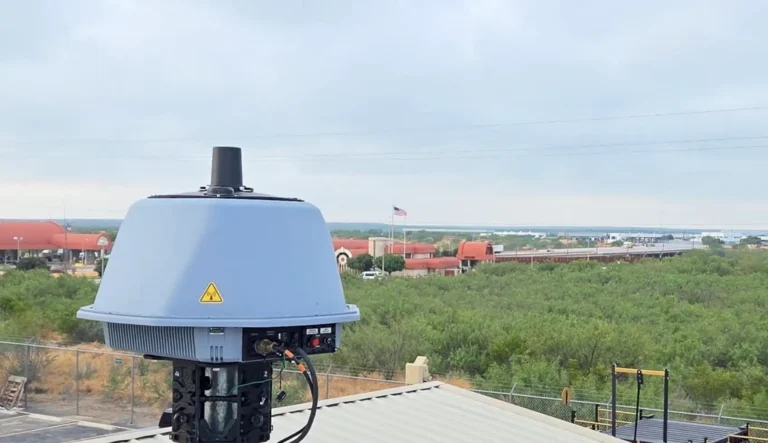
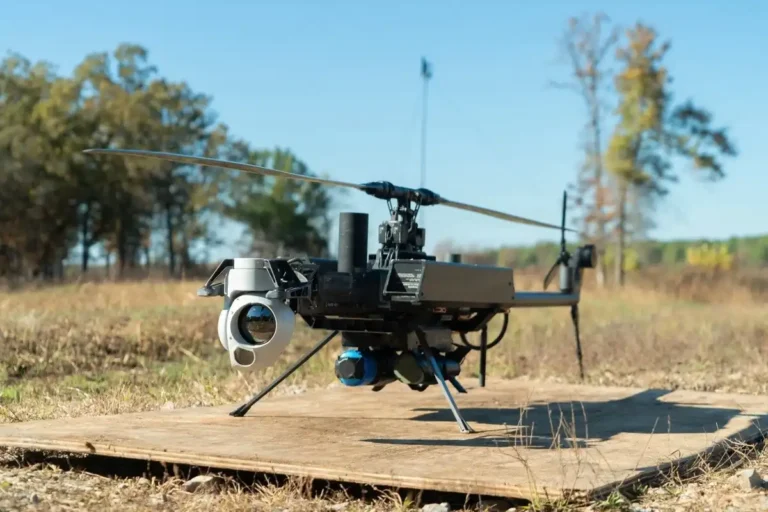
IFPC is now a kinetic-only program. Lockheed Martin’s 300 kW-class IFPC High Energy Laser (HEL), contracted under a July 2023 OTA for two prototypes later cut to one, is completing lab testing in Morristown, New Jersey. It will not be fielded and will instead inform development of the Joint Laser Warfighting System. In September 2026, the Army reportedly decided to divest the variant to leverage Navy-led development of larger-aperture lasers, while still describing directed energy as a combat multiplier. The High-Power Microwave (HPM) variant, aimed at swarms of small UAS weighing about 55 pounds or less, ends the same way: Epirus delivered four prototypes under a $66.1 million January 2023 contract, two more were due by the end of March 2026, and no further procurement is planned.
Analysis: IFPC has narrowed from a three-pronged concept into a missile-centric system whose full value depends on an interceptor that does not yet exist. The AIM-9X gives Enduring Shield a credible answer to UAS and subsonic cruise missiles, but low-altitude supersonic cruise missiles are exactly where the Army concedes its current round falls short. Nearly doubling the budget buys launchers years before a second interceptor reaches production. Without the laser and microwave variants, low-cost drone defeat must come from elsewhere in the layered architecture, and the Army-only mandate on Guam leaves open who defends Air Force and Navy sites there.
The next milestones are the start of Guam shipments this quarter, all 20 launchers in place by mid-2027, and IOC, alongside congressional action on the FY2027 request. CRS flags open questions for lawmakers: whether IFPC units will defend other services’ sites, whether the other services are developing comparable systems, and whether the Army could revisit the HEL and HPM variants. The second interceptor down-select will show whether IFPC Inc 2 can defeat the full cruise missile threat set it was built for.