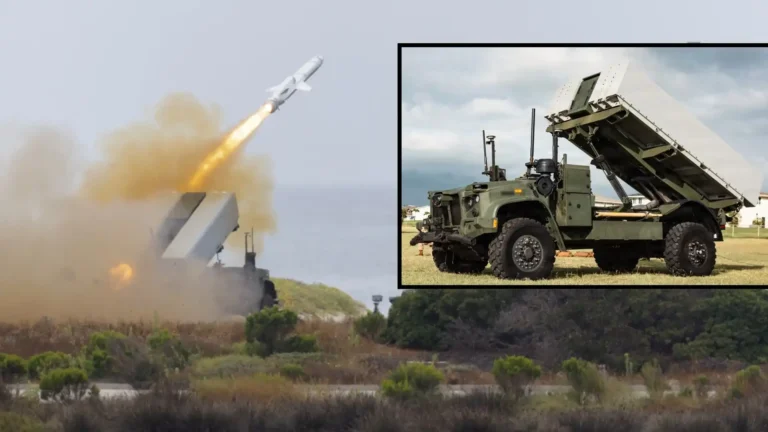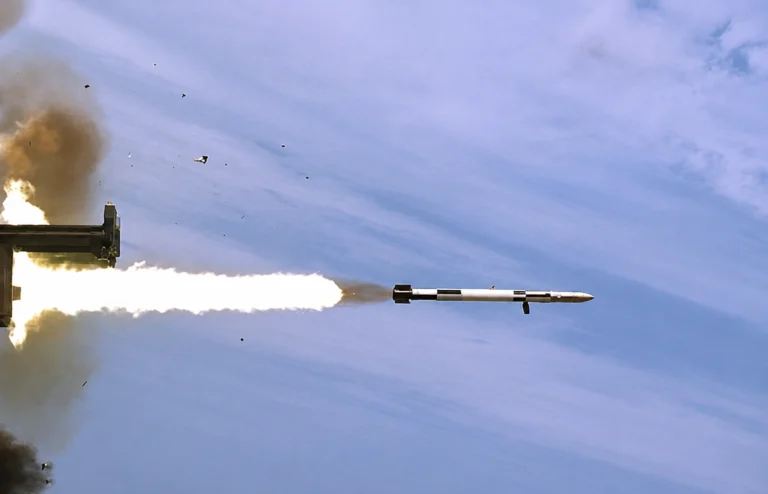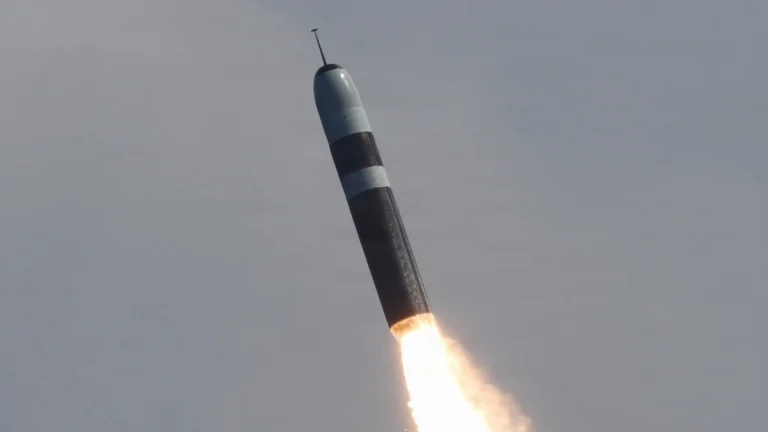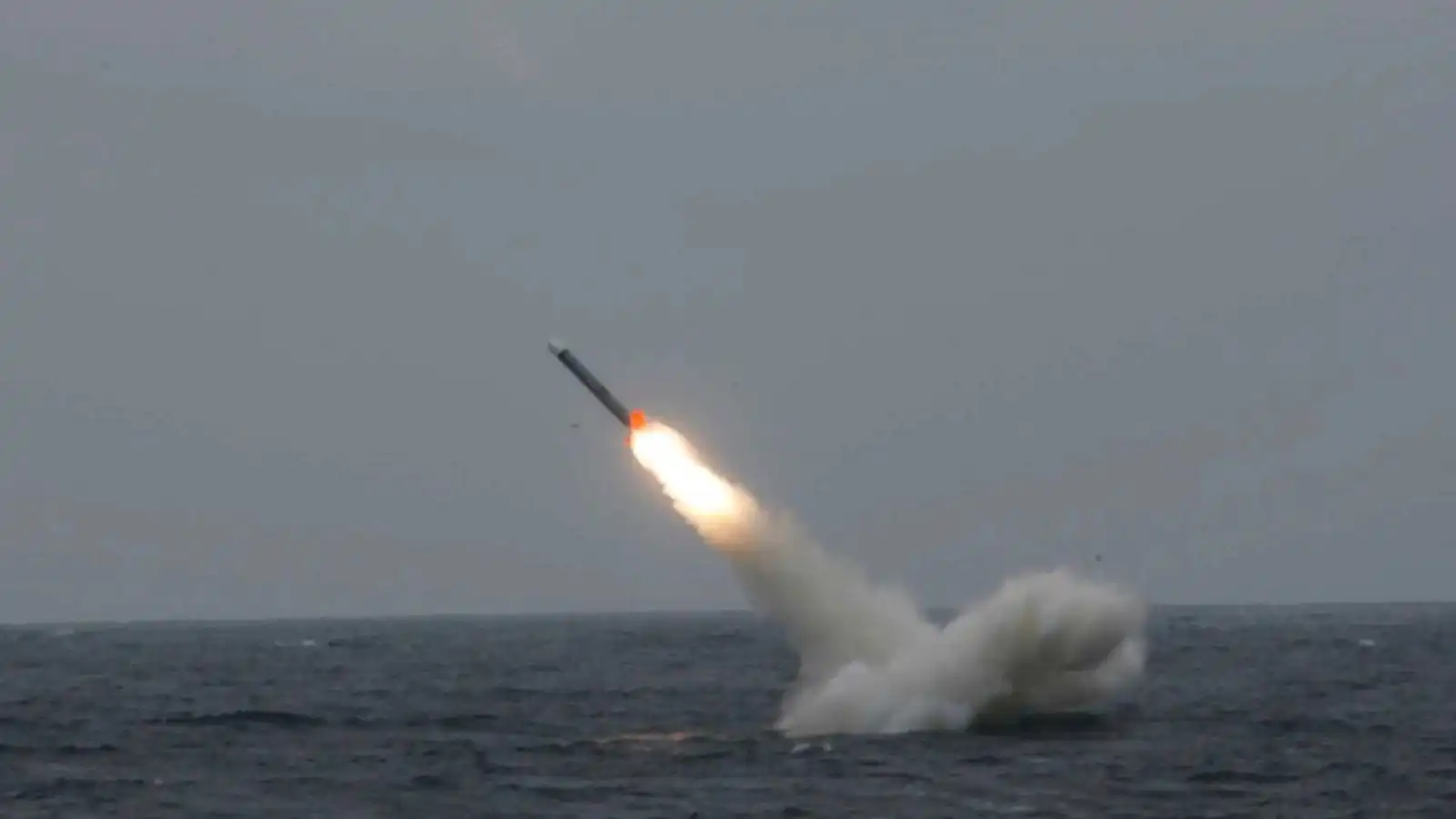
Raytheon has received a U.S. Navy Other Transaction Authority (OTA) agreement to advance development of the SLCM-N nuclear cruise missile (Nuclear-Armed Sea-Launched Cruise Missile), RTX announced on November 24, 2026. The award moves the program out of early concept activities and into a focused development phase covering design maturation, subsystem integration and preparation for prototype demonstrations. Neither the Navy nor Raytheon disclosed the agreement’s value or period of performance.
SLCM-N restores a capability the Navy gave up when it retired the nuclear Tomahawk Land Attack Missile (TLAM-N) following the 2010 Nuclear Posture Review. Proposed in the 2018 review as a regional deterrence option, the program was slated for cancellation in the 2022 review and survived because Congress kept funding it. Section 1640 of the Fiscal Year 2024 National Defense Authorization Act (NDAA) requires initial operational capability (IOC) no later than September 30, 2034, and the FY2026 NDAA added a limited operational deployment by September 2032. That timeline explains the Navy’s reliance on rapid prototyping agreements.
SLCM-N Nuclear Cruise Missile Moves From Concept to Development
The new agreement follows a staged competition run by Navy Strategic Systems Programs (SSP) and Naval Surface Warfare Center (NSWC) Crane through the Strategic and Spectrum Missions Advanced Resilient Trusted Systems (S2MARTS) OTA consortium. On August 22, 2025, SSP selected Leidos, Raytheon, Lockheed Martin, Northrop Grumman and Florida Turbine Technologies for initial flight system design. Launcher and canister agreements followed on September 26, 2025, with Northrop Grumman Mission Systems and Pacific Engineering.
On September 23, 2026, the Navy signed five further prototype agreements worth a combined $743.6 million. Three covered missile development and systems integration, awarded to Leidos subsidiary Dynetics, Raytheon and Northrop Grumman; two covered launch canisters. That work runs through December 31, 2027. Raytheon’s announcement does not say whether its agreement is its share of that package or a separate award, and it does not indicate that the Navy has narrowed the field to a single missile design.
Raytheon’s Advanced Technology team will apply what the company calls a composable weapons approach, building the missile from mature, modular subsystems already proven on other programs to shorten the development cycle. “This contract reflects the critical importance of strengthening our nation’s deterrence and expanding the options available to respond to emerging threats,” said Colin Whelan, president of Advanced Technology at Raytheon.
Publicly available information indicates an All-Up Round combining an expendable underwater launch booster, the missile body and its canister, followed by powered cruise flight. The only open-source range benchmark is the roughly 2,500 km attributed to the retired TLAM-N; the SLCM-N range requirement has not been disclosed.
Industrial Team, W80-5 Warhead and Virginia-Class Integration
Raytheon will draw on contributions from Anduril Rocket Motor Systems, Divergent and Williams International. The company did not assign roles, but each partner’s product line suggests a fit: Anduril produces solid rocket motors, Divergent builds additively manufactured airframe structures, and Williams International makes the F107 turbofan that powers the Tomahawk family. The mix pairs an established cruise missile engine supplier with two non-traditional entrants, in line with Pentagon efforts to widen a solid rocket motor base long concentrated in two companies.
The warhead is the W80-5, a new member of the W80 family announced in January 2026, with Lawrence Livermore National Laboratory as design agency. The Nuclear Weapons Council authorized the W80-5 to enter Phase 6.3, development engineering, in FY2026, according to the NNSA FY2027 budget justification. Its sibling, the W80-4, will arm the Air Force’s Long-Range Standoff (LRSO) cruise missile, for which Raytheon is prime contractor and has already run combined missile and warhead ground tests with Sandia National Laboratories.
The first launch platform is the Virginia-class attack submarine, using its Virginia Payload Tubes and, on Block V boats, the Virginia Payload Module. Vice Admiral Johnny Wolfe, then SSP director, told lawmakers in May 2025 that the Navy was still working through the challenges of integrating the missile on Virginia-class boats. The administration has also named the planned Trump-class guided missile battleship, BBG(X), as a future SLCM-N carrier.
Analysis: Raytheon enters this phase with the most directly relevant portfolio of the three missile teams: prime on Tomahawk, prime on LRSO and a partner in W80-family warhead integration testing. That overlap could reduce integration risk on a program with almost no schedule margin, since the 2032 limited deployment sits two years ahead of the statutory IOC date. The larger exposure is financial. SLCM-N has relied on $1.92 billion in mandatory funding from the 2025 reconciliation law (P.L. 119-21), the FY2027 budget request omitted it, and the National Nuclear Security Administration (NNSA) administrator has said resources will be sought in FY2028. One-time money against a fixed legal deadline leaves little room for slippage.
The next markers are the prototype demonstrations, for which no date has been given, the December 31, 2027 end of the current missile and canister agreements, and the FY2028 budget request, which will show whether SLCM-N moves onto a regular appropriations line. Still unknown: the agreement’s value, the missile’s range and payload requirements, and whether the Navy will carry more than one design toward the September 2032 deployment.