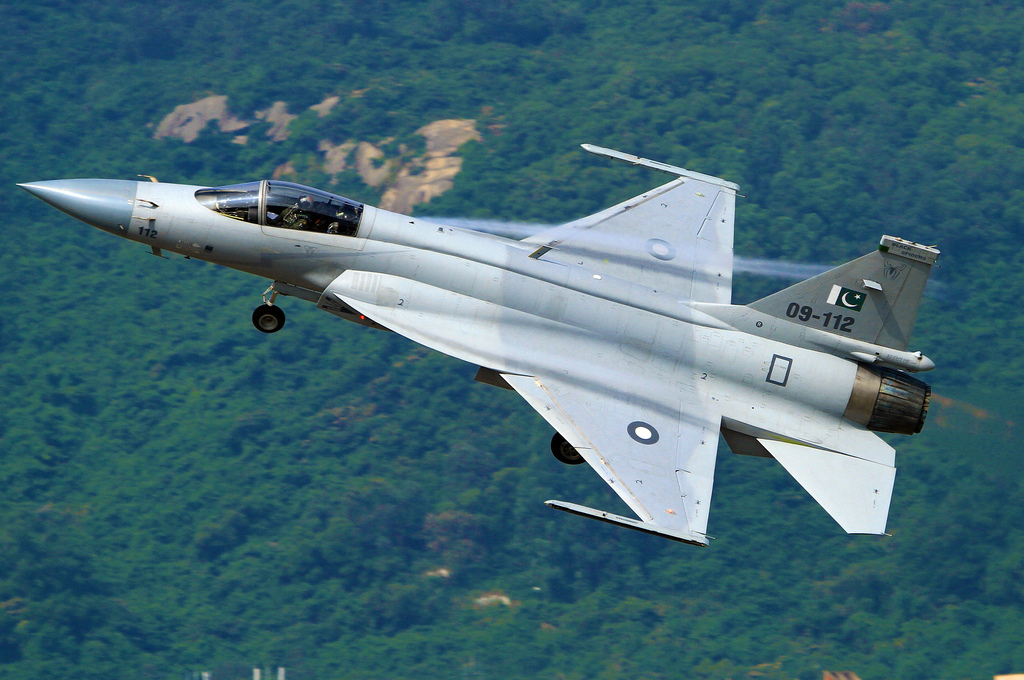
Pakistan Air Force fighter jets are taking part in strikes against Yemen’s Houthi movement, a senior Pakistani military official said on October 7, 2026, the first acknowledgment from inside Pakistan’s military that its air arm has joined Saudi Arabia’s renewed war on the Iran-backed group. A second official, also speaking anonymously, said Islamabad’s role would focus on degrading Houthi drone and missile threats through air support, not a ground offensive in Yemen.
The disclosure follows the first activation of the Mecca Joint Defense Agreement, signed by Saudi Arabia, Pakistan and Türkiye in Mecca on August 7, 2026. At an emergency meeting in Riyadh on October 5, the three agreed to rapidly deploy Pakistani and Turkish forces to the kingdom. The pact extends to Türkiye the Strategic Mutual Defense Agreement Riyadh and Islamabad signed in September 2025, which treats an attack on either as an attack on both. Since the meeting, Houthi strikes on Abha and King Khalid international airports have killed three people and injured 36, according to Saudi authorities.
Pakistani Fighter Jets in Saudi Arabia: What Islamabad Has Deployed
Neither official disclosed how many aircraft are involved, which targets have been hit, when the strikes began or whether Pakistani jets are operating over Yemeni territory, and Pakistan’s military declined to comment. Lt. Gen. Ahmed Sharif Chaudhry, director general of Inter-Services Public Relations, confirmed on October 7 that Pakistani forces are stationed in the kingdom but would not say whether they would operate across the border, describing any involvement as “defensive in nature.” Defense Minister Khawaja Asif said on October 5 that Pakistani and Turkish forces were playing a supporting role, including reconnaissance, with Saudi forces doing the fighting.
The known order of battle points to the JF-17 Thunder. Riyadh confirmed in April that a Pakistani contingent of fighter and support aircraft had arrived at King Abdulaziz Air Base in the Eastern Province, and security sources reported in May that the package comprised a squadron of about 16 aircraft, mostly JF-17s, together with roughly 8,000 personnel and an air defense system, initially assigned to advisory and training duties. David O. Smith, a former U.S. Army attaché in Pakistan and former Defense Intelligence Agency analyst, said the contingent includes Pakistan Air Force and Army Air Defense elements likely tasked with securing oil infrastructure.
Pakistani aircraft would be operating inside a much larger air effort. The Saudi-led coalition says 100 fighter jets now support the Yemeni government’s counteroffensive to retake the Red Sea coast the Houthis seized in September. The block standard of the deployed JF-17s, their unit designations and any reinforcements since the October 5 meeting remain undisclosed.
JF-17 Thunder Range and Payload Against Houthi Launch Sites
Publicly available specifications indicate the JF-17, co-developed by Pakistan Aeronautical Complex and China’s Chengdu Aircraft Corporation, is a single-engine lightweight multirole fighter powered by a Klimov RD-93 afterburning turbofan of roughly 84 kN, with a top speed near Mach 1.6, seven to eight hardpoints and an external load reported at 3,400 to 3,600 kg. Block II airframes added an in-flight refueling probe; Block III introduced the KLJ-7A active electronically scanned array radar and the PL-15E beyond-visual-range missile. The type carries Chinese and Pakistani precision-guided munitions, but the weapons used against Houthi targets have not been disclosed.
King Abdulaziz Air Base in Dhahran lies roughly 1,230 km from Saada, the Houthi stronghold near the Saudi border, and about 1,360 km from Sanaa. Published JF-17 combat radius figures range from about 900 km on internal fuel to between 1,350 and 1,740 km with external tanks, depending on source and load. Strike sorties from Dhahran with a meaningful weapons load would therefore require aerial refueling or forward staging at southern facilities such as King Khalid Air Base in Khamis Mushait, about 180 km from Saada. Neither arrangement has been confirmed.
The stated focus on drone and missile threats maps onto the target set the coalition has prioritized: launchers, missile storage sites and command centers. Coalition spokesman Maj. Gen. Turki al-Maliki said Saudi forces destroyed the ballistic missile launcher used in the October 7 attack on Riyadh. The risk to aircrews is concrete: the Houthis shot down a Royal Saudi Air Force F-15SA near Marib on September 16, reportedly with a locally produced surface-to-air missile.
Analysis: Pakistan is entering the Yemen war on terms built to preserve a distinction the strikes themselves erode. Iran’s Foreign Ministry said on October 4 it hoped reports of a Pakistani deployment for the Yemen war were untrue, and Islamabad remains a key mediator between Washington and Tehran. Pakistan’s parliament voted for neutrality in Yemen in April 2015 while pledging to defend Saudi territory and the holy sites. Framing strikes as interdiction of launchers aimed at the kingdom keeps the posture deniable, and a deployed fleet built mainly around JF-17s rather than US-supplied F-16s limits end-use friction with Washington. But every sortie into Yemen moves Pakistan toward co-belligerence and narrows its room as a mediator.
Watch for on-the-record confirmation of strike operations, evidence of Pakistani aircraft over Yemen and Tehran’s response. Türkiye’s parliament, which must authorize foreign troop deployments under Article 92 of the constitution, has yet to ratify the pact, and Ankara has not confirmed any deployment. Duration hinges on Riyadh’s war aims: Yemeni government forces now say they intend to retake Sanaa, held by the Houthis since 2014, which would turn a deterrence campaign into a far longer war.