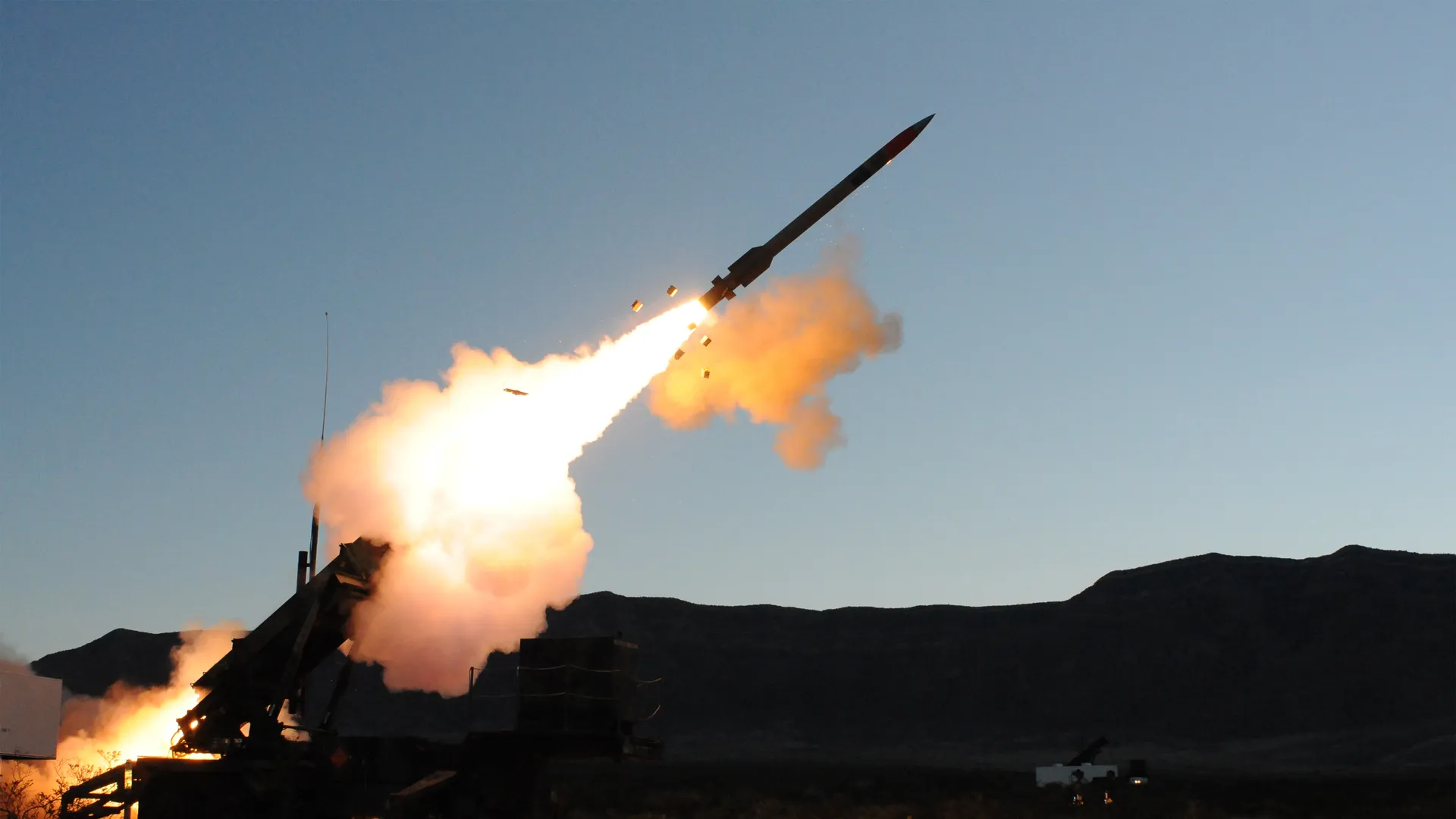
The U.S. military has deployed two additional Patriot air and missile defense batteries to protect oil and gas facilities in Saudi Arabia and Qatar, according to two U.S. officials and a regional source cited in reporting on October 1, 2026. Both were sent in recent weeks: one to Saudi Arabia in September to cover a key oil facility, the other to Qatar to defend a natural gas site.
The deployments are meant to assure Riyadh and Doha that Washington will defend their energy infrastructure if President Donald Trump orders a resumption of major combat operations against Iran. Trump said on October 1 that he is weighing a renewed bombing campaign in the coming weeks: “Now I have to make a decision: either Iran signs the deal, or it won’t exist any longer.” The warning follows his September 26 rejection of an Iranian proposal to reopen the Strait of Hormuz, seven months after the United States and Israel launched the war on February 28, 2026.
Why the Patriot Batteries Hinge on Saudi Airspace Access
The moves trace back to early August, when Trump weighed a large-scale attack that included strikes on Iranian energy infrastructure. Saudi and Qatari leaders lobbied against the plan, warning that Iran would retaliate against their oil and natural gas facilities. U.S. officials said those appeals were a key reason Trump shelved the strikes in favor of an economic pressure campaign.
The Gulf concern rests on recent precedent. On March 2, 2026, debris from intercepted drones forced a temporary shutdown of Saudi Aramco’s Ras Tanura refinery. On March 18, an Iranian missile attack on Qatar’s Ras Laffan Industrial City, the world’s largest liquefied natural gas export facility, caused what QatarEnergy described as extensive damage.
Renewed major combat operations would require Saudi permission to use the kingdom’s airspace, and officials assess that Riyadh is unlikely to grant it without confidence that its oil facilities are protected. Each battery therefore functions as collateral in an access negotiation as much as a point-defense asset.
Key details remain undisclosed: the specific facilities covered, the deploying units, launcher counts and interceptor loads. Capt. Tim Hawkins, a spokesman for U.S. Central Command (CENTCOM), declined to comment. Both Saudi Arabia and Qatar already operate national Patriot systems, with Qatar fielding PAC-3 MSE interceptors, so the U.S. batteries most likely add fire units and magazine depth to existing networks rather than create new coverage.
PAC-3 MSE Interceptors and the Strain on U.S. Patriot Stocks
A U.S. Army Patriot battery is built around the AN/MPQ-65 radar, an AN/MSQ-104 Engagement Control Station and multiple M903 launching stations. Publicly available specifications indicate each M903 can carry up to 12 Patriot Advanced Capability-3 Missile Segment Enhancement (PAC-3 MSE) interceptors, or a mixed load of six MSE and eight PAC-3 Cost Reduction Initiative rounds. The PAC-3 MSE is a hit-to-kill interceptor using an active Ka-band radar seeker and a dual-pulse solid rocket motor that extends its engagement envelope against tactical ballistic missiles, cruise missiles and aircraft.
At upward of $4 million per round, every new battery draws on a constrained inventory. Since the war began, the military has pulled Patriot batteries and interceptors into the Middle East from other combatant commands, raising readiness concerns elsewhere. A July 27, 2026 assessment by the Center for Strategic and International Studies estimated remaining U.S. Patriot stocks at 759 to 827 interceptors, roughly a third of the estimated 2,300 on hand before the war. The administration disputes that shortages are constraining operations.
The industrial response is underway but slow to deliver. The Army awarded Lockheed Martin a contract worth up to $58.6 billion for PAC-3 MSE production covering fiscal years 2026 through 2032, and the company has pledged to triple capacity by the end of 2030. L3Harris announced a $4.7 billion award on September 8, 2026, for the interceptor’s motors and related components.
Theodore Roosevelt and Makin Island Lead Wider U.S. Force Buildup
The Patriot moves are part of a broader flow of warships, fighter aircraft and troops into the region ahead of a possible resumption of the war. The USS Theodore Roosevelt (CVN-71) and its carrier strike group left San Diego without announcement on September 27, 2026, and are expected in the Middle East around mid-November.
The Roosevelt would join the USS George H.W. Bush (CVN-77), in the region since March, and the USS George Washington (CVN-73), which deployed from Japan over the summer and has operated in theater for about a month. One U.S. official said the arrival could give the region up to three carrier strike groups. A second official said no decision has been made on whether the Roosevelt will relieve a deployed carrier or add to the force.
The Makin Island Amphibious Ready Group, three amphibious ships carrying thousands of Marines from the 13th Marine Expeditionary Unit, sailed on September 28 and is due in theater by the end of November. It will join another amphibious ready group and Marine expeditionary unit deployed over recent months. The George Washington’s redeployment also leaves the U.S. 7th Fleet without its forward-deployed carrier in Japan.
Analysis: The deployments show how Gulf host-nation leverage now shapes U.S. escalation options against Iran. Saudi and Qatari objections helped stop energy-sector strikes in August; Washington is now trading air defense coverage for the airspace and political cover a renewed campaign would require. The cost is paid in interceptors. With stocks depleted and expanded production years from full rate, every battery tied to a Gulf refinery or gas plant is one unavailable to U.S. Indo-Pacific Command, U.S. European Command or Ukraine.
The next markers are Trump’s strike decision, which he said on September 26 he was considering for after the November 3 midterm elections, and the arrival of the Roosevelt and Makin Island groups in November. Still unanswered: which facilities the new batteries cover, whether Riyadh will open its airspace, and whether the theater will host two carriers or three.