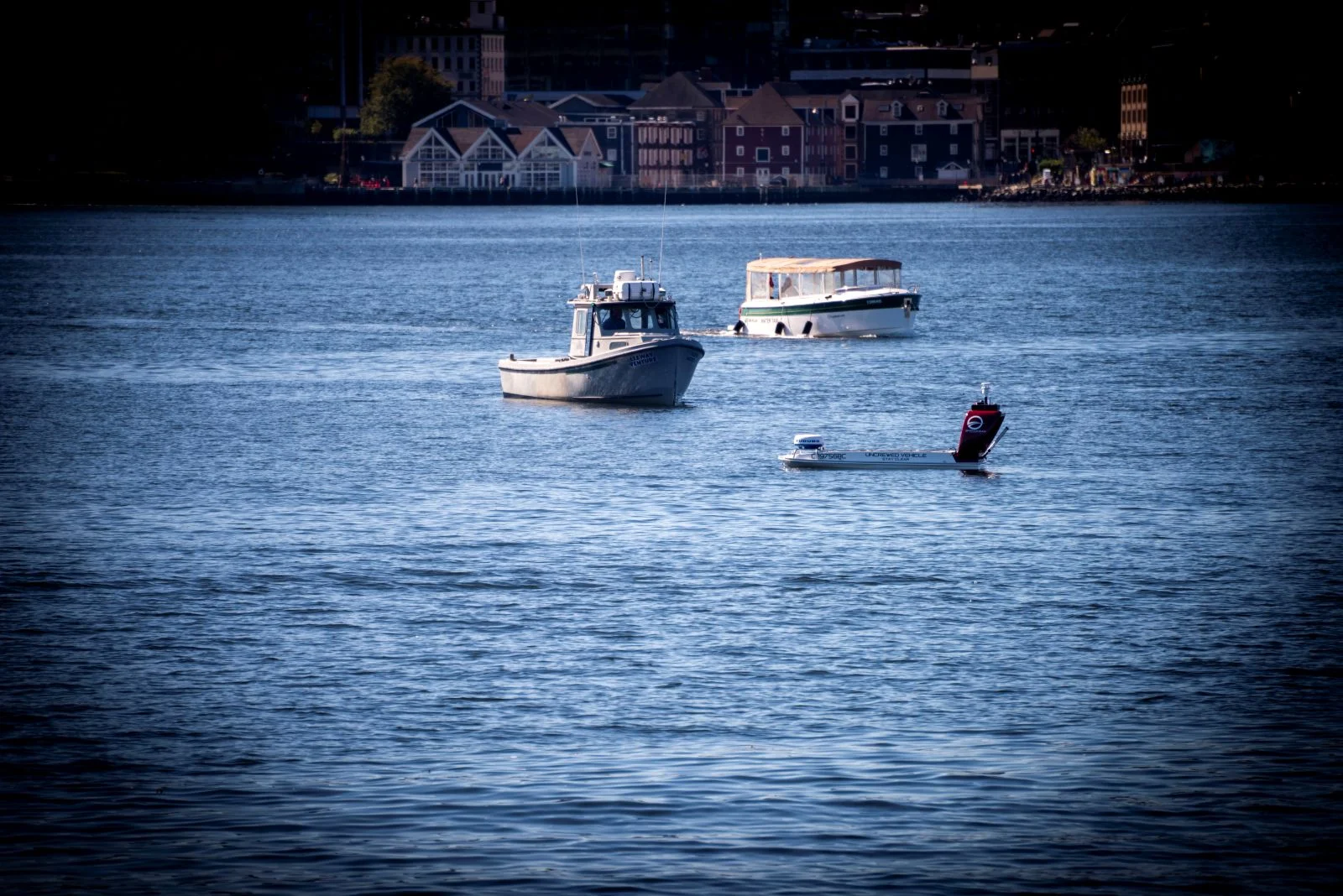
NATO’s Allied Command Transformation (ACT) closed its 2026 Innovation Continuum on October 9 with SHINE, a live experimentation event at the Centre for Ocean Ventures and Entrepreneurship (COVE) in Dartmouth, Nova Scotia, where operators, companies and researchers tested emerging technologies against operational problems from Arctic surveillance to counter-drone defense.
SHINE, held October 5 to 9, 2026, was the fourth and final in-person phase of the continuum’s third annual cycle and the first edition staged in Canada. ACT, NATO’s warfare development command in Norfolk, Virginia, built the framework to shorten the path from prototype to fielded capability, a gap the pace of battlefield adaptation in Ukraine has made costlier. One hundred companies took part, 30 percent of them Canadian, according to COVE chief executive Melanie Nadeau.
How the NATO Innovation Continuum Moved From Sofia to Dartmouth
The 2026 cycle ran through four sequenced phases. SPARK, the scoping phase, convened in Sofia, Bulgaria, in February to match candidate technologies with military use cases. IGNITE developed those projects into operational scenarios in Warsaw, Poland, from May 5 to 7. GLOW, held at COVE from September 1 to 3, handled system integration and physical dry runs. SHINE then assessed each project’s operational relevance through live experimentation rather than static display.
Latvian Brigadier General Sandris Gaugers, ACT’s Assistant Chief of Staff for Multi-Domain Force Development, described the model as a way to align field requirements with industry roadmaps and move viable products toward commercialization. Handing competing companies a shared operational problem, he argued, produces both answers and cooperation, while early testing with end users clarifies how new tools fit existing capabilities.
The 2026 lines of effort spanned artificial intelligence (AI) for command and control and military planning, emerging sensors for targeting, operations in contested electromagnetic environments, cyber and quantum threats, cognitive warfare, counter-uncrewed aerial systems (C-UAS) and critical undersea infrastructure protection. The NATO-Ukraine Joint Analysis, Training and Education Centre (JATEC) fed battlefield experience from Ukraine into smart logistics and sustainment work.
Participation also widened beyond the Alliance. The 2026 cycle was the first in which Australia, Japan, South Korea and New Zealand were eligible to compete, and Japanese observers attended SHINE. Türkiye led work on seabed warfare and undersea infrastructure, amphibious warfare, and chemical, biological, radiological and nuclear (CBRN) challenges; its Secretariat of Defense Industries (SSB) signed a memorandum of understanding with ACT during the event. Companies that have progressed through the Defence Innovation Accelerator for the North Atlantic (DIANA) used SHINE to continue testing with military users.
Arctic Surveillance and a GIUK Gap War Game Test Autonomy
The most visible experiment unfolded over Dartmouth Cove on October 7, when a Finnish autonomous airship stayed aloft for most of the day while Canadian and Icelandic systems operated in the water below to demonstrate combined surveying and target-detection capability. The firms belong to an Arctic surveillance team; the specific Canadian and Icelandic systems have not been publicly identified.
The airship comes from Kelluu, which builds 12-meter uncrewed airships at its factory in Joensuu, Finland. Publicly available specifications indicate hydrogen fuel cells power the platform, delivering more than 12 hours of endurance per sortie and cold-weather operation down to minus 30 degrees Celsius. The company says the airship can navigate without satellite positioning, a prerequisite for persistent intelligence, surveillance and reconnaissance (ISR) under jamming or spoofing. That profile places it as a persistent sensor layer between satellites, limited by revisit rates and cloud cover, and small tactical drones that typically stay aloft for less than two hours. Kelluu, a DIANA participant backed by the NATO Innovation Fund, has opened an office in Ottawa to pursue Canadian Arctic requirements.
On October 8, a war game ran in an adjacent building on a map of the Greenland-Iceland-United Kingdom (GIUK) gap, the North Atlantic chokepoint Russian Northern Fleet submarines must cross to reach the open Atlantic. Red and blue teams used the scenario to probe the limits of participants’ technologies in cyber resilience, uncrewed systems and AI training. Nick Price, a NATO scientist and the war game’s project lead, said the military personnel and veterans at the table quickly identified how far they were prepared to trust autonomous systems. ACT states that any uncrewed system in the experimentation remains under ultimate human control.
Simon Purton, ACT’s Branch Head for Innovation, called SHINE the place “where innovation meets operational reality,” a setting to test assumptions and build evidence on what works.
Analysis: The continuum’s value lies less in any single demonstration than in the institutional follow-through it now generates. Work from the 2025 cycle on quantum-safe NATO Communications and Information Systems (CIS) has become an ACT-led project to protect Alliance networks against cryptographically relevant quantum computers, and Türkiye has replicated the model nationally through its ALFA 2026 initiative. The GIUK war game exposed the harder constraint: operator trust in autonomy, not sensor performance, may set the pace of adoption. Without national procurement lines or NATO common funding behind the strongest projects, SHINE risks producing well-documented prototypes rather than fielded systems.
Findings from SHINE will feed the Innovation Continuum report and shape follow-on experimentation, including activities tied to Task Force X-Arctic, ACT’s beacon project for High North awareness. ACT has not publicly detailed which 2026 projects will advance or when the report will be released. The ACT-SSB memorandum and Kelluu’s Ottawa expansion are the first indicators of whether experimentation in Dartmouth translates into allied acquisition.