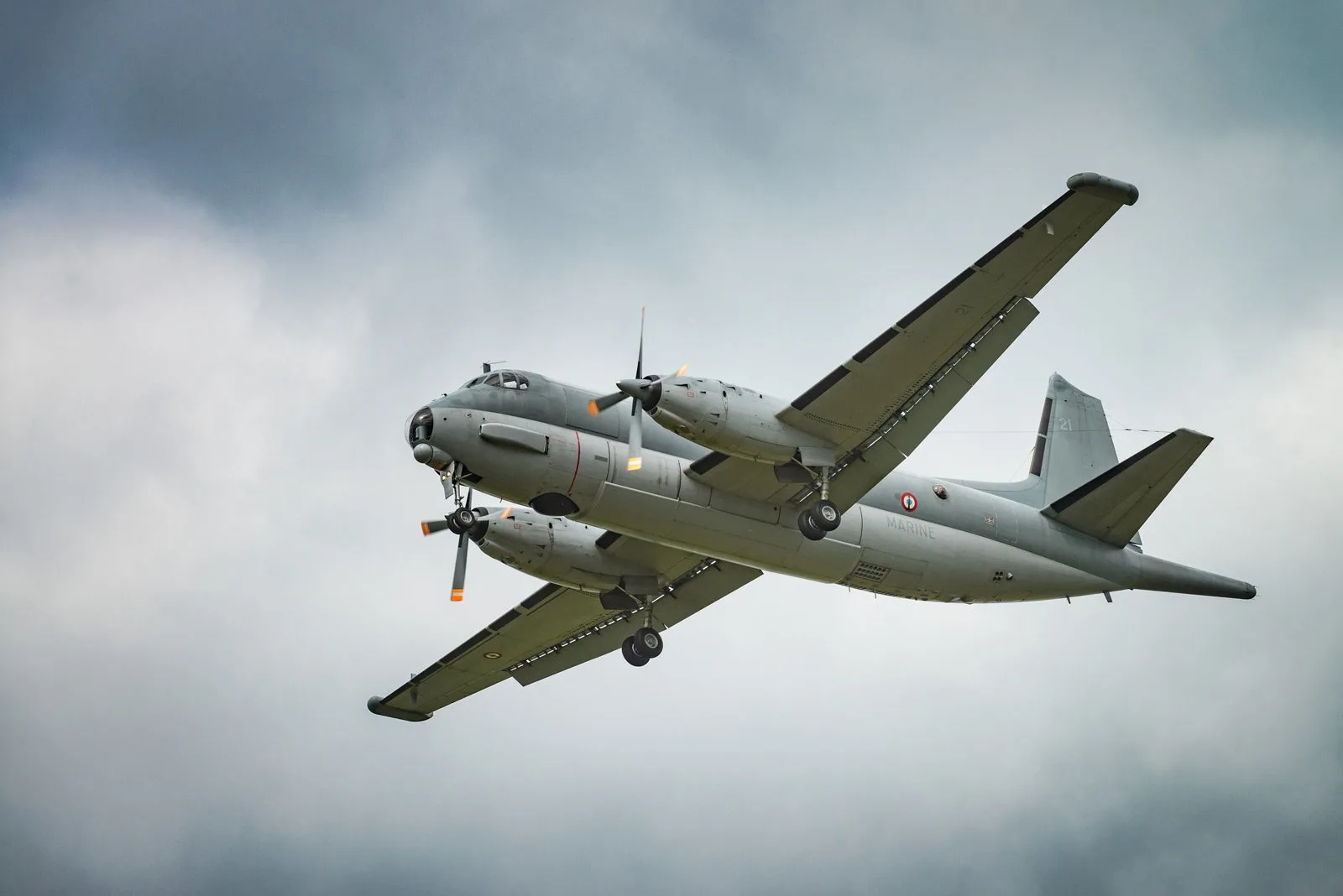
A French Navy Atlantique 2 maritime patrol aircraft has been operating in the Black Sea region for two weeks and has contributed to rescue operations, French Foreign Minister Jean-Noël Barrot said in Varna on October 24, while a U.S. Navy P-8A Poseidon is flying reconnaissance patrols off Bulgaria at Sofia’s request. The French aircraft operates under NATO arrangements. Flight-tracking data showed it arriving at Constanța, Romania, on the evening of October 18, 2026, as first reported by Romanian outlet Curs de Guvernare. Together, the two aircraft anchor allied surveillance of the western Black Sea after drone strikes on at least eight merchant vessels off the two NATO members since October 5.
The strikes have hit a shipping route Ukraine uses for its exports: the Danube, the Sulina Canal and the coastal lanes off Romania and Bulgaria. At least 30 seafarers have been killed or reported missing. The latest loss came on October 23, when the Comoros-flagged cargo ship Khoryv capsized about 13 nautical miles (24 km) east of Constanța after a drone strike that Romanian President Nicușor Dan attributed to Russia. One of its 13 crew members died and three remain missing.
How Atlantique 2 and P-8A Poseidon Reinforce Black Sea Maritime Patrol
The Atlantique 2, or ATL2, is one of the few maritime patrol aircraft designed from the outset for anti-submarine warfare rather than adapted from an airliner. Publicly available specifications indicate two Rolls-Royce Tyne RTy.20 Mk 21 turboprops rated at 6,100 shp each and a maximum flight time of 18 hours. The French Navy has modernized 18 airframes to the Standard 6 configuration, the last delivered in February 2026. The upgrade adds a Thales Searchmaster active electronically scanned array (AESA) radar derived from the Rafale’s RBE2, a new digital acoustic processing subsystem, a new electro-optical sensor and an updated version of the LOTI mission software.
Here, sensors matter more than the weapons bay. Flying low and slow for long periods, the ATL2 can search for survivors and debris, classify vessels waiting at the Sulina anchorage and document strike damage for investigators. French ATL2s already fly NATO vigilance missions over Romanian waters, including during the Neptune Strike exercise in May.
The P-8A trades loiter for reach. Derived from the Boeing 737-800 and powered by two CFM56-7B turbofans, it carries the AN/APY-10 multi-mission radar, electronic support measures and up to 129 sonobuoys; U.S. Navy figures cite a 1,200-nautical-mile radius with four hours on station. It flew from Naval Air Station Sigonella, Sicily, to Varna on the evening of October 18 and began circling off the Bulgarian coast. Bulgarian Prime Minister Rumen Radev said on October 20 that the patrols started after Sofia asked allies for help following strikes in Bulgaria’s exclusive economic zone (EEZ).
Eight Merchant Ships Struck off Romania and Bulgaria Since October 5
The sequence began on October 5, when the St. Kitts and Nevis-flagged Royad Mammadov, carrying corn, sank after a fire in Romania’s EEZ; two crew members died and Ukraine blamed Russian drones. On October 6, two ships were hit in Bulgaria’s EEZ; one of them, the Togo-flagged Alfa Watan, sank with 10 crew missing. On October 13, drones struck two cargo ships off Bulgaria: the Guinea-Bissau-flagged HS Dignity sank about 17 nautical miles east of Krapets with 11 crew missing, while the Maltese-flagged Chelsea 3, hit by three drones about 18 nautical miles east of Byala, was later towed to Burgas.
Strikes then shifted to the Sulina anchorage, where ships wait to enter the Danube. The Comoros-flagged tanker Yara J caught fire late on October 14 inside Romanian territorial waters; its crew was unharmed. Hours later, the San Marino-flagged chemical tanker Wine Trader was struck about 13 nautical miles southeast of Sulina, and seven of its 12 crew were reported missing. A NATO military source has said both tankers were hit by Russian drones.
On October 17, two Romanian Air Force F-16s shot down two drones over Romanian territorial waters off Sulina that Romanian authorities said were heading toward merchant ships. Acting Defense Minister Radu Miruță said their speed, roughly 450 km/h (280 mph), pointed to the Russian jet-powered Geran-4. Ukraine’s Main Intelligence Directorate (HUR) assesses that type at up to 500 km/h and 450 km of range, with a 50 kg or 90 kg warhead. Romania has recorded 35 unauthorized drone incursions in 2026, against nine in all of 2025.
NATO’s October 20 Package: Patrol Aircraft, Radars, and Forensic Teams
NATO Secretary General Mark Rutte met Dan and Radev in Brussels on October 15 and said the alliance would adjust its deterrence and defense posture in the Black Sea. After the October 17 shootdowns, acting Romanian Foreign Minister Oana Țoiu said: “Our armed forces have prepared for an intensification of hybrid interference and will continue to prioritize air defense and maritime security.”
After the North Atlantic Council met at Romania’s request on October 20, a spokesman for Supreme Headquarters Allied Powers Europe (SHAPE) said allies have sent or will send additional maritime patrol aircraft, radar systems, drones, intelligence personnel and explosive exploitation teams. NATO has not disclosed numbers, contributing nations or basing. Bulgaria has separately requested combat aircraft and anti-drone systems.
The aircraft-heavy mix reflects legal geography. Türkiye has restricted warship transits of the Turkish Straits under the 1936 Montreux Convention since 2022, and allies from outside the region have kept surface combatants out of the Black Sea, leaving NATO’s naval presence to the Romanian, Bulgarian and Turkish fleets.
Analysis: The NATO package is built for awareness and attribution, not interception. Patrol aircraft, radars and explosive exploitation teams can map the surface picture around Sulina, recover fragments and turn national accusations into evidence allies can act on collectively. They do not close the kill chain against a jet-powered drone crossing open water at 450 km/h. That still rests on national fighters such as Romania’s F-16s, ground-based radar cueing and whichever counter-drone systems allies actually field. Until that layer thickens, the corridor will remain contested and Ukraine’s Danube exports exposed.
The next decision points are the composition and basing of the promised NATO assets, Romania’s proposal for a joint NATO command for the Black Sea, and progress on the EU Maritime Security Hub for the Black Sea. Forensic analysis of drone fragments recovered in Bulgaria will shape how far allies go on formal attribution.