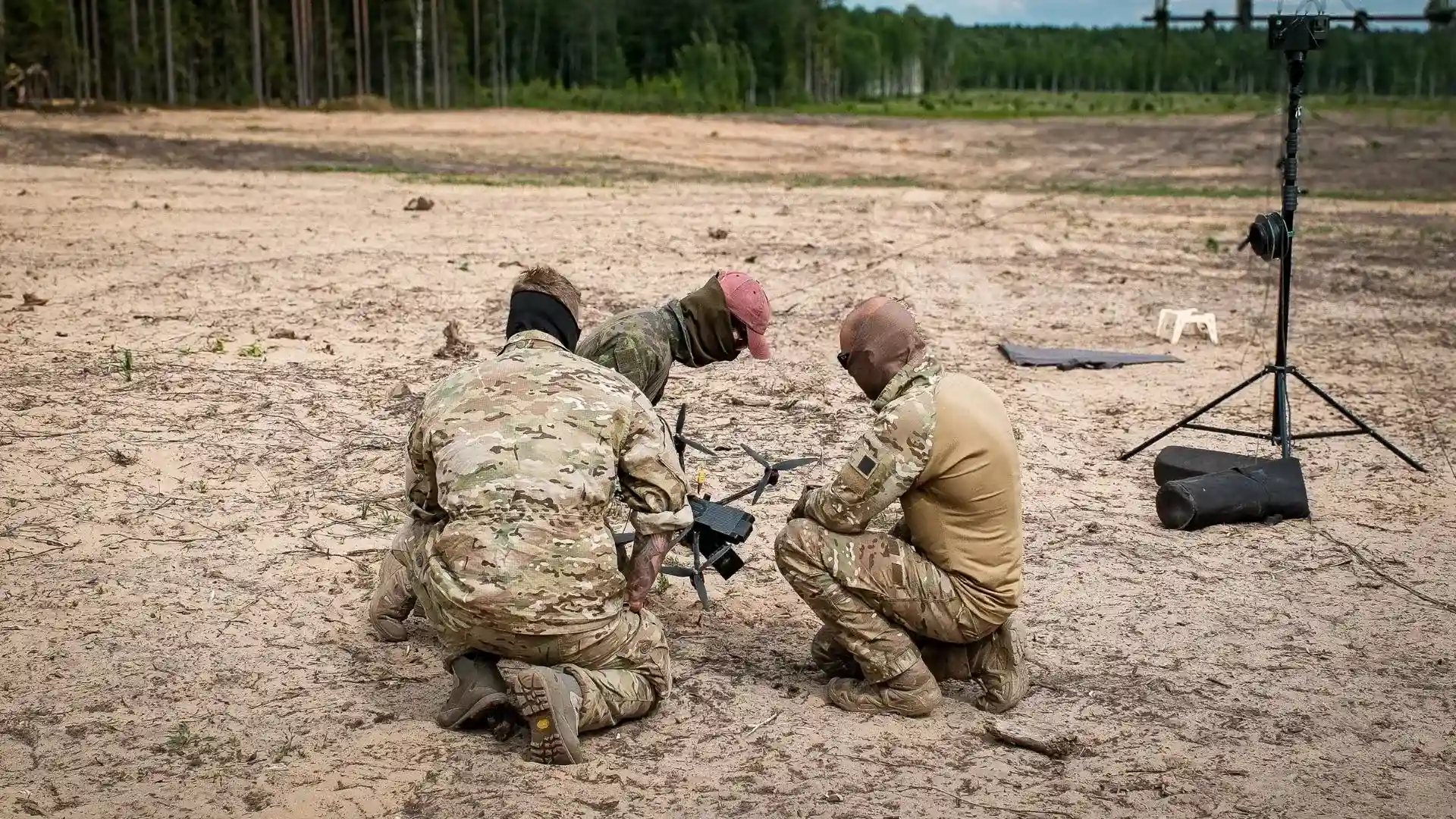
The European Defence Agency (EDA) will run new operational exercises in 2027 to develop two pilot Drone Technology Hubs, one at the Selonia military training area in Latvia and one in Scheveningen, the Netherlands, the agency announced on October 29, 2026. The hubs are the first nodes of a planned European network designed to move drone and counter-drone innovation from industry to armed forces faster.
The initiative stems from the EU’s Priority Capability Area on Drone and Counter-Drone Systems (PCA DCDS), one of nine areas where EU leaders want accelerated progress toward defence readiness by 2030. Latvia, the Netherlands, Croatia, Denmark and Spain lead the PCA DCDS.
The hubs also fall under the Drone and Counter-Drone European Resolve (DECODER) project, which the Council of the EU approved on September 28, 2026 as one of five European Defence Projects of Common Interest (EDPCIs), making it eligible for funding through the European Defence Industry Programme (EDIP). According to the European Commission, DECODER brings together most EU member states plus Norway and Ukraine, with an indicative investment of €3.5 billion to €5 billion by 2033.
Drone Technology Hubs Split Between Land, Air, and Seabed Missions
Selonia will host the land-based hub, covering aerial and ground drones as well as the full counter-drone chain: detection, identification, tracking and defeat of unmanned systems. It is the largest military training ground in the Baltics. It hosted the first European drone pilot training, organised by the EDA and the Latvian armed forces from May 31 to June 5, 2026, where first-person view (FPV) pilots from 14 member states trained on strike and interception scenarios. Latvia opened a dedicated drone testing facility there in June 2024 for regular trials of unmanned aerial vehicles and electronic warfare equipment by national firms and allies.
The Scheveningen hub will focus on maritime and seabed security, in particular shallow-water counter-unmanned maritime systems. The mission targets small uncrewed surface and underwater vehicles threatening ports, subsea cables and offshore energy sites. It builds on SABUVIS II, a €3.7 million Polish-led EDA project on swarming autonomous underwater vehicles completed in February 2026.
Mutual Recognition of Test Results: What Changes for Drone Makers
Both hubs will follow a common EDA-supported approach linking operational requirements, innovation, testing, evaluation and standardisation. The stated objective is more coordinated testing and, where appropriate, common test methodologies and mutual recognition of results.
The sites will let member states, industry, researchers and operational users evaluate new concepts under realistic operational conditions. Operational experimentation has become a central EDA activity after similar events in Italy, Portugal and Switzerland in 2025 and 2026. It will also anchor the agency’s new Centre for European Defence Innovation (CEDI), due to be established within the EDA in November 2026. Both hubs will be co-located with NATO innovation ranges, so that test methodologies and technical findings can be shared with the alliance to avoid duplication and build interoperability by design.
The hubs arrive as European industry scales output. In March 2026, 25 European drone and counter-drone companies meeting in Düsseldorf at the invitation of the Bundeswehr’s innovation centre set a shared target of more than 100,000 drones and counter-drone systems produced per year by 2027, with an emphasis on reducing dependence on international suppliers.
Analysis: European drone makers face a qualification problem as much as a production one. A system validated in one national trial generally needs separate evaluation before another member state fields it, a cost that weighs most on small and mid-sized firms. If the hubs deliver mutual recognition of test results, a system qualified at Selonia or Scheveningen could compete across participating states without repeating national trials, and DECODER-funded buyers would gain a common performance baseline. Without it, the 100,000-unit ambition risks feeding parallel national qualification queues.
Several unknowns remain. The EDA has not disclosed the hubs’ budget, the 2027 exercise calendar or the conditions for industry access to the ranges. The next markers are the CEDI launch in November 2026, the first EDIP funding decisions under DECODER, and whether the PCA DCDS lead nations formalise common test standards. The agency describes both sites as pilots, with a wider European network to follow.