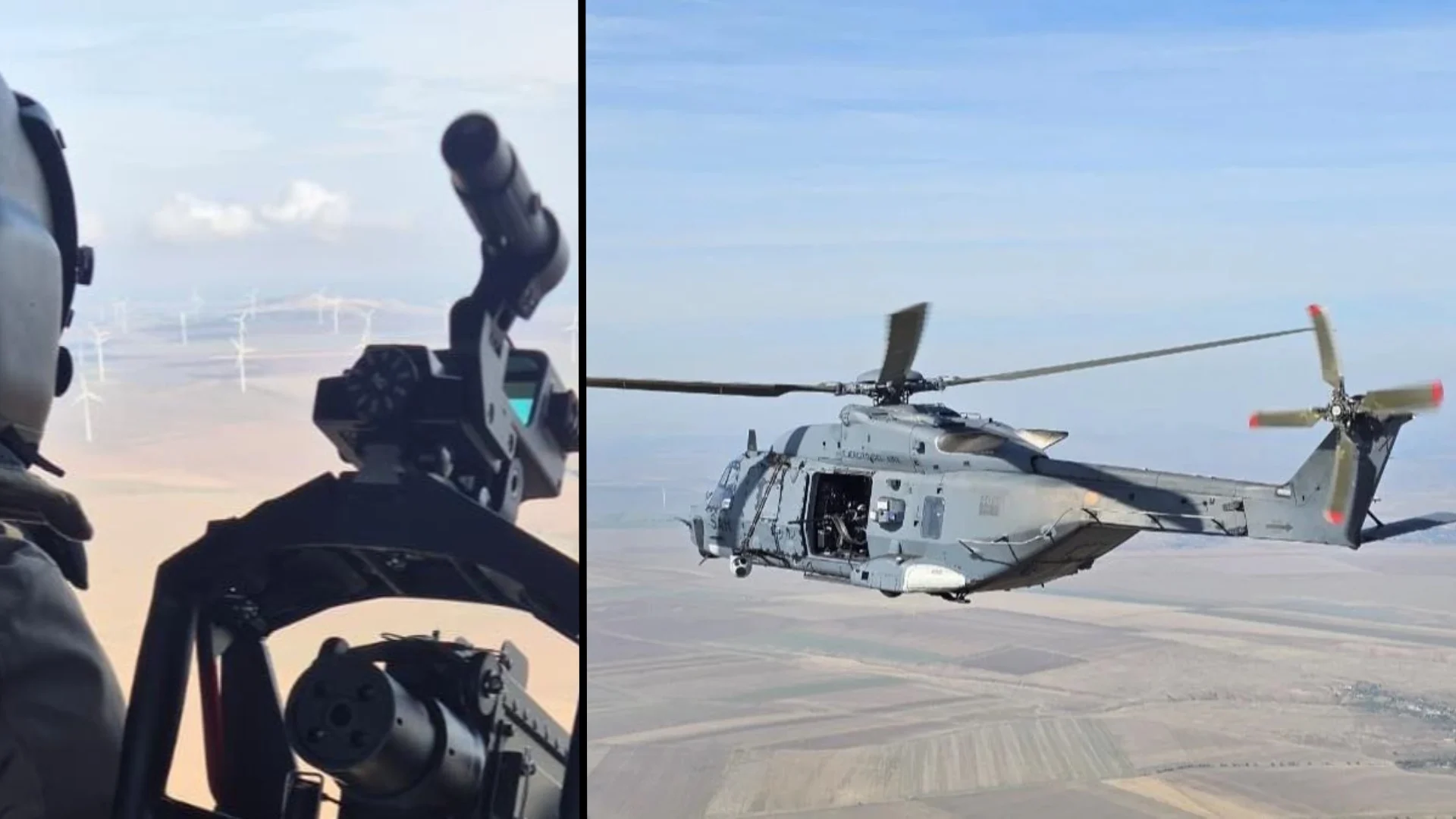
Two Spanish Air and Space Force NH90 helicopters flew their first Alpha Scramble under NATO’s air defense framework on November 5, 2026, launching on Quick Reaction Alert (QRA) from Mihail Kogălniceanu Air Base after unidentified drones were detected in Romania. Spanish F/A-18 Hornets responded alongside them. The Spanish Defense Staff said the drones disappeared before neutralization became necessary, and the helicopters returned to base without engaging.
The launch comes during a sharp rise in drone activity over Romania, which downed its first intruding drone with an F-16 on July 24, 2026. Spain’s detachment logged 15 Alpha Scrambles in its first month on station, compared with one during the mission’s 70th rotation in February and March. Madrid added the helicopters to this rotation specifically for counter-uncrewed aircraft systems (C-UAS) tasks, the first time NH90s have joined Spain’s air policing deployment in Romania.
First NH90 Alpha Scramble Puts Rotary Wing Into NATO Air Defense
The helicopters belong to the Spanish Air and Space Force’s 48th Wing, based at Cuatro Vientos in Madrid, and deploy as part of the Paznic Tactical Air Detachment, designated eAP-72 under NATO’s enhanced Air Policing mission. An Alpha Scramble is a live launch ordered to identify and, if required, neutralize an unidentified air track. The Spanish Defense Staff described the November 5 activation as the first carried out by a Spanish helicopter on an international NATO mission.
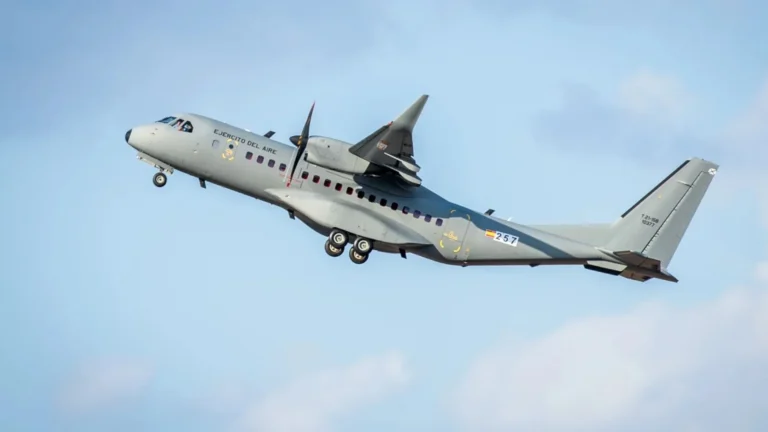
Three NH90s were allocated to the detachment for the final phase of the rotation and joined it in October. Two launched on November 5. The detachment numbers approximately 200 personnel and operates seven F/A-18s from Wing 12 at Torrejón de Ardoz. An A400M from Wing 31 provided aerial refueling earlier in the rotation.
Since the rotation began in August, the detachment has flown 37 Alpha Scrambles by the Spanish count, a figure NATO’s Allied Air Command gives as almost 40 across both aircraft types. One ended with a shootdown: on August 16, 2026, a Spanish F/A-18 destroyed a drone that had entered Romanian airspace from Moldova, bringing it down at 5:01 a.m. over an uninhabited area of Galați County.
Several details remain undisclosed. Neither NATO nor Spain has published the number or type of drones involved on November 5, their location or flight path, the time the helicopters spent airborne, or whether the crews gained sensor contact before the tracks disappeared.
NH90 TTH Performance Against Low, Slow Drone Threats
The NH90 is a twin-engine, fly-by-wire medium helicopter built by the NHIndustries consortium. Publicly available specifications for the Tactical Transport Helicopter (TTH) variant indicate a maximum takeoff weight of 10,600 kg, a top speed of 300 km/h, a service ceiling of 6,000 m, a range of about 800 km, and endurance of roughly 4.5 to 5 hours. Spanish aircraft use the General Electric CT7-8F5 turboshaft rather than the RTM322 fitted to most of the global fleet, with open-source figures placing CT7-8 output at about 1,845 kW per engine.
Those figures explain the role. Propeller-driven Shahed-type attack drones reach about 185 km/h by open-source estimates, inside the NH90’s speed envelope and far below normal fighter speeds. A helicopter can match that pace, hold a track at low altitude, and loiter without tanker support. The margin disappears against the jet-powered Geran variants now in Russian service, which a 300 km/h airframe cannot overtake.
The weapon fit is unconfirmed. Imagery released by Allied Air Command shows a door gunner scanning Romanian terrain, and open sources indicate the NH90 TTH can carry pintle-mounted 7.62 mm or 12.7 mm machine guns, but neither Spain nor NATO has specified the armament, sensors, or engagement procedures assigned to the C-UAS role. Spain’s air force bought 12 NH90s in its first two contract phases as Super Puma replacements, six in Standard 2 and six in Standard 3. Madrid has not said which standard the deployed aircraft meet.
How Rotary-Wing Assets Fit NATO’s Layered Eastern Flank Defense
Allied Air Command presents the November 5 launch as evidence for integrating mixed aircraft types into NATO’s Integrated Air and Missile Defense (IAMD) framework, which spans uncrewed aerial systems, cruise missiles, and ballistic missiles. The alliance describes a layered, 360-degree posture combining QRA aircraft, surface-based air and missile defense, mobile firing teams, surveillance aircraft, helicopters, and C-UAS equipment, tied together by sensors and command and control.
Lieutenant Colonel Alberto B. Calvo López, commander of the Paznic detachment, framed the helicopter as an addition to the fighter force. “They do not replace the F/A-18s; they complement them,” he said. Calvo López said fighters retain the advantage in speed, range, sensor power, and immediate response against certain threats, while helicopters add flexibility against targets flying low, slowly, or in less conventional patterns.
Romania has already used rotary-wing aircraft on the same problem, sending an IAR-330 SOCAT helicopter on drone reconnaissance alongside scrambled Spanish F/A-18s. Romania’s Defense Ministry has described the Spanish C-UAS helicopters as allied support, provided at its request until counter-drone systems ordered through the European Union’s Security Action for Europe (SAFE) loan program become available.
Analysis: Adding helicopters to the alert roster addresses a cost and target-matching problem. Fast jets are poorly matched to small targets moving at propeller speeds near the ground. An NH90 offers a slower, more persistent platform, but its utility depends on cueing, a weapon fit still undisclosed, and targets slow enough to catch. The November 5 launch exercised the alert chain. It did not test the engagement chain, since the drones left before any intercept.
The Spanish rotation is scheduled to run through December 2026, leaving the NH90s weeks to record a first engagement. Decision points include whether the next rotation retains a rotary-wing C-UAS element and whether Madrid discloses the helicopters’ mission fit. Deliveries of the SAFE-linked Skyranger 35 air defense systems ordered by Romania are scheduled from 2028 to 2030, which keeps allied stopgaps in demand.