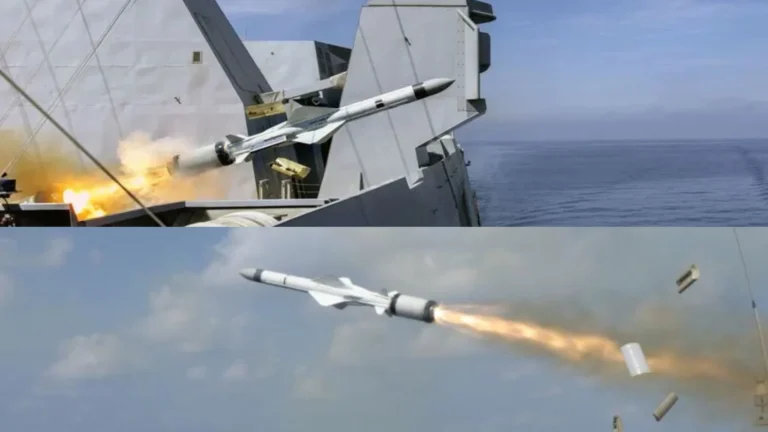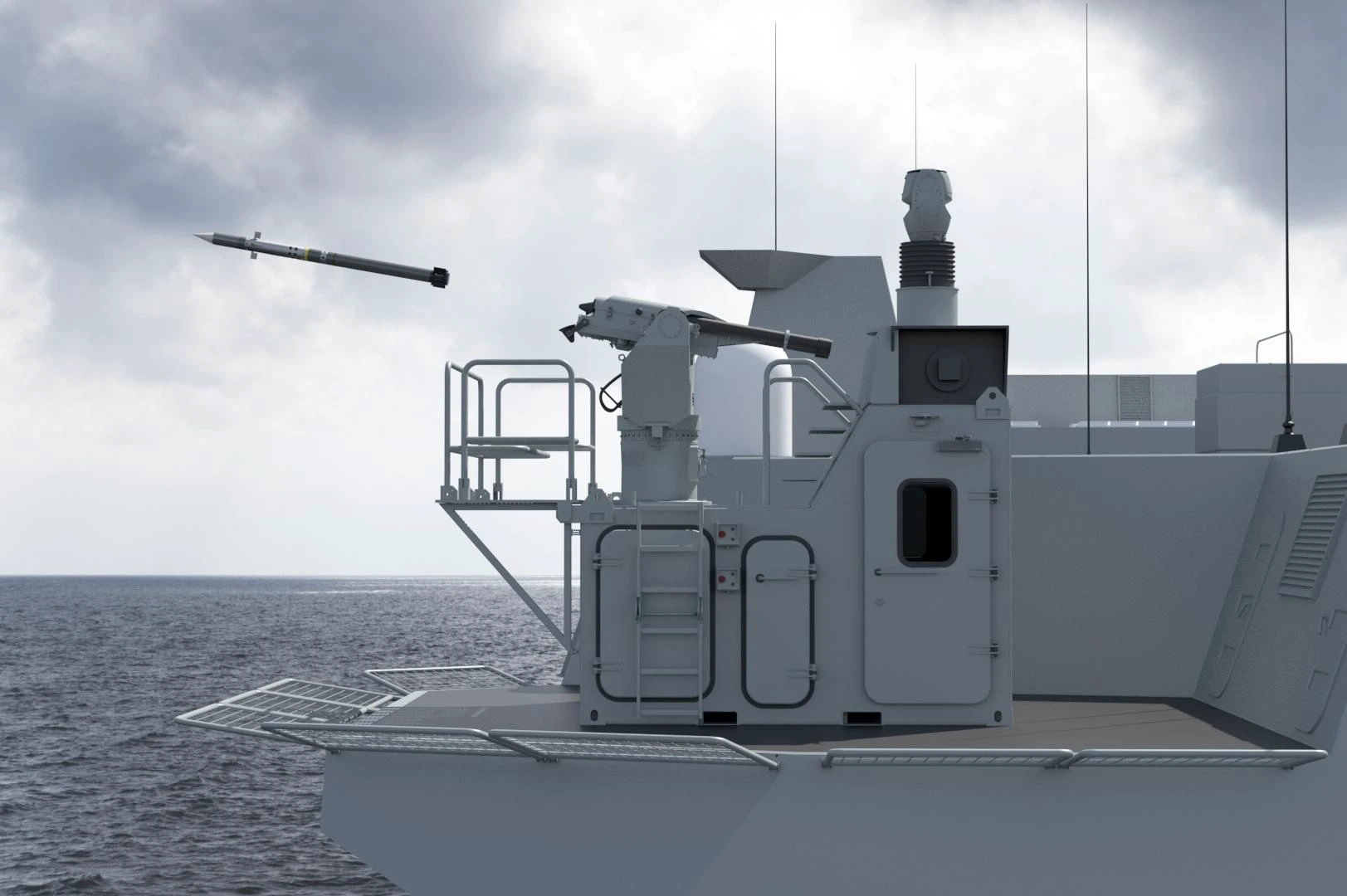
MBDA and Denmark’s Terma announced on November 4, 2026, that they are developing the Self Protection Integrated Mistral 3 Module (SPIMM), a containerized air and surface defense system that combines a four-round SIMBAD-RC4 launcher, threat detection sensors, and a Terma command and control (C2) system in one standard ISO container.
The project revives a concept MBDA unveiled at NAVDEX in Abu Dhabi in February 2019 but never turned into a fully developed product. It now falls under the cooperation agreement the companies signed on June 19, 2026, at Eurosatory, which Terma said includes joint naval development. MBDA chief executive Jean-Brice Dumont, who took the post on November 1, tied SPIMM to the group’s industrial cooperation initiative in Denmark, which selected Mistral 3 in 2024 and VL MICA and SAMP/T NG in 2025.
SPIMM Containerized Air Defense Packs SIMBAD-RC4 Into One ISO Container
MBDA’s announcement specifies only a standard ISO container. Janes reported on November 9 that the system is a 10-foot unit carrying a single SIMBAD-RC4 turret, controlled by two operators in a shelter inside the module, with space for a ready locker holding up to eight additional Mistral 3 missiles. That puts up to 12 rounds on board, double the six carried by the 2019 design, which paired a two-round turret with four reloads. The 2019 module weighed about 7 tons and secured to the deck with four corner twist-locks. MBDA has not published a weight for the current configuration.
The turret drives that growth. MBDA launched the SIMBAD-RC2 and RC4 family at Euronaval 2024 after Red Sea operations highlighted the threat from low-cost aerial drones and explosive unmanned craft. Figures published at that launch put the two-pod RC4 mount at about 800 kg with missiles, against slightly more than 500 kg for the single-pod version, with bearing of plus or minus 160 degrees and elevation from minus 30 to plus 55 degrees. The RC4 doubles ready-to-fire rounds without a second mount, which matters in a saturation attack, when a crew has no time to reload.
The Mistral 3 weighs less than 20 kg and measures 1.88 m with its launch motor, according to MBDA. Publicly available specifications indicate a maximum range of about 8 km, a ceiling of 6,000 m, a minimum intercept range of 500 m, a speed of 930 m/s, and a warhead of roughly 3 kg with tungsten balls. Its imaging infrared seeker homes passively in fire-and-forget mode, so the module needs no illuminator or missile guidance channel, a trait that helps make a self-contained installation practical.
How Terma’s C-Flex Heritage Shapes SPIMM Command and Control
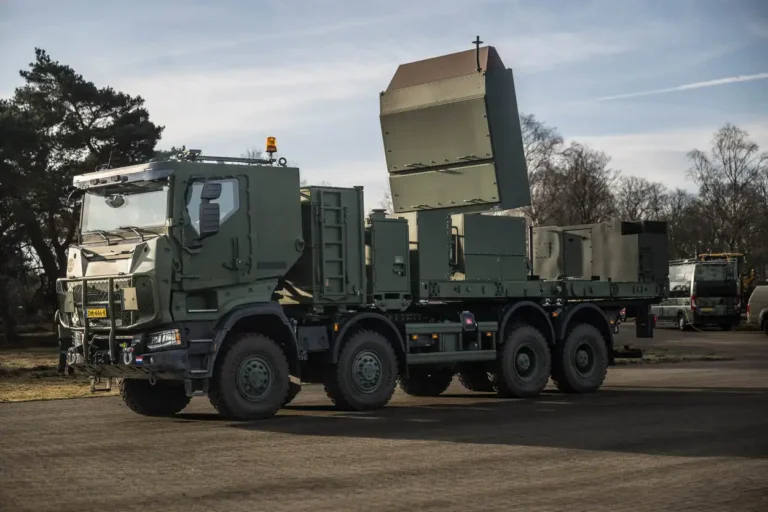
Terma’s contribution addresses the central weakness of a bolt-on weapon aboard a ship with no combat system: the weapon must build its own tactical picture. MBDA says the module adds a dedicated combat management system (CMS) and a Terma C2 system derived from C-Flex, which merges sensor and track data into one picture for small crews and reduces dependence on the host platform.
C-Flex brings an established naval record. Terma says the system runs on the 12 largest vessels of the Royal Danish Navy, including the three Iver Huitfeldt-class frigates, and it has been selected for a Royal Australian Navy training vessel and Indonesia’s KCR-60 fast attack craft. That lineage gives SPIMM a track management and operator interface baseline already exposed to fleet use, rather than a bespoke console for a niche product.
Key details remain undisclosed. The 2019 design relied on a 360-degree infrared panoramic system for detection, but the companies describe the current suite only as advanced threat detection sensors and have not said whether it includes a radar. That choice will set detection performance against sea-skimming missiles and small drones, and determine whether the module can remain electromagnetically silent. Nor have they said how the CMS and C2 layers divide functions, or whether SPIMM will carry a tactical data link to share tracks with escorts.
From Support Ships to Oil Platforms: SPIMM Deployment and Threat Set
SPIMM requires only a power supply, according to MBDA, so it can go aboard vessels with no combat system and move between ships and land sites as requirements change. When MBDA introduced the concept in 2019, it cited logistics ships and chartered commercial vessels transiting chokepoints without a permanent escort, where a fixed self-defense suite would be costly and rarely needed. The 2026 announcement widens that scope to offshore oil and gas platforms, littoral positions, ports, naval bases, and industrial sites.
The announced target set covers cruise missiles, unmanned aerial vehicles, aircraft, and helicopters, plus unmanned surface vessels, rigid-hulled inflatable boats, fast inshore attack craft, and one-way attack boats. MBDA demonstrated the anti-surface role in late 2018, when a land-based SIMBAD-RC engaged a remotely controlled semi-rigid boat more than 3 km offshore.
The wider SIMBAD-RC line has a commercial footing, with more than 50 turrets sold by late 2024 and a Spanish Navy framework agreement for three RC2 systems announced in September 2026. The RC4 is less mature. At the 2024 launch, MBDA said it aimed to begin system deliveries in 2027, and no RC4 customer had been publicly identified as of September 2026.
Analysis: SPIMM’s value lies in speed of fit and fleet coverage, not area defense. An 8 km missile protects the hull or site it sits on, and four ready rounds limit endurance against a sustained raid. The module can give auxiliaries and fixed sites a final defensive layer when no escort is available, while giving Denmark’s Terma a development role in an MBDA product. Who would crew it on civilian-manned hulls, and under what legal status, remains unaddressed.
A SPIMM model appeared at Euronaval 2026 in Paris, but the companies have disclosed no schedule, qualification plan, price, or launch customer. The next markers are a live firing validating Terma’s C2 with the RC4 and first RC4 deliveries. The June agreement places work at Terma’s Lystrup, Søborg, and Grenaa sites; the SPIMM workshare has not been published.