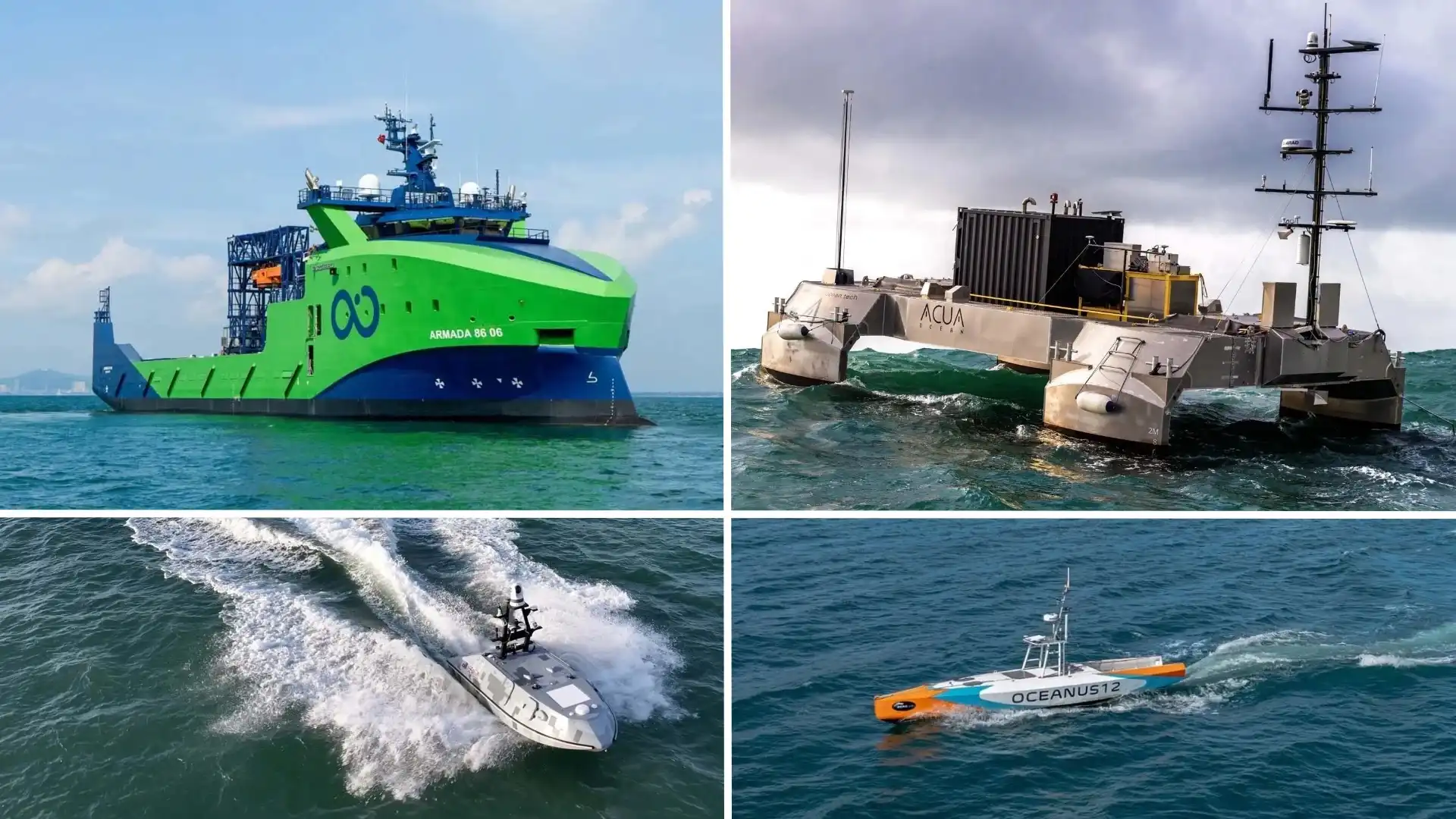
Britain’s Ministry of Defence (MoD) has selected Hampshire-based Ocean Infinity Solutions to deliver Atlantic Net, a £90 million network of uncrewed vessels, underwater sensors and artificial intelligence (AI) systems designed to help the Royal Navy find Russian submarines and protect undersea cables and energy infrastructure in the North Atlantic. Luke Pollard, Minister for Defence Readiness and Industry, announced the framework agreement, due to be signed on November 10, 2026, at the International Sea Power Conference in Oslo, Norway.
Atlantic Net is the first phase of Atlantic Bastion, the Royal Navy’s plan to field a hybrid force of crewed and uncrewed platforms for anti-submarine warfare (ASW) and seabed infrastructure protection, a key recommendation of the 2025 Strategic Defence Review. The award follows a competition under Project CABOT, the umbrella acquisition program for North Atlantic ASW: the MoD published its intent to tender in October 2025, and Pollard said in January 2026 that 26 compliant proposals had been assessed after engagement with around 327 companies. It lands amid sustained Russian submarine activity in the UK’s northern approaches and rising NATO concern over cable and pipeline security.
How Atlantic Net Delivers Undersea Surveillance as a Service
Atlantic Net is built on a contractor-owned, contractor-operated, naval oversight (COCONO) model. Ocean Infinity will own and operate the platforms, the Royal Navy will task and direct the capability, and the resulting data will flow to commanders ashore.
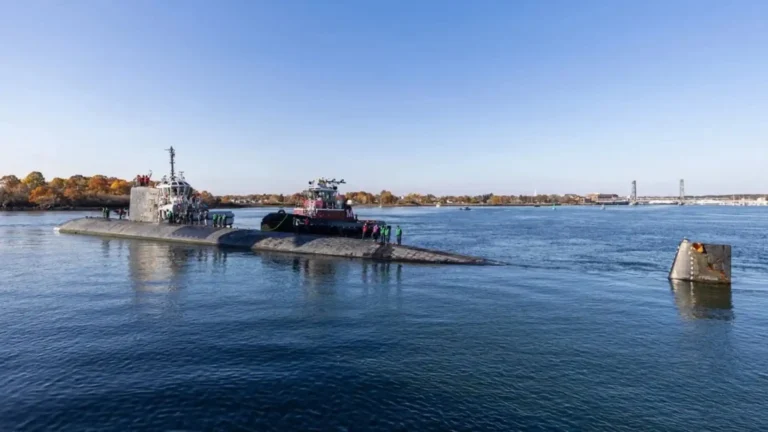
The network pairs advanced sensors, intended to detect Russian submarines and other hostile activity, with uncrewed systems that patrol at depth. The MoD describes the output as a single surveillance service giving submarine-hunting warships and Astute-class nuclear-powered attack submarines (SSNs) earlier warning of threats. Atlantic Net therefore sits at the wide-area detection end of the kill chain, cueing scarce crewed ASW assets rather than replacing them.
Much of the operational detail remains undisclosed. The MoD has not published the number or type of platforms, the sensor modalities involved, the contract duration, or whether £90 million represents the full framework value or initial funding. The October 2025 tender notice described Atlantic Net as underwater intelligence, surveillance and reconnaissance (ISR) delivered as a data-focused service, with information passed directly to the maritime operational commander ashore, and open-source reporting has identified the Greenland-Iceland-UK (GIUK) gap as an early focus, the main transit route for Russian Northern Fleet submarines into the Atlantic.
Pollard said:
The threats beneath the North Atlantic are changing, and we are changing with them. This investment gives the Royal Navy new technology to find threats earlier and protect our critical infrastructure, while also backing British business.
Ocean Infinity’s Armada Fleet and the Remote Operations Model
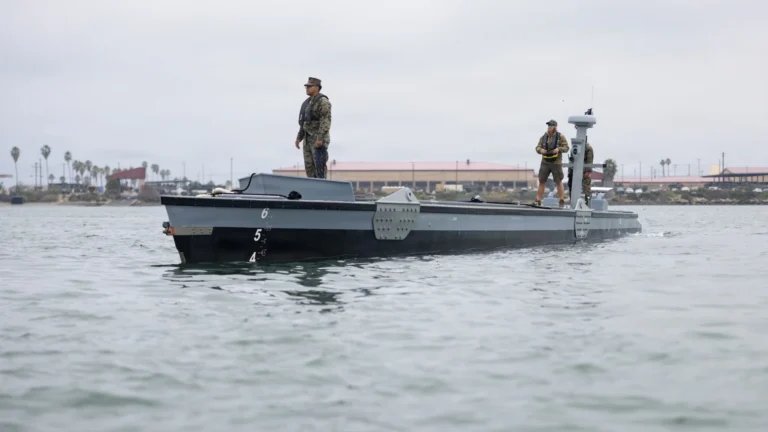
Ocean Infinity, founded in 2016, is a marine robotics and offshore survey group best known for deep-ocean search operations, including the hunt for Malaysia Airlines flight MH370. Its Armada fleet consists of uncrewed and lean-crewed vessels controlled from shore-based remote control centers. Publicly available company data lists the Armada A21, an uncrewed robotic ship built at Grovfjord Mekaniske Verksted in Norway, and the remotely controllable Armada 86-06 took part in Atlantic Net trials in early 2026. The MoD has not named any partners or subcontractors.
That existing remote operations infrastructure is what the COCONO model buys. The approach was tested in the Atlantic Net Technology Demonstrator program, in which industry teams demonstrated uncrewed systems over four months; the Navy said on April 22, 2026, that the trials focused on automation, sensor performance and AI, and assessed industry partners’ readiness to deliver at pace. The MoD says the framework will support almost 200 new skilled jobs at the company and its immediate supply chain.
From Atlantic Net to Atlantic Bastion: Type 92 and Type 93 Platforms
Atlantic Net is designed as a bridge. The follow-on phase would shift to a government-owned, government-operated model under direct Royal Navy control. The Type 93 is planned as an extra-large uncrewed underwater vehicle (XLUUV), building on demonstrator work such as Project Cetus, a 12-meter autonomous submarine ordered from Plymouth-based MSubs. The Type 92 was first presented as a large uncrewed ASW surface vessel, dubbed the Sloop, and has since been described in UK government documents as an uncrewed underwater sensing platform. The MoD has not confirmed quantities, configurations or in-service dates for either type.
Funding for the wider effort dwarfs the Atlantic Net award. The UK’s 2026 Defence Investment Plan committed an additional £1.5 billion over four years to Atlantic Bastion, which sits alongside Atlantic Shield and Atlantic Strike, efforts tied to the Type 94 uncrewed sensing platform and Type 91 uncrewed missile platform. The MoD says Atlantic Bastion will work with NATO and Joint Expeditionary Force (JEF) partners against interference, sabotage and hostile activity, a Nordic dimension underlined by the choice of Oslo for the announcement.
Analysis: The value of the award matters less than the model it validates. By buying undersea surveillance as a service, the Royal Navy can put persistent sensors into the North Atlantic years before government-owned Type 92 and Type 93 platforms clear design, procurement and certification, while shifting availability and technology refresh risk to industry. That answers a structural problem: a small fleet of ASW frigates and Astute-class boats cannot sustain continuous coverage of the northern approaches while also protecting the nuclear deterrent. The harder question is resilience: the MoD has yet to explain how a commercially owned network would be protected, or keep operating, in a crisis in which the sensors themselves become targets.
Next milestones include formal signature, disclosure of initial deployments and an initial operating capability date. The First Sea Lord, General Sir Gwyn Jenkins, said in September 2025 that the first Bastion sensors would be in the water in 2026; the MoD has not said whether Atlantic Net deployments will meet that target. Beyond that, watch for Type 92 and Type 93 design decisions and how far JEF and NATO allies plug their own sensors into the network.