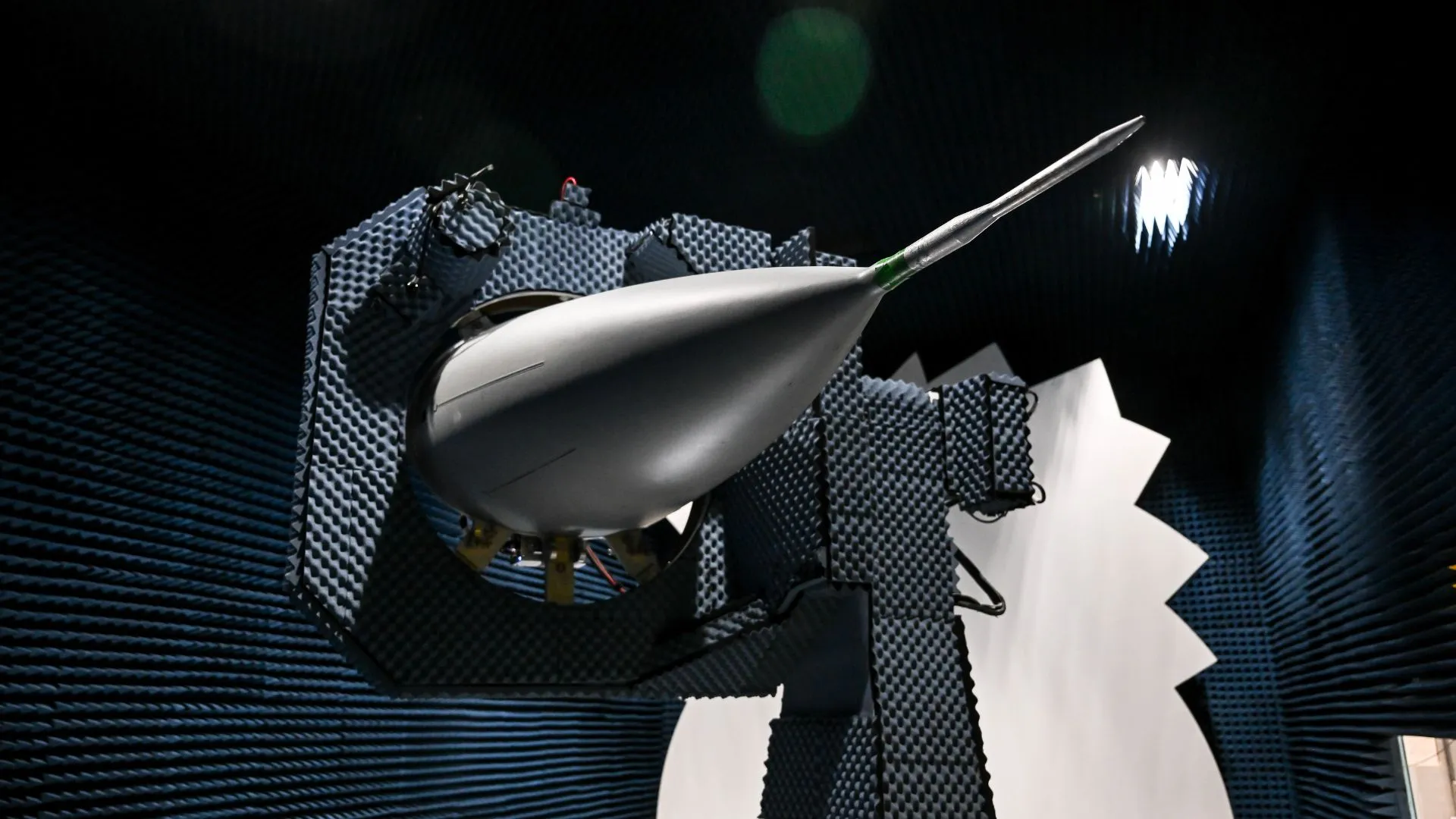
The 523rd Electronic Maintenance Squadron at Hill Air Force Base, Utah, tests about 70 F-16 radomes and 160 fire control radar antennas every year, and recent upgrades to its two dedicated test systems have increased the shop’s throughput and capacity, the Air Force said on November 9, 2026. The squadron is the service’s sole source for F-16 radar antenna repair and radome tuning.
The unit belongs to the Ogden Air Logistics Complex, an Air Force Materiel Command depot. More than four decades after the Fighting Falcon entered Air Force service, the service plans to keep the F-16 flying into the 2040s, according to Air Force officials. Together, the fire control radar antenna and the nose radome provide the radar picture pilots rely on to detect, track, and engage threats.
How NRETS and FCRATS Verify F-16 Radar Performance at Hill
On the F-16, the fire control radar antenna sits directly behind the nose radome, so every transmitted pulse and every return passes through the composite structure. Kelly Sellers, the 523rd EMXS Avionics Flight chief, described the radome as “a highly engineered electromagnetic window” rather than a fiberglass cover. According to Sellers, moisture intrusion, micro-cracks, composite delamination, or improper paint thickness can refract or absorb radar energy even when the flaws are invisible to the eye.
The operational consequences are concrete. Sellers said a degraded radome or antenna can shorten detection and tracking range, generate false returns, and place a target at a slightly different position than its true location. For the pilot, that translates into difficulty holding a track, achieving lock-on, and employing radar-guided weapons accurately.
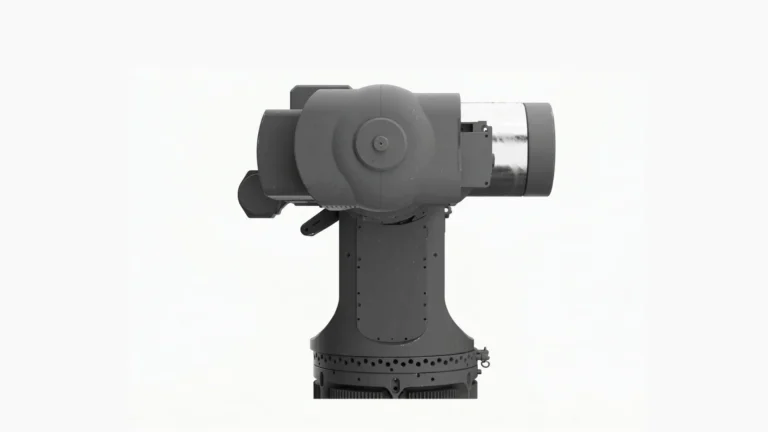
The squadron’s Radio Frequency Shop uses two systems to catch those faults. The Nose Radome Electrical Test System, or NRETS, measures how effectively radar signals pass through a radome and identifies distortion or attenuation. The Fire Control Radar Antenna Test System, or FCRATS, evaluates the antenna itself: radiation pattern, beam-pointing accuracy, sidelobe levels, and transmit and receive performance. “Because the fire control radar antenna is located directly behind (inside) the nose radome, the two systems must function in perfect electromagnetic harmony,” Sellers said.
How Hill Repairs F-16 Radomes, Antennas, and Obsolete Avionics
Radomes and antennas follow separate repair paths before final testing. A radome reaching NRETS has already passed through depot-level preparation that can include robotic coating removal, structural repair, resurfacing, and precision painting. Technicians diagnose and repair each antenna, verify it on a specialized test station, and then clear it through final FCRATS testing before it returns to the field.
Sellers said the recent NRETS and FCRATS upgrades replaced obsolete test equipment and increased throughput and capacity, allowing the squadron to absorb workload surges and respond to urgent F-16 field needs. The Air Force has not disclosed when the upgrades were completed, their cost, the contractor involved, or the size of the capacity gain.
Obsolescence runs across the squadron’s F-16 portfolio. The same unit repairs the jet’s Signal Acquisition Unit, which collects flight parameters for the flight data recorder and relies on circuit card assemblies no longer commercially produced. In fiscal 2026, that line completed 82 shipments with 100% on-time delivery, supported by parts reclaimed from retired aircraft at Davis-Monthan Air Force Base, Arizona.
The radar mix behind the radome is also shifting. Air Force F-16s are moving from older mechanically scanned radars to Northrop Grumman’s AN/APG-83 Scalable Agile Beam Radar (SABR), an active electronically scanned array (AESA) that is the standard radar for the service’s F-16 upgrade program. Northrop Grumman delivered its 1,000th APG-83 on May 19, 2026, across U.S. and international customers. The Air Force has not specified which antenna types FCRATS supports or how the AESA transition affects the antenna workload; the radome requirement applies to both radar generations.
Analysis: The Hill workload shows where radar modernization can quietly erode. The Air Force is investing in AESA performance for a fourth-generation airframe, yet a radome with delamination or the wrong paint thickness degrades that sensor before it is ever employed. Concentrating radome tuning and antenna repair in a single sole-source squadron delivers depth of expertise and consistent test standards, but it also creates a single point of failure for a fleet the service intends to operate into the 2040s. Test infrastructure such as NRETS and FCRATS decides whether upgraded sensors deliver their rated performance on the flightline.
The next indicators to watch are throughput figures showing the effect of the upgraded test stations, any adaptation of FCRATS to AESA arrays as APG-83 retrofits expand, and whether the Ogden Air Logistics Complex builds redundancy into a capability currently held by one squadron. Dan Marcom, the 523rd EMXS director, framed the objective as ensuring every radome and antenna returning to the flightline delivers the radar picture warfighters depend on.