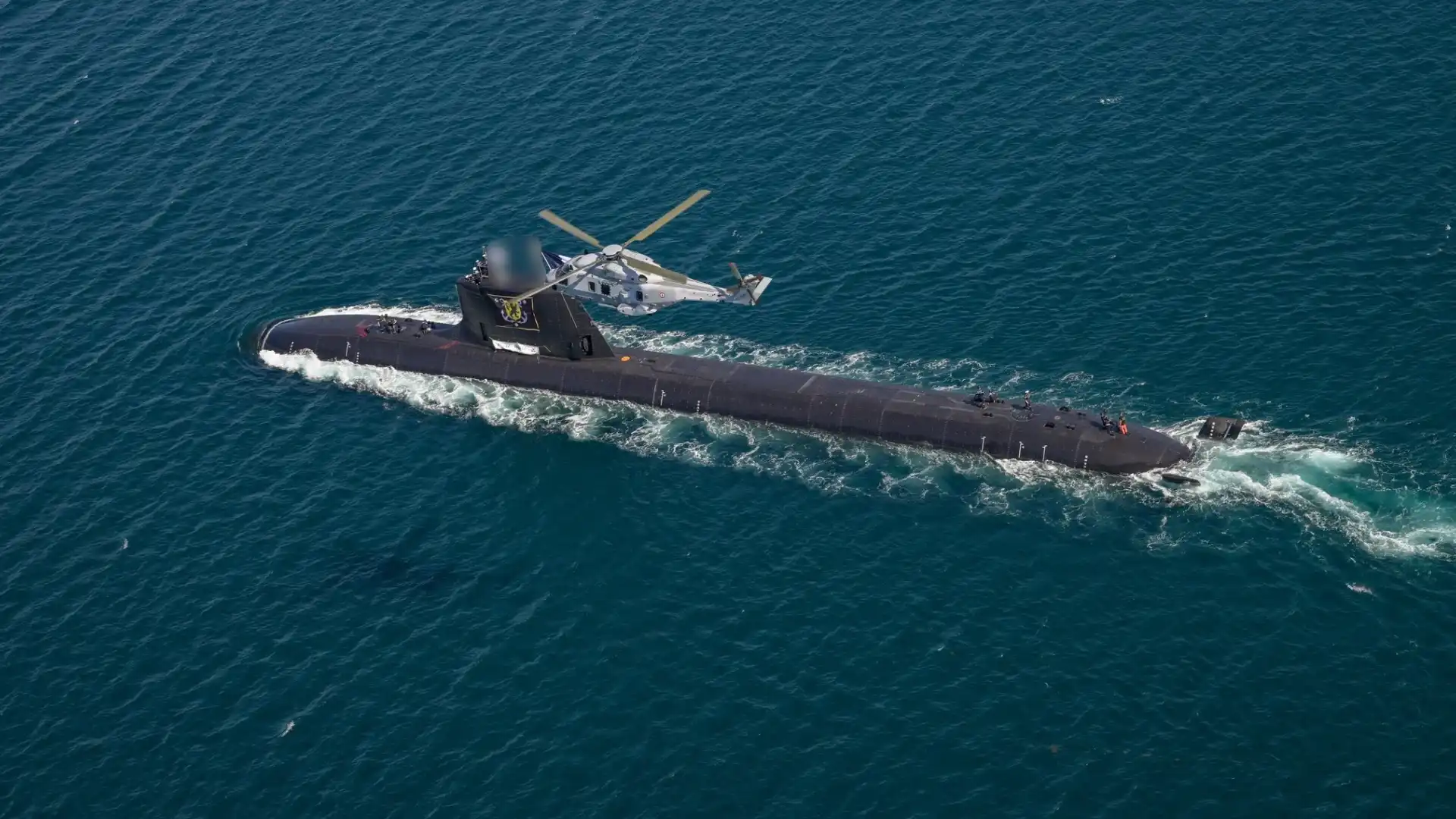
The French Navy admitted the nuclear-powered attack submarine De Grasse to active service on November 20, 2026, when Admiral Christophe Cluzel, Chief of Staff of the French Navy, pronounced the boat’s admission following sea trials that began in February 2026. De Grasse is the fourth of six Suffren-class boats built under the Barracuda program and will now deploy on operations, according to the French Ministry of the Armed Forces.
The milestone brings the operational Barracuda fleet to four hulls, alongside Suffren (active service in June 2022), Duguay-Trouin (April 2024) and Tourville (July 2025). The program, managed by the Direction générale de l’armement (DGA), the French defense procurement agency, replaces the Rubis-class nuclear attack submarines (SSNs) that entered service from the 1980s. Naval Group builds the boats in Cherbourg, with TechnicAtome producing the nuclear steam supply system.
De Grasse Submarine Trials From Polar Waters to Norfolk
De Grasse moved quickly from shipyard to fleet. The hull left Naval Group’s construction hall in May 2025, its nuclear reactor was started up in December 2025, and the boat made its first sortie from Cherbourg on February 24, 2026. Naval Group handed it over to the DGA and the French Navy on June 24, 2026, exactly four months later.
Admission to active service closes the military capability verification phase (vérification des capacités militaires, VCM), during which the crew tests the boat’s performance and endurance and confirms that its equipment meets specification. The ministry said De Grasse operated in both polar and warm waters during this period, with port calls in Tromsø, Norway, and Norfolk, Virginia. The Norfolk stop coincided with commemorations of the 1781 Battle of the Chesapeake, where the submarine’s namesake, Admiral François Joseph Paul de Grasse, turned back a British fleet and paved the way for victory at Yorktown.
The ministry describes these port calls as part of the long-duration deployment that follows technical trials.
Suffren-Class Design, Propulsion, and Deep-Strike Armament
According to Naval Group, the Suffren class displaces 4,700 tonnes surfaced and 5,300 tonnes submerged, with a length of 99 meters and a hull diameter of 8.8 meters. Propulsion is hybrid: a pressurized water reactor derived from the K15 plants of the Triomphant-class ballistic missile submarines and the aircraft carrier Charles de Gaulle supplies steam to turbines for high-speed propulsion and to turbo-generators that power electric motors at cruising speeds. Published figures cite a diving depth beyond 350 meters, a submerged speed above 25 knots and availability of more than 270 days per year. The crew numbers 65, plus embarked commandos.
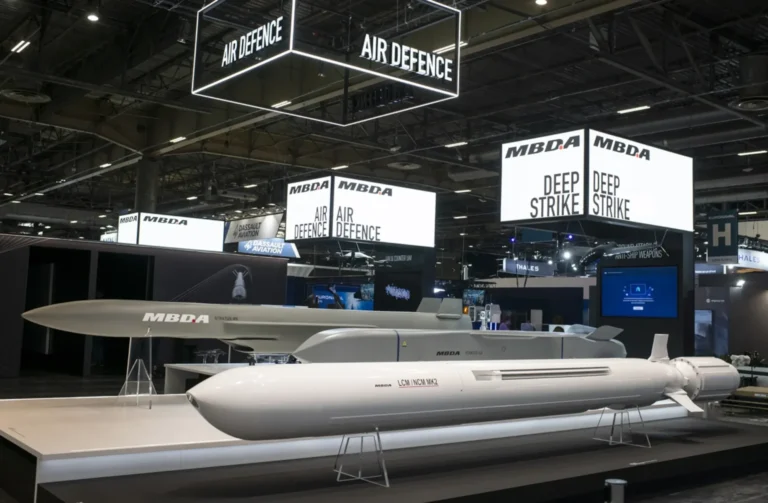
Publicly available specifications indicate four 533 mm torpedo tubes. The load-out combines F21 heavyweight torpedoes, modernized Exocet SM39 anti-ship missiles and the MBDA naval cruise missile (Missile de croisière naval, MdCN), which the ministry says can strike land targets several hundred kilometers away; open sources credit it with a range beyond 1,000 km. A removable dry deck shelter aft of the sail lets special forces divers and swimmer delivery vehicles deploy while the boat stays submerged. The Rubis class offered neither land attack nor a dedicated special forces hangar.
Analysis: Four operational Barracudas give the French Navy a modern core for its two standing SSN missions: protecting Triomphant-class deterrent patrols and escorting the carrier strike group, while freeing hulls for independent deployments. The Tromsø and Norfolk calls also point to where Paris expects to use these boats, in the High North, where Russian Northern Fleet submarine activity drives NATO anti-submarine warfare demand, and alongside the US Navy in the Atlantic. With the MdCN, France fields a submarine-launched land-attack capability that few European NATO navies possess, the Royal Navy’s Tomahawk-armed Astute class being the main other example.
Rubis and Casabianca, the last two boats, remain under construction in Cherbourg, with deliveries scheduled by 2030, according to the ministry. Open questions include De Grasse’s first operational deployment and the pace at which the remaining Rubis-class boats leave service.