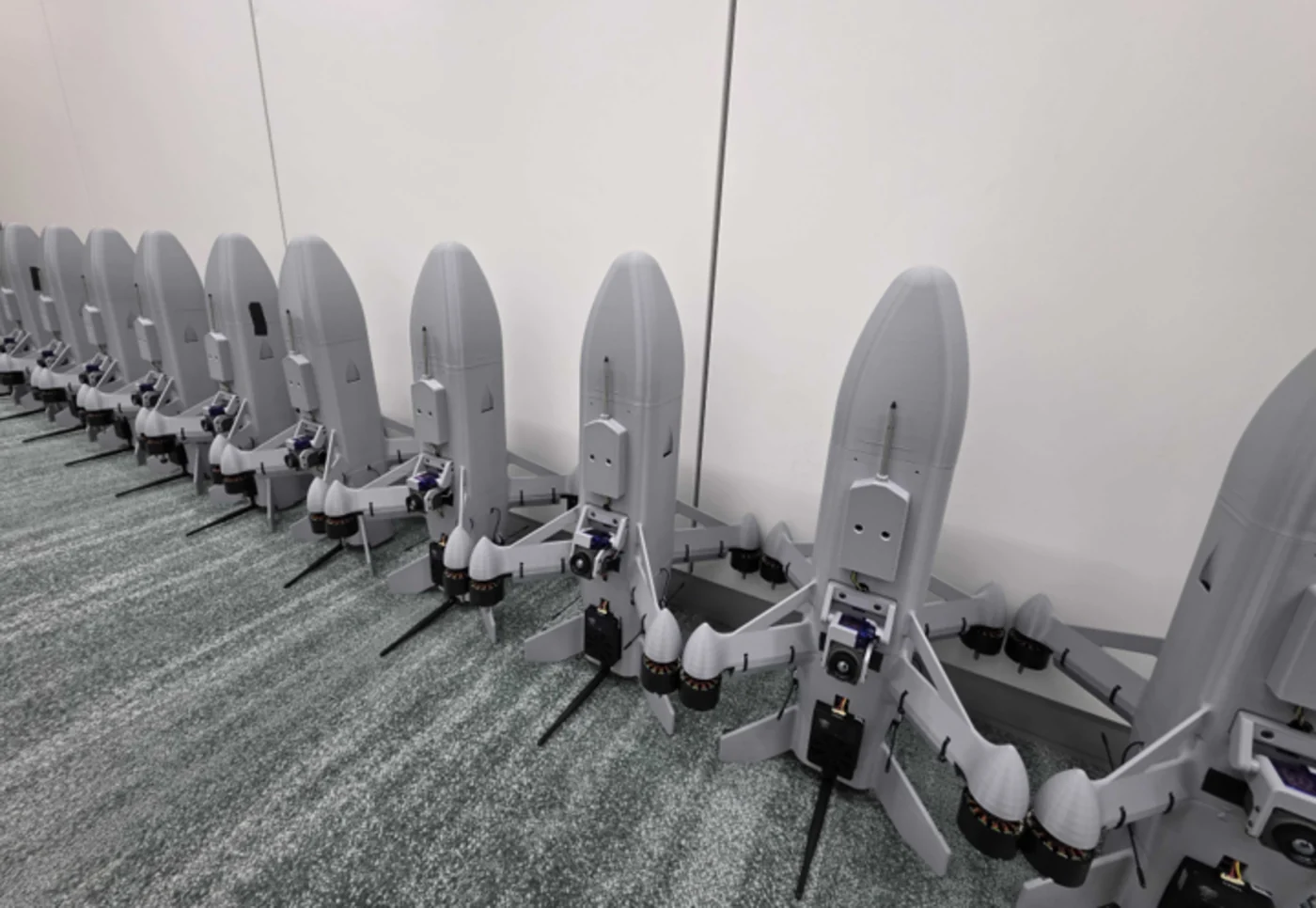
Terra Drone Corporation announced on November 26, 2026 that it has completed production and delivery of the Terra B1, an AI-enabled autonomous interceptor drone, to Japan’s Acquisition, Technology and Logistics Agency (ATLA). The delivery covers a complete operational package rather than airframes alone: the interceptor, batteries and chargers, a control module and software, a ground control station (GCS) computer, and a communication antenna and module. According to the company, the Terra B1 is the first AI-autonomous interceptor drone with a domestic production base to be adopted by ATLA.
The delivery closes a fast-track acquisition cycle that ATLA opened on June 5 under its Interceptor Drone Early Acquisition Program, created to give the Self-Defense Forces a low-cost answer to long-range one-way attack drones such as the Iranian-designed Shahed series. ATLA received proposals from 38 companies, shortlisted four models on July 15, and had the Japan Maritime Self-Defense Force (JMSDF) run demonstration trials through August 6. The Terra B1 was the only system to pass, and ATLA signed a mass-production contract on August 25 to equip the JMSDF. Terra Drone says it stood up domestic series production roughly three months after that signature. Neither the contract value nor the number of units has been disclosed.
Inside the Terra B1 Interceptor Drone and Its Ground Segment
Terra Drone describes the Terra B1’s core capability as AI-based target identification combined with autonomous guidance, meaning the interceptor is designed to recognize and close on a hostile unmanned aircraft with limited operator input in the terminal phase. The company has not published speed, range, endurance, kill mechanism, sensor suite, or datalink specifications, and ATLA has released no performance data from the JMSDF trials.
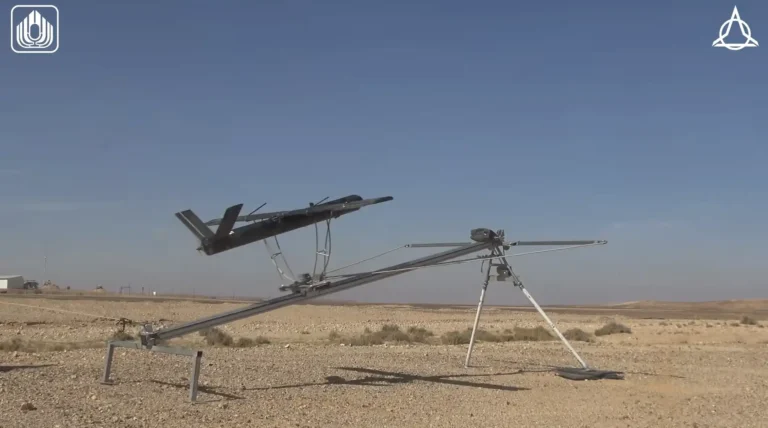
Company imagery released with the announcement shows a slender airframe in a vertical tail-sitter configuration, with cruciform rear fins carrying four electric motor pods, alongside a ruggedized hard case housing the GCS display and controls. Rows of identical airframes in the production photos are consistent with the series-production claim. The airframe has been reported as 3D-printed, a manufacturing approach that favors rapid scaling and low unit cost, although the delivery announcement does not address it.
The B1 draws on Terra Drone’s Ukrainian-developed A-series. The Terra A1, launched on March 31 with investee Amazing Drones and deployed operationally in Ukraine from April 17, is a vertical takeoff and landing short-range interceptor. Publicly available specifications for the A1 indicate a range of 32 km, a top speed of 300 km/h, and a flight time of about 15 minutes. These are A1 figures; Terra Drone has not stated whether the B1 matches them. The fixed-wing Terra A2, built under license with Ukrainian firm WinnyLab, covers longer-endurance patrol and interception. The B1 is the Japan-built branch of that family, shaped by ATLA’s requirement for a domestic production base.
Why Domestic Production Drives Japan’s Counter-Drone Procurement
Terra Drone frames supply assurance, alongside airframe performance, as a condition for sustained operations. Interceptor drones are consumed in large numbers during saturation attacks, so a force’s defensive endurance depends on how quickly it can replace them. The cost-exchange logic is the same one driving interceptor programs worldwide: the company has put conventional interception costs at several hundred million yen per engagement, against roughly ¥300,000 to ¥1 million per interceptor drone.
After the August contract, Terra Drone said it would build domestic production and procurement systems and strengthen supply chains for components, batteries, communications, and control equipment. Delivering the full kit from Japanese production matters in a country whose commercial drone market is dominated by imports from China.
The program also fits Tokyo’s broader budget direction. The Ministry of Defense’s record ¥8.9 trillion ($55.6 billion) fiscal 2027 request names unmanned systems and artificial intelligence as priorities and cites low-cost drone interception as a specific use case. Separately, the ministry plans to begin developing a close-range air defense system in fiscal 2027 that would combine interceptor missiles, autocannons, and lasers.
Analysis: The Terra B1 matters less as a platform, about which little is public, than as a procurement precedent. ATLA moved from solicitation to delivered hardware in under six months, a pace comparable to the US Army’s rapid fielding of the Merops interceptor. The program also shows Japan importing battlefield lessons from Ukraine through private investment rather than government-to-government transfer, while keeping production onshore. The open question is whether a single-vendor outcome, from a competition in which one of four candidates passed, gives the Self-Defense Forces enough depth for a layered counter-UAS architecture or ties the effort to one supplier’s capacity.
Key unknowns remain the size of the initial lot, the units receiving the system, and how the B1 will be cued by Self-Defense Forces radars and integrated into existing air defense networks. Terra Drone says it will expand domestic production capacity, stabilize supply, pursue overseas defense markets, and study maritime drone applications. The final fiscal 2027 budget, due by year’s end, should show whether interceptor drones move from an early-acquisition program to sustained procurement.