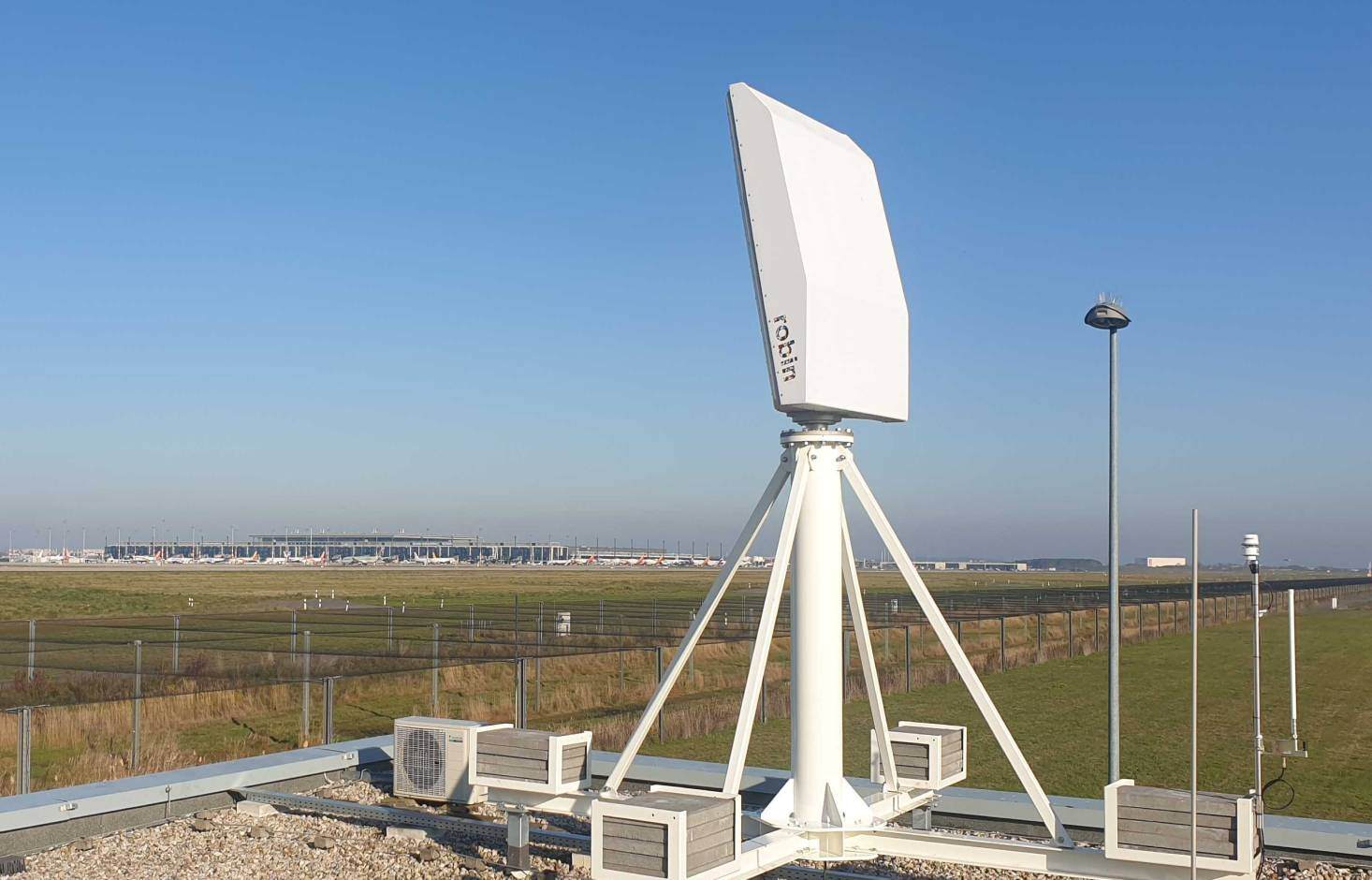
BAE Systems is among the potential bidders in the early stages of exploring an offer for Robin Radar Systems, the Dutch developer of drone and bird detection radars, three people familiar with the matter said on October 1, 2026. Private equity firms CVC Capital Partners and Blackstone are also weighing bids, according to two of the people, while Advent International and EQT are further potential suitors in a sale that could value the company at about €2 billion ($2.26 billion).
Parcom, the Dutch investment firm that took a majority stake in Robin Radar in October 2024, is working with JPMorgan to launch a formal sale process later this year. An offer from CVC and Blackstone over the summer was rejected before the process opened, the sources said. BAE said it does not comment on rumor or speculation. Robin Radar declined to discuss “confidential shareholder processes,” adding: “If we have anything to report regarding the shareholder structure at any point, we will do so with due care.” The auction comes as drone incursions push counter-unmanned aircraft systems (C-UAS) sensors up European procurement lists and governments tighten control over defense technology ownership.
Robin Radar IRIS Specifications: Micro-Doppler Classification and 12 km Range
Robin Radar was founded in 2010 as a spin-off of TNO, the Netherlands Organisation for Applied Scientific Research, initially to track bird flocks and prevent strikes on military aircraft. Drone detection, developed since 2014, now generates most of its revenue, mainly from defense customers, according to company leadership. The portfolio includes the MAX three-dimensional avian radar, the ELVIRA drone radar and the current flagship, IRIS.
Publicly available specifications describe IRIS as an X-band frequency-modulated continuous-wave (FMCW) radar with 360-degree azimuth and 60-degree elevation coverage at a 5-kilometer instrumented range. The sensor weighs about 29 kilograms, fits in a 550 by 630 millimeter housing and updates tracks approximately once per second. Classification fuses micro-Doppler analysis of rotor and propeller returns with deep neural network processing, the discriminator that separates multirotor and fixed-wing drones from birds, the main source of false alarms around airfields. An optional on-the-move module supports detection from vehicles traveling at up to 100 kilometers per hour. Company leadership has put the unit price below $1 million.
In September 2025, Robin Radar released a software-only Long-Range Mode extending IRIS range to 12 kilometers, shaped by Ukrainian operators tracking Shahed-type one-way attack drones. Against a target flying above 180 kilometers per hour, the additional 7 kilometers buys roughly 140 seconds of warning to cue guns, interceptors or electronic attack. The Dutch Ministry of Defense ordered 51 mobile radars for Ukraine in August 2024, then signed on November 27, 2025, for 100 early-warning radars for airbases and units after drone sightings over Volkel Air Base and Eindhoven. More than 30 IRIS units also covered the 2026 FIFA World Cup.
BAE Systems Counter-Drone Strategy Meets Dutch Investment Screening Rules
For BAE, the attraction is the sensor end of the C-UAS kill chain. Its Advanced Precision Kill Weapon System (APKWS), a laser-guidance kit that turns 70 mm Hydra rockets into precision munitions, has become a low-cost interceptor against one-way attack drones; the company delivered its 100,000th kit in February 2026. That month, the US Air Force awarded BAE a contract worth up to $145 million for a dual-mode laser and infrared APKWS variant built for air-to-air counter-drone engagements. What BAE lacks is a proprietary, mass-producible detection and classification layer to cue those effectors. Robin Radar would supply one, along with a US subsidiary that opened a larger Northern Virginia operations center on August 26, 2026.
Ownership will be shaped in The Hague as much as in the boardroom. Parcom would prefer a European strategic or private equity investor to develop the technology for Europe’s benefit, one source said. The bidder field splits along that line: CVC and EQT are European-headquartered, Blackstone and Advent are US-based, and BAE is a British prime with a large US business. Robin Radar classifies IRIS as a dual-use item under EU Regulation 2021/821, which likely brings any change of control within the Dutch Investments, Mergers and Acquisitions Security Screening Act (Vifo Act), administered by the Investment Screening Bureau (BTI). In May 2026, the Dutch government blocked US-based Kyndryl’s €100 million takeover of cloud provider Solvinity on public interest and national security grounds, the first time the bureau had stopped a US acquisition since its creation in 2020.
Analysis: A valuation near €2 billion for a company selling radars at under $1 million apiece means buyers are pricing classification software, a Ukrainian operational record and a Dutch installed base, not hardware volume. For BAE, Robin Radar would turn APKWS from a stand-alone munition into one half of an integrated sensor-to-shooter C-UAS offer. Nationality remains the friction point. The United Kingdom sits outside the EU’s €150 billion Security Action for Europe (SAFE) loan instrument after talks collapsed in November 2025, and British control of a Dutch sensor supplier could complicate the eligibility of its products for SAFE-financed procurement. That hands EU-based private equity bidders a structural edge.
Parcom and JPMorgan are expected to open the formal process later in 2026. Open questions include whether CVC and Blackstone return with a higher offer, whether BAE submits a binding proposal, and how the BTI would treat a non-Dutch owner of radars now embedded in Dutch base protection. Robin Radar’s revenue and earnings remain undisclosed, leaving the implied valuation multiple unknown.