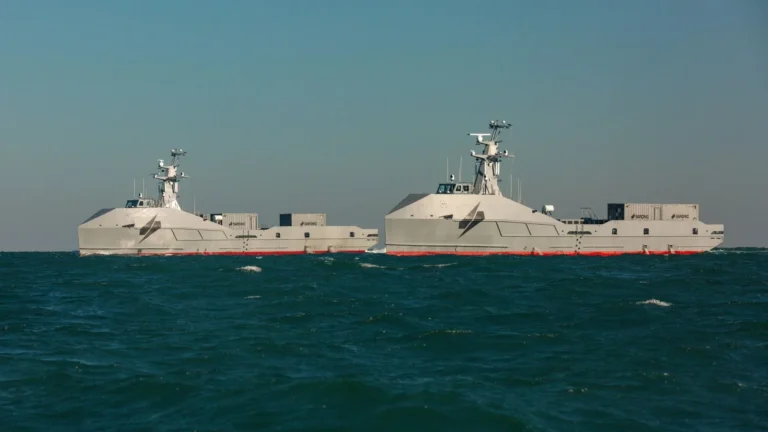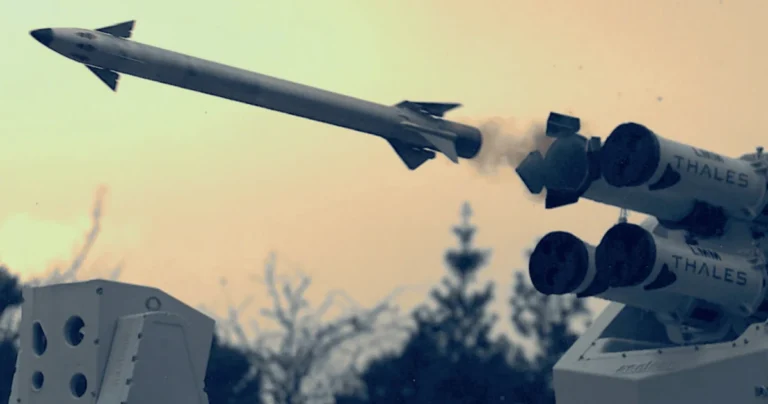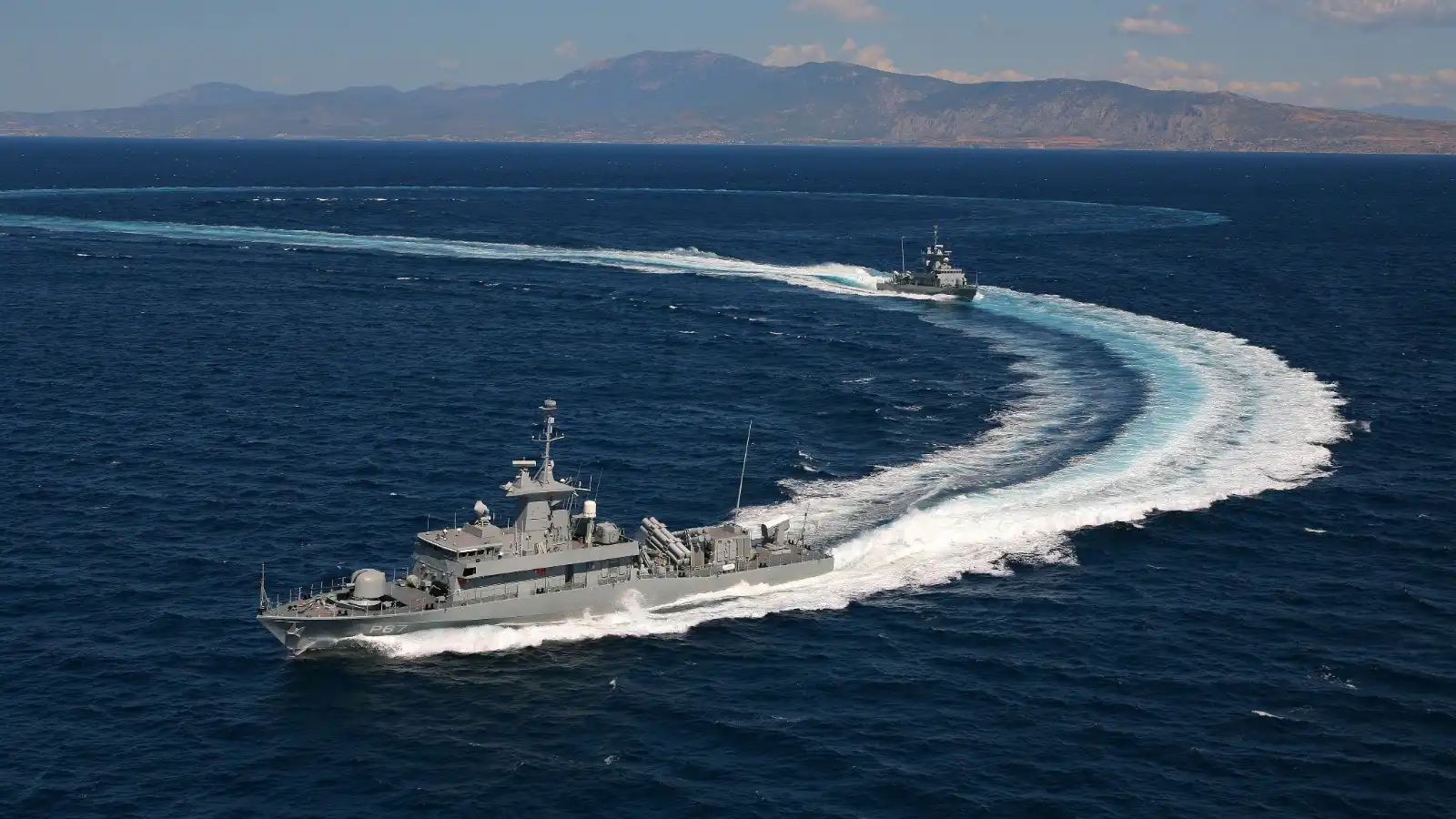
The United Kingdom and Norway will jointly fund two British-built fast attack boats for the Ukrainian Navy, committing more than £100 million to the program, the UK government announced on November 19, 2026. The pledge came as Prime Minister Andy Burnham and Norwegian Prime Minister Jonas Gahr Støre joined allied leaders at a Coalition of the Willing meeting in Berlin. The 30-meter vessels will carry air defense, missile, and self-defense systems from European suppliers and are intended to defend Ukraine’s coastline and the Black Sea Grain Corridor.
The Berlin meeting, hosted by German Chancellor Friedrich Merz and co-chaired by France and the United Kingdom, brought together more than 30 heads of state and government to advance security guarantees for Kyiv, with US envoys Steve Witkoff and Jared Kushner also present. The boats will be funded in equal shares through the Maritime Capability Coalition, which London and Oslo launched in December 2023 alongside the transfer of two ex-Royal Navy Sandown-class mine countermeasures vessels to Ukraine. The stakes are economic as much as military: Ukraine’s maritime corridor, opened in September 2023, had carried more than 200 million tonnes of cargo by June 2026, about 118 million tonnes of it grain, according to Ukraine’s Ministry for Communities and Territories Development.
Fast Attack Boats With Frigate-Like Air Defense Ambitions
London describes the vessels as delivering frigate-like capability at a fraction of the price, with agile offensive and air defense capabilities. Beyond the 30-meter length, UK construction, and European-sourced mission systems, no technical data has been released. The builder, hull design, displacement, propulsion, sensor suite, and weapons fit all remain undisclosed, as does any delivery schedule.
The price offers the clearest clue to the design. More than £100 million for two hulls implies roughly £50 million per boat. Publicly available figures for comparable boats sit well below that: in 2021, the Philippines contracted nine Acero-class boats, based on the 32.65-meter Shaldag Mk V, for 10 billion pesos including weapons, missiles, training, and technology transfer, or roughly $23 million per hull at the time. The premium points to the mission systems, not the hull, as the main cost driver. London has described them only as advanced air defense, missile, and self-defense systems.
The frigate comparison deserves caution. The Shaldag Mk V, for comparison, displaces about 95 tonnes, a size that constrains radar height, magazine depth, and endurance. A Royal Navy Type 23 frigate, by contrast, carries 32 Sea Ceptor cells for area air defense. On a 30-meter hull, a realistic air defense role is point defense of the boat itself and possibly a closely escorted merchant ship against one-way attack drones and sea-skimming missiles. Officials have not said whether the boats will escort grain convoys directly.
Reviving the 2020 UK-Ukraine Naval Program in Smaller Form
The program partially revives an effort launched in October 2020 with a UK-Ukraine memorandum backed by UK Export Finance, then formalized in June 2021 in an agreement covering the joint production of eight fast missile warships and new naval bases on the Black Sea and the Sea of Azov. In September 2021, Babcock showed its proposed answer at DSEI, the 50-meter P50-U, displayed as a model with eight anti-ship missile canisters and a short-range air defense launcher, with the lead boat to be built at Rosyth. Its final weapon fit was never announced. The new boats are 40 percent shorter, and no shipbuilder has been named.
Delivery is the hardest open question. Since February 2022, Türkiye has closed the Bosphorus and Dardanelles to belligerent warships under Article 19 of the Montreux Convention. That restriction left Ukraine’s two ex-Royal Navy Sandown-class minehunters, Chernihiv and Cherkasy, unable to sail home after their July 2023 commissioning. Officials have not described a transit plan for the new boats.
Burnham framed the program as a trade-security measure, saying that “stable and secure sea lanes are arteries of global trade.” Defence Secretary Wes Streeting said the boats “will strengthen Ukraine’s defences in the Black Sea, help protect vital trade routes and deter Russian aggression.”
Analysis: The deal marks a shift in the Maritime Capability Coalition from transferring legacy hulls to commissioning purpose-built combat craft for Ukraine’s post-war navy. The concept fits the Black Sea as Ukraine has reshaped it since 2022, where uncrewed surface vessels and anti-ship missiles pushed Russia’s Black Sea Fleet away from the western Black Sea and made large surface combatants high-value targets. Small, missile-armed, air-defended boats spread risk across cheaper platforms. At roughly £50 million per hull, however, the value case rests on a mission system fit that has not been disclosed, and two boats alone will not provide persistent convoy cover.
Next milestones include a contract award naming the shipbuilder, selection of the air defense and missile systems, a delivery timeline, and a viable transit route. The boats sit within a broader UK package that includes 1,000 additional long-range strike drones, an air defense package announced at the Ukraine Defence Contact Group on November 17, sanctions that made the UK the first country to target all ten of Russia’s major oil producers, and more than £10 billion in additional financial support on top of £3 billion a year in military aid. London and Oslo also agreed to deepen cooperation on artificial intelligence, including defensive AI for the battlefield.