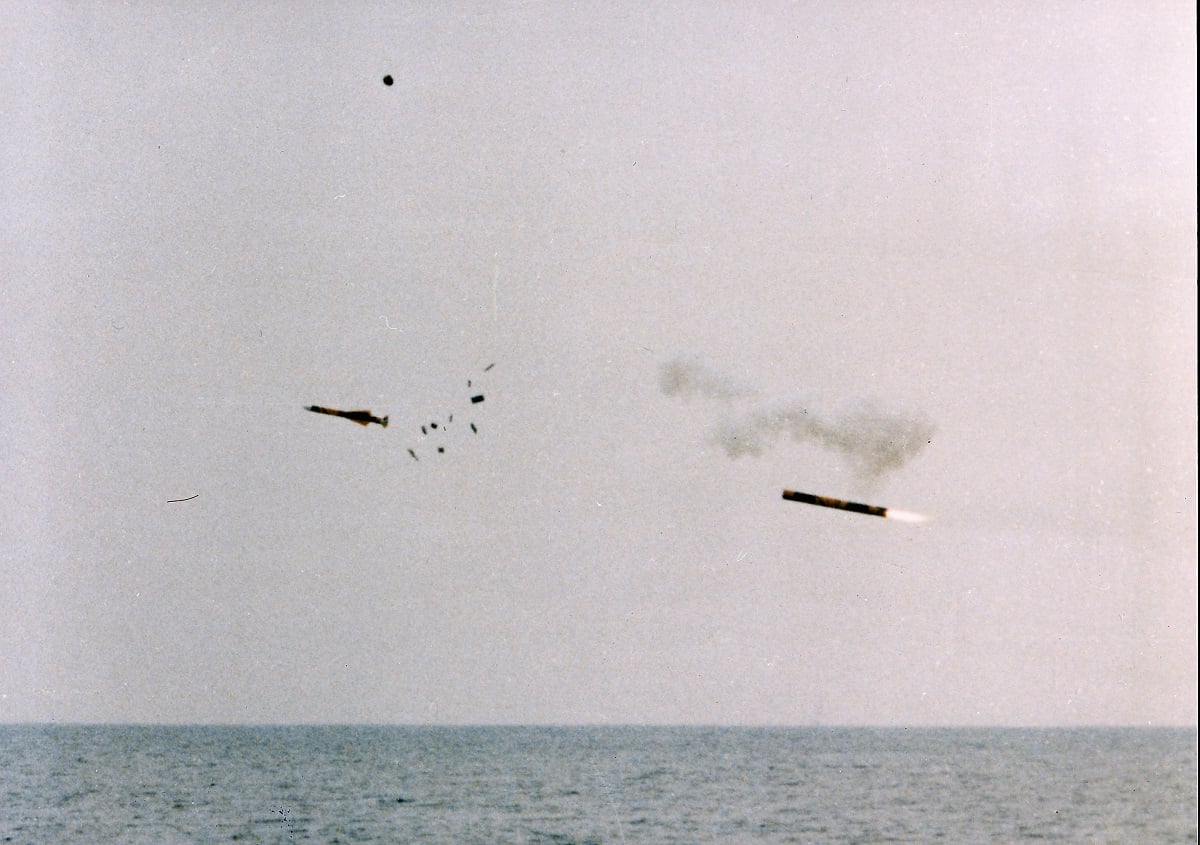
MBDA is offering the SM39 Block 2 Mod 2, the latest production standard of its submarine-launched Exocet anti-ship missile, to arm the Indonesian Navy’s future Scorpène Evolved submarines. The European missile maker confirmed the offer in response to a question from Naval News, which reported the development exclusively on October 6, 2026, during the EURONAVAL 2026 press tour organized by the French maritime industry association, GICAN. MBDA expects Jakarta to place a formal order in early 2027.
The offer fills in the weapons picture for Indonesia’s flagship submarine program. Jakarta selected Naval Group and state-owned shipbuilder PT PAL on March 28, 2024 to deliver two Scorpène Evolved Full LiB boats, to be built at PT PAL’s Surabaya yard in East Java under a technology transfer arrangement. A submarine-launched anti-ship capability has been one of the Indonesian Navy’s (TNI AL) key requirements, and MBDA said the existing contract already includes SM39 launch capability, confirming what Naval News reported in June 2026.
SM39 Exocet Block 2 Mod 2: Launch Sequence and Performance
The SM39 is the submarine-launched member of the Exocet family. It leaves a standard 533 mm torpedo tube inside a watertight capsule, which carries the missile to the surface before releasing it for low-altitude, sea-skimming flight at high subsonic speed. Publicly available descriptions indicate the capsule is self-propelled, so the boat fires from depth through existing tubes without dedicated vertical launch cells.
MBDA lists the missile at 655 kg, 4.69 m long, and 350 mm in diameter, with an operational range of more than 50 km. Guidance is inertial through the midcourse phase, with an active radio frequency (RF) seeker taking over for terminal homing. The high-explosive warhead is fitted with both impact and proximity fuzes.
Block 2 Mod 2 is the current production standard. Compared with earlier SM39 versions, it incorporates updated electronics, improved seeker performance, and stronger electronic counter-countermeasures (ECCM). The ECCM upgrade targets the main weakness of any active RF seeker: jamming and decoys fielded by a defended surface group.
The missile already arms Brazil’s Riachuelo-class Scorpène submarines and the French Navy’s nuclear-powered boats. Publicly available information indicates earlier SM39 standards also equip Scorpène operators in Chile, Malaysia, and India, giving Indonesia an established user base for training and logistics.
Why MBDA Chose SM39 Over the SM40 for Indonesia
The choice comes down to schedule. MBDA unveiled the next-generation SM40 at EURONAVAL 2024, and the missile remains in development. Indonesia’s first Scorpène Evolved is due for delivery in 2032 and the second in 2033. MBDA said it wants the TNI AL able to equip the boats with a submarine-launched anti-ship missile at or soon after delivery if required, and the SM40 may not be available in that window.
The SM40 is a substantial step up. MBDA credits it with a 120 km range, more than double the SM39’s quoted envelope, and a new-generation J-band seeker initially designed for the surface-launched MM40 Block 3c. Range is the operationally decisive variable: an SM39 shot places the submarine relatively close to its target’s escort screen, while the SM40 allows engagement from a much greater standoff distance.
MBDA stressed that Indonesia could still acquire the SM40 later with minimal adjustments. Both missiles use the same storage and launch capsule, and both fit standard 533 mm torpedo tubes. Naval Group separately confirmed in July 2026 that the Scorpène Evolved will be able to fire the SM40. The result is a two-step path: an in-production missile for initial operational capability, with the longer-range weapon as a later insertion rather than a platform redesign.
Scorpène Evolved Weapons Fit and PT PAL’s Build Schedule
Naval Group says the Scorpène Evolved can carry a mixed load of up to 18 heavyweight torpedoes and SM39 missiles, managed by the SUBTICS combat system and a sonar suite that includes a planar array. A full lithium-ion battery configuration supports mission endurance of up to 80 days, and the design uses acoustic discretion technology similar to that of France’s ballistic missile submarines. Publicly available information indicates the TNI AL’s current Type 209-derived submarines do not field a submarine-launched anti-ship missile, which would make the Scorpène Evolved the first Indonesian boats with that capability.
First steel cutting for the lead boat was slated for July 2026 at PT PAL in Surabaya, with testing and sea trials planned between 2030 and 2032. Work on the second boat begins in 2027, with trials from 2031 to 2033. The TNI AL joined the Scorpène Club in 2025, alongside Brazil, Chile, India, and Malaysia, and both companies say negotiations on additional hulls are ongoing.
Missile integration also carries an industrial agenda. PT PAL President Director Kaharuddin Djenod has said the company aims to take a larger role in future missile integration work and to secure related technology transfer it could apply to other programs, including its KSOT autonomous submarine. Naval Group has also offered technology transfer on missiles and torpedoes beyond the submarine contract.
Analysis: The SM39 offer is fundamentally about time. By proposing an in-production weapon, MBDA gives the TNI AL a path to field a credible submarine-launched anti-ship capability alongside the boats themselves, rather than operating two new submarines as torpedo-only platforms while waiting for SM40 qualification. For an archipelagic state whose approaches include the Malacca, Sunda, and Lombok straits, and whose exclusive economic zone in the North Natuna Sea overlaps with China’s nine-dash line claim, a submerged anti-ship missile adds a deterrent layer that surface combatants cannot replicate. An order would further deepen a French defense relationship that already includes 42 Rafale fighters from Dassault Aviation.
MBDA expects Indonesia to formally order the SM39 in early 2027. Key unknowns remain, including the number of missiles in an initial buy, the contract value, any local role for PT PAL in integration or production, and whether Jakarta commits to the SM40 once development is complete. The pace of construction in Surabaya and the outcome of talks on additional Scorpène Evolved hulls will determine how many launch platforms the missile ultimately serves.