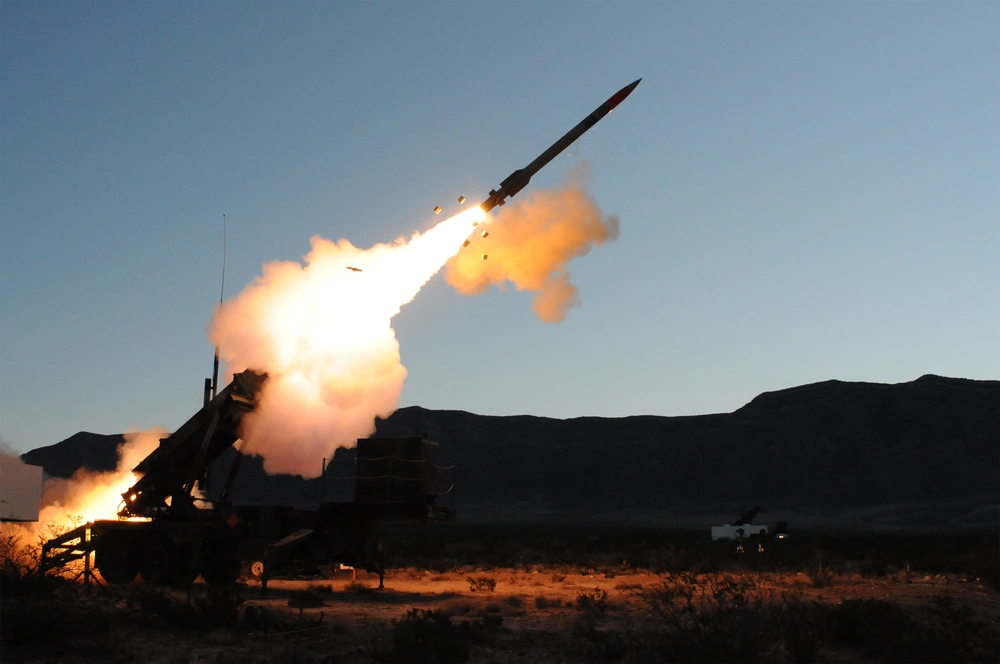
President Donald Trump has made his final decision to grant Ukraine a license to produce Patriot air defense missiles on its own territory, Ukrainian President Volodymyr Zelensky said Friday, September 25, 2026, three days after the two leaders met on the sidelines of the 81st United Nations General Assembly in New York.
The announcement caps a stop-start saga that began July 8, 2026, at the NATO summit in Ankara, Turkey, where Trump first floated the idea to Zelensky in informal remarks, and continued through a July 31 reversal at Camp David, when Trump said no formal agreement existed and cited the risk of sensitive technology eventually being used against the United States. Secretary of State Marco Rubio confirmed on September 2 that talks were ongoing but stressed that new production lines would take years, not months, to build. The reaffirmation lands as Russia intensifies ballistic missile strikes on Ukrainian cities ahead of winter; Zelensky said Friday that nearly three of every four Russian ballistic missiles got through in July, before Ukrainian crews raised the interception rate to 60 percent during an overnight barrage between September 23 and 24.
Patriot Missile License Leaves Interceptor Variant Unresolved
Trump did not specify which Patriot interceptor Ukraine could build, and the distinction carries real operational weight. RTX, through its Raytheon business, produces the PAC-2 Guidance Enhanced Missile-Tactical (GEM-T), a one-stage, solid-fuel interceptor that uses a blast-fragmentation warhead and ground-radar guidance to engage aircraft, cruise missiles and some tactical ballistic missiles. Lockheed Martin builds the newer PAC-3 family, including the Missile Segment Enhancement (MSE), a hit-to-kill interceptor that destroys targets through direct kinetic impact rather than blast effect.
The PAC-3 MSE carries a dual-pulse solid rocket motor and enlarged fins; publicly available specifications indicate these extend its range and intercept altitude well beyond the baseline PAC-3, to a reported 35 kilometers or more. It is the PAC-3 MSE, not the GEM-T, that Ukraine has relied on to intercept Russia’s quasi-ballistic Kh-47M2 Kinzhal and Iskander-M missiles. Michael Cadenazzi, the Pentagon’s assistant secretary of defense for industrial policy, said in August that the department was still weighing which variant to license. Raytheon’s earlier engagement with Kyiv points toward the GEM-T as the likelier candidate, partly because it avoids the single-source active radar seeker supply chain that constrains PAC-3 MSE output. That would ease Ukraine’s broader air defense picture but would not, by itself, close the ballistic missile gap that prompted the request in the first place.
Three to Seven Years Separate License From First Missile
Licensing a foreign nation to build a controlled US missile follows a two-step process under the International Traffic in Arms Regulations, administered by the State Department’s Directorate of Defense Trade Controls. A Technical Assistance Agreement must come first, permitting RTX or Lockheed Martin engineers to share controlled data with Ukrainian counterparts; a separate Manufacturing License Agreement must follow before Ukraine can actually assemble an interceptor. Neither existed as of the most recent public reporting in August. Industry estimates put the span from signature to meaningful output at three to seven years, a timeline Zelensky has publicly disputed, telling reporters earlier this week that Ukraine could reach initial production within one to one and a half years.
The gap matters against the scale of existing demand. The US Army’s contract with Lockheed Martin currently caps PAC-3 MSE output at 650 missiles annually, and a Pentagon framework to expand that to 2,000 a year is not expected to finish until around 2033, a rate shared across the Army’s own stockpile and every allied Patriot operator, not Ukraine alone. European officials have separately floated locating sensitive production nodes in Poland, drawing on the Wisla program’s existing PAC-3 integration, so tooling and intellectual property would sit outside the range of Russian strikes while Ukraine still receives dedicated output.
Analysis: Friday’s statement is the third distinct position Trump has taken on Ukrainian Patriot production since July, and the pattern underscores that presidential intent and executed export authorization remain two different things. A signed Technical Assistance Agreement would not close Ukraine’s immediate gap on its own: Zelensky’s one-to-one-and-a-half-year estimate is optimistic against the industry norm, and existing US and allied production is already oversubscribed, with Rubio describing interceptor demand as the top defense need worldwide. The license carries more strategic than tactical weight, embedding Western air defense manufacturing inside Ukraine for the first time and strengthening Kyiv’s case for further industrial partnerships with Poland and other frontline states. It does nothing to shield Ukrainian cities this winter, when allied battery transfers already in the pipeline, not a production license years from its first missile, will determine how much of the ballistic missile gap actually closes.
The State Department has not said whether a Technical Assistance Agreement has been drafted, and neither RTX nor Lockheed Martin had issued updated statements on the licensing timeline as of Friday. Zelensky said Ukraine, the United States and European allies would revisit the broader negotiating picture within ten days, alongside a separate US proposal for a technical-level trilateral meeting with Russia in the United Arab Emirates, for which no date has been set. Which interceptor variant the Pentagon ultimately names, and whether Warsaw ends up hosting part of the production chain, will determine how quickly, if at all, Ukrainian-built Patriots reach the front line.