Northrop Grumman has won a $1.6 billion multi-year order to boost output of PAC-3 MSE solid rocket motors and ignition safety devices for the U.S. Army’s Patriot system, the company announced November 16, 2026. The hardware feeds Lockheed Martin’s production line for the Patriot Advanced Capability-3 Missile Segment Enhancement (PAC-3 MSE) interceptor, and the dual-pulse motor at the center of the award is built at Northrop Grumman’s Allegany Ballistics Laboratory (ABL) in Rocket Center, West Virginia.
The order falls under the two seven-year framework agreements, worth more than $3 billion combined, that Northrop Grumman signed with the Department of War (DoW) and Lockheed Martin on August 3, 2026. The roughly $2 billion PAC-3 framework set up Northrop Grumman as a second source of PAC-3 solid rocket motors alongside incumbent L3Harris, while a separate $1 billion agreement covers Terminal High Altitude Area Defense (THAAD) components. Both sit downstream of Lockheed Martin’s January 6, 2026, framework with the DoW to lift PAC-3 MSE output from approximately 600 rounds a year to approximately 2,000 over seven years, after the company delivered 620 interceptors in 2025.
Inside the $1.6 Billion PAC-3 MSE Propulsion Order
The award covers two items: the solid rocket motor that propels the interceptor and the ignition safety device that arms and initiates it. Northrop Grumman says the order directly supports the DoW’s Acquisition Transformation Strategy, which trades longer-term demand commitments for contractor investment in production capacity.
The company has been building that capacity since before the framework was signed. Since 2021, it has doubled solid rocket motor capacity at its Utah facilities, nearly tripled capacity at ABL and increased capacity at its Elkton, Maryland, site by 25%. Ben Davies, corporate vice president and president of Northrop Grumman Defense Systems, said the company is “turning years of propulsion investment into expanded capacity for the warfighter.” He added that Northrop Grumman has committed more than $2 billion to munitions technologies and facilities since 2019, including over $1 billion in solid rocket motor production, and that “this award translates that commitment into greater scale.”
Several contract details remain undisclosed. The announcement does not specify motor quantities, annual delivery rates, the period of performance or the contract type, nor does it state how much of the $2 billion PAC-3 framework the $1.6 billion order consumes.
Dual-Pulse Motor and Second-Source Supply for PAC-3 MSE
The PAC-3 MSE is the hit-to-kill evolution of the PAC-3 Cost Reduction Initiative (CRI) missile. Lockheed Martin reached a production decision in 2014, declared First Unit Equipped in 2015 and Initial Operational Capability in 2016. Compared with the CRI, the MSE adds a larger dual-pulse solid rocket motor, larger control fins, and upgraded actuators and thermal batteries. The second pulse fires later in the flight, restoring energy for the endgame and expanding the engagement envelope in both altitude and range. Lockheed Martin credits these upgrades with nearly doubling the reach of the baseline PAC-3, though official range figures are not published.
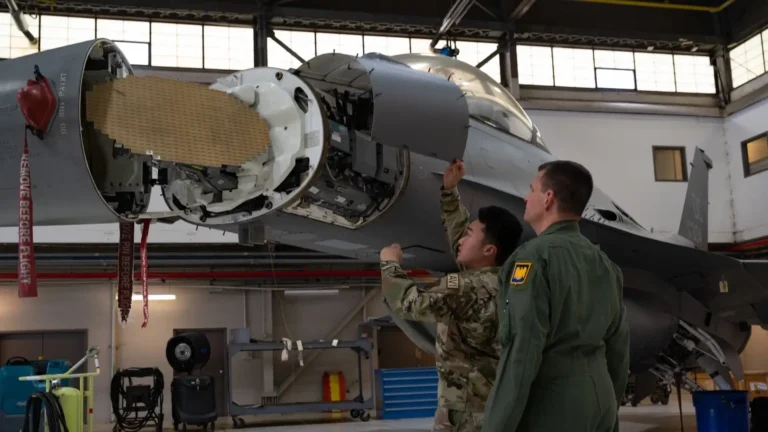
Terminal guidance relies on an active Ka-band radar seeker, while publicly available specifications indicate that each round carries 180 small attitude control motors for precise steering in the final seconds before impact, plus a lethality enhancer, a fragment explosive device. The interceptor has been demonstrated with the Integrated Battle Command System (IBCS), THAAD and Aegis.
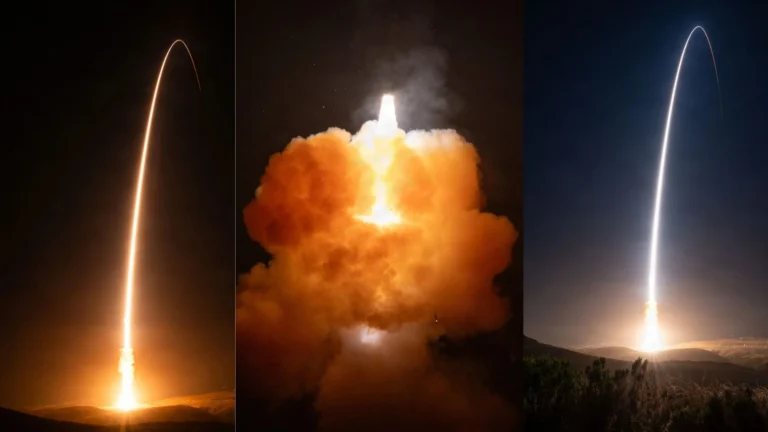
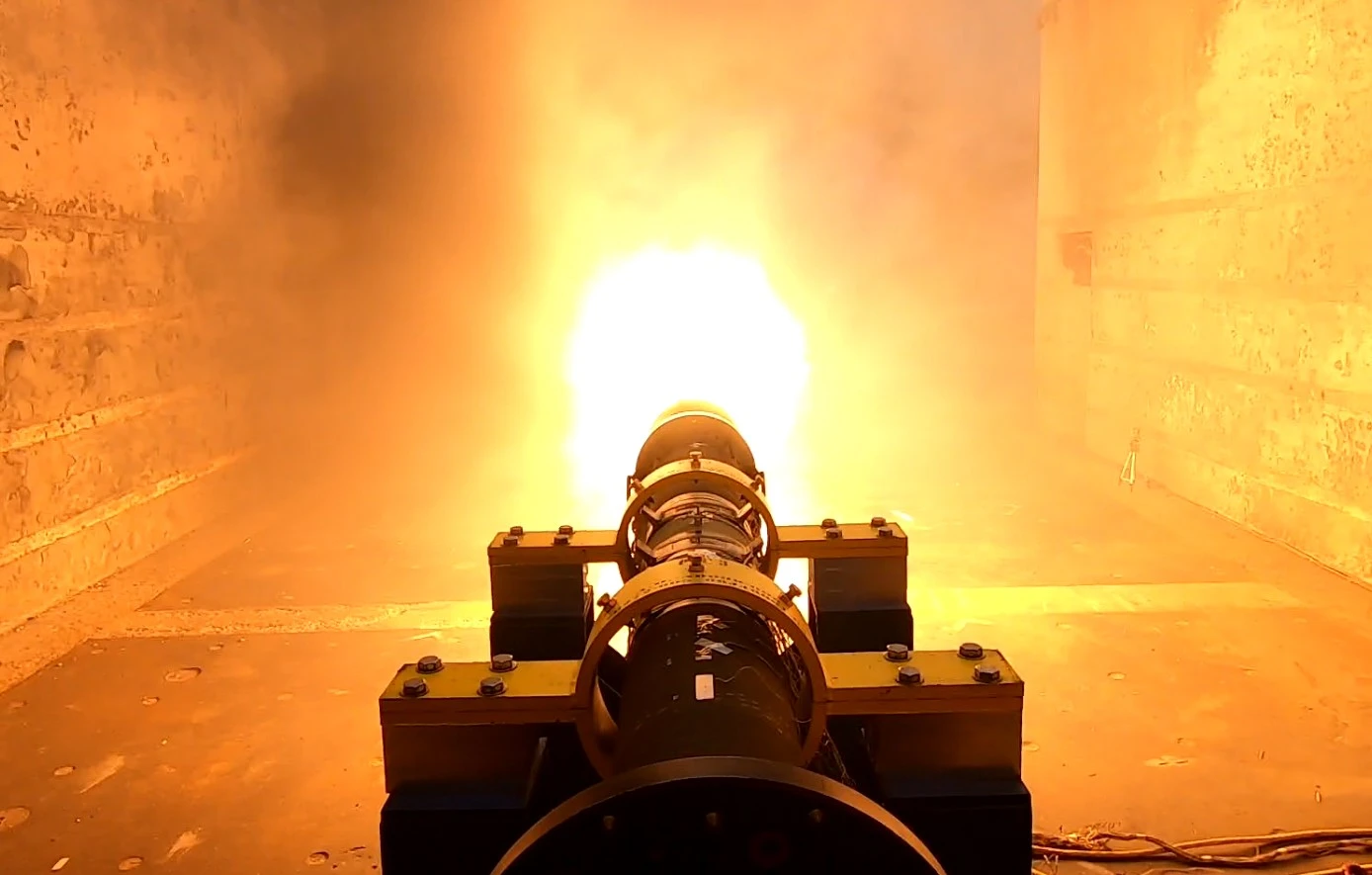
Propulsion is the pacing item in that architecture. L3Harris, through its Camden, Arkansas, plant, has been the sole producer of PAC-3 MSE solid rocket motors and signed its own seven-year framework in late July 2026 to nearly triple output of the motor, the attitude control motors and the lethality enhancer, then announced on September 8 a $4.7 billion, seven-year undefinitized contract award from Lockheed Martin for that propulsion hardware. Northrop Grumman’s ABL line introduces a second, independent motor source for a weapon whose production ceiling is set by its slowest supplier. Northrop Grumman says ABL now manufactures the PAC-3 MSE motor and released imagery of a static test there, but it has not disclosed whether ABL-built motors have completed full qualification or entered lot acceptance.
Analysis: The $1.6 billion figure matters less than what it reveals about how the DoW is attacking the interceptor shortage. Lockheed Martin’s 2,000-round target is only as credible as the propulsion tier beneath it, and a single motor source represented the clearest single point of failure in the PAC-3 MSE supply chain. By funding Northrop Grumman as a parallel producer while L3Harris expands, the department is buying redundancy as well as volume, a hedge against a single plant disruption halting deliveries. The other constraint is financial: Lockheed Martin’s own framework was set up as the basis for a supply contract subject to congressional authorization and appropriations, and contractor capital only stays committed if annual budgets sustain the promised demand.
The next markers to watch are the disclosure of the order’s quantities and completion date, the first production deliveries of ABL-built motors to Lockheed Martin, and the definitization of L3Harris’s $4.7 billion award. Lockheed Martin’s 2026 delivery total, due early next year, will show whether the ramp toward 2,000 interceptors a year is on schedule.