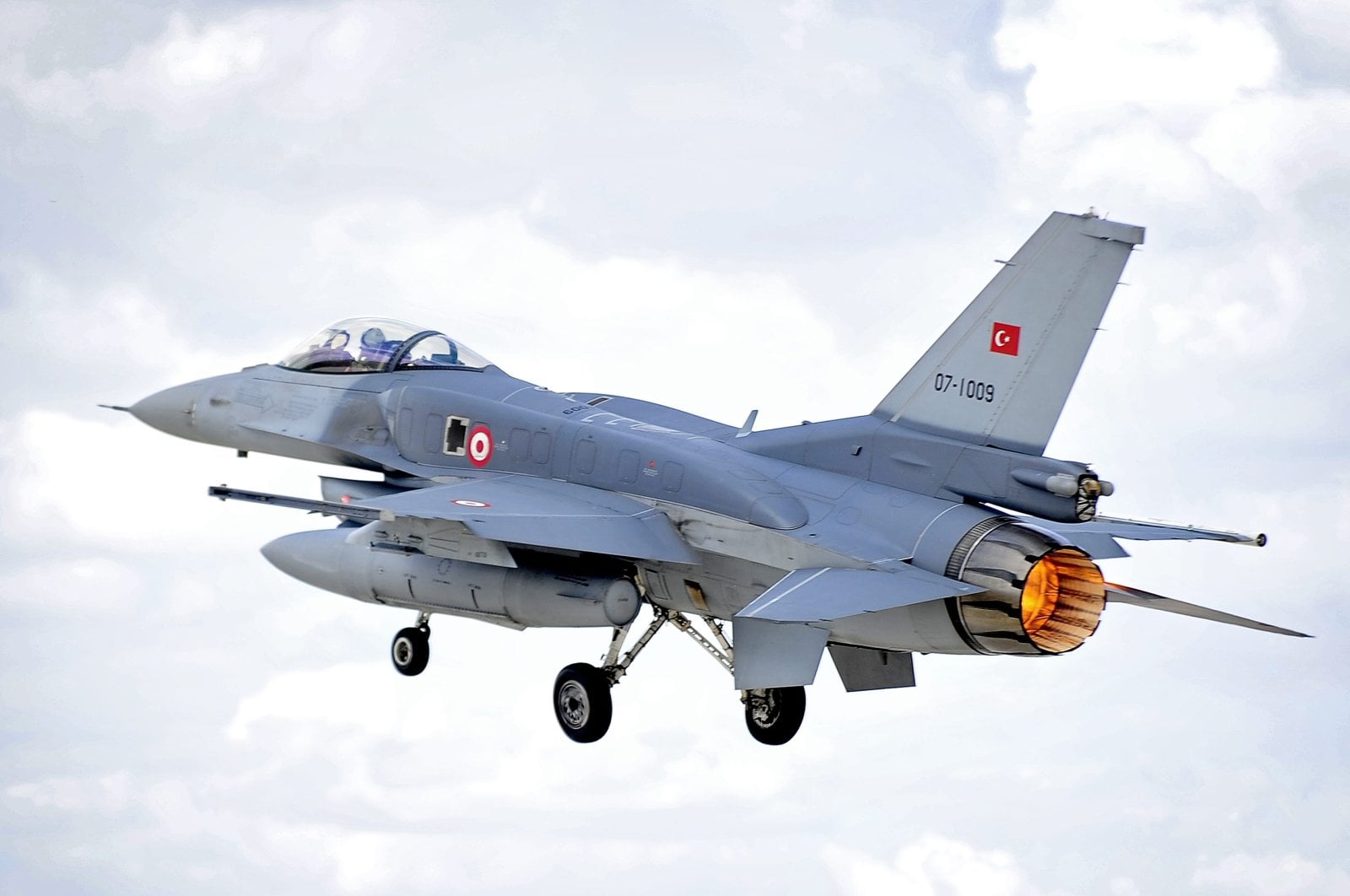
The Turkish Air Force has completed a temporary deployment of F-16 fighters to Latvia’s Lielvārde Air Base, where the jets reinforced NATO air defense around the country’s October 3, 2026, parliamentary election. Latvian Defense Minister Raivis Melnis visited the Turkish unit at the base on October 9, 2026, to thank Ankara for the contribution.
Melnis asked allies in September to reinforce Latvian airspace protection for the vote that elected the 15th Saeima, the national parliament. Germany sent four Eurofighters from Tactical Air Wing 74 to Lielvārde for about a week starting in late September. Italy, which leads the Baltic fighter mission from Šiauliai in Lithuania, accepted additional tasks, and Türkiye committed F-16s from its detachment at Ämari in Estonia. Drones have shaped Latvian security politics all year: after two Ukrainian drones that Kyiv said were diverted by Russian electronic warfare (EW) struck an empty oil storage site in Rēzekne on May 7, Defense Minister Andris Sprūds resigned and Melnis, an army colonel, took over the ministry.
Turkish F-16s in Latvia Tested Lielvārde as a Forward NATO Base
According to the Latvian Ministry of Defense, the F-16s were stationed in Latvia temporarily to support NATO Integrated Air and Missile Defense (IAMD) activities. The ministry said the deployment also tested two things: the alliance’s ability to move and deploy allied forces quickly, and Lielvārde’s readiness to receive and support allied air units. Melnis said the jets’ presence showed NATO could “effectively move forces where they are needed.”
The aircraft come from the Turkish detachment that has stood quick reaction alert (QRA) at Ämari since August 1, 2026. Pre-deployment reporting put that rotation at five F-16s and 76 personnel from the 181st “Pars” Squadron, normally based at the 8th Main Jet Base in Diyarbakır, on a tour running through November 30. Photos released after Melnis’s visit show 181st Squadron jets at Lielvārde. The Turkish contingent is also the first to fly under NATO’s Baltic air defense mission, which replaced the 22-year-old Baltic Air Policing mission on August 1 following decisions taken at the alliance’s July summit in Ankara.
Lielvārde, a Soviet-era airfield transferred to Latvia in 1994, first hosted a Baltic fighter detachment in 2024, when German Eurofighters operated there while Ämari’s runway was resurfaced. Unlike Ämari and Šiauliai, it has no standing fighter presence, so each short-notice arrival exercises the host-nation support NATO would need in a crisis. Two Turkish F-16s first landed there on August 21. The ministry has not disclosed how many jets deployed for the election, how long they stayed, or whether they were scrambled.
Sensors, Weapons, and Cost: F-16s Against Baltic Drone Incursions
Türkiye operates one of NATO’s largest F-16 fleets, but Turkish officials have not identified the block of the jets serving in the Baltic. Pre-deployment reporting described Block 50+ aircraft, while the 181st Squadron has traditionally flown Block 40 jets. Publicly available specifications for both variants indicate a General Electric F110 afterburning turbofan producing roughly 28,000 to 29,000 pounds of thrust, an AN/APG-68-series mechanically scanned radar, and a standard air defense loadout of AIM-120 AMRAAM and AIM-9 Sidewinder missiles plus an internal 20mm M61A1 cannon.
Those parameters frame the problem the mission now faces. One-way attack drones and decoys fly low and slow and return small radar signatures, and in both 2026 shootdowns over Latvia, pilots positively identified the target and engaged over unpopulated ground. A French Rafale from Šiauliai downed the first drone over Latvia on June 8 near Bērzgale with an air-to-air missile. On August 14, two Turkish F-16s scrambled from Ämari alongside two Italian Eurofighters from Šiauliai before one of the Italian jets destroyed a drone near Rugāji in Balvi Municipality. Turkish jets scrambled again on September 1 when drones entered Estonian airspace, without firing. Each missile shot spends a high-end interceptor on a far cheaper target, a trade Melnis defended in June as the price of security.
Türkiye is modernizing its fleet under the national ÖZGÜR program, which first adds a domestic mission computer to Block 30 airframes and plans to integrate the ASELSAN MURAD active electronically scanned array (AESA) radar in a later phase extended to Block 40 and Block 50 jets. AESA radars generally improve detection and tracking of small, slow targets. It has not been disclosed whether any of the jets in the Baltic carry ÖZGÜR modifications.
Analysis: The Lielvārde deployment shows NATO turning its Baltic fighter posture from a fixed two-base routine into a network that can push jets to a third airfield on short notice. That matters most for Latvia, whose eastern municipalities of Rēzekne and Balvi near the Russian border have absorbed both drone shootdowns on its territory this year. It also gives Türkiye, host of NATO’s 2026 summit, a visible operational role on the northern flank, far from its southern theaters. The structural weakness remains cost and capacity: fighters on QRA are a finite, expensive answer to cheap drones, and Latvian officials say ground-based anti-drone defenses along the eastern border still need strengthening.
The Turkish rotation at Ämari is scheduled to end on November 30. Germany then plans to station five Eurofighters and about 120 personnel at Ämari from December 2026 through March 2027. The open questions are how many Turkish jets used Lielvārde and for how long, whether any intercepts occurred during the election window, and whether NATO will keep Lielvārde as a standing third base for the Baltic air defense mission.