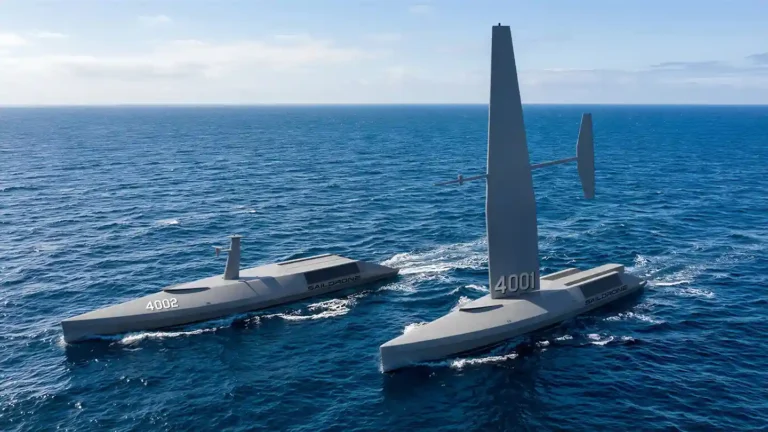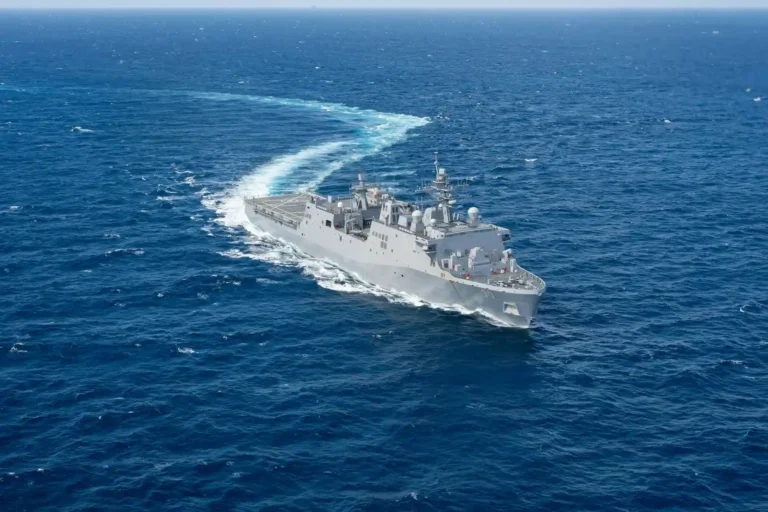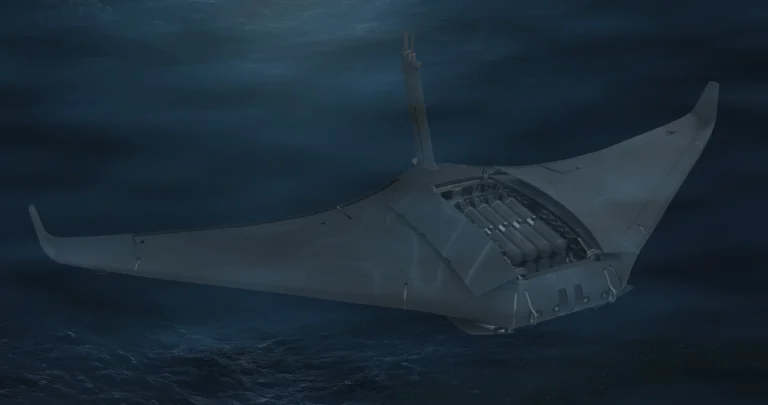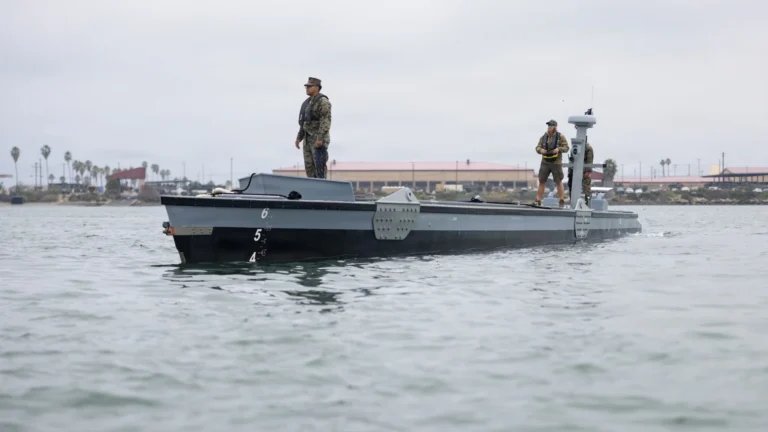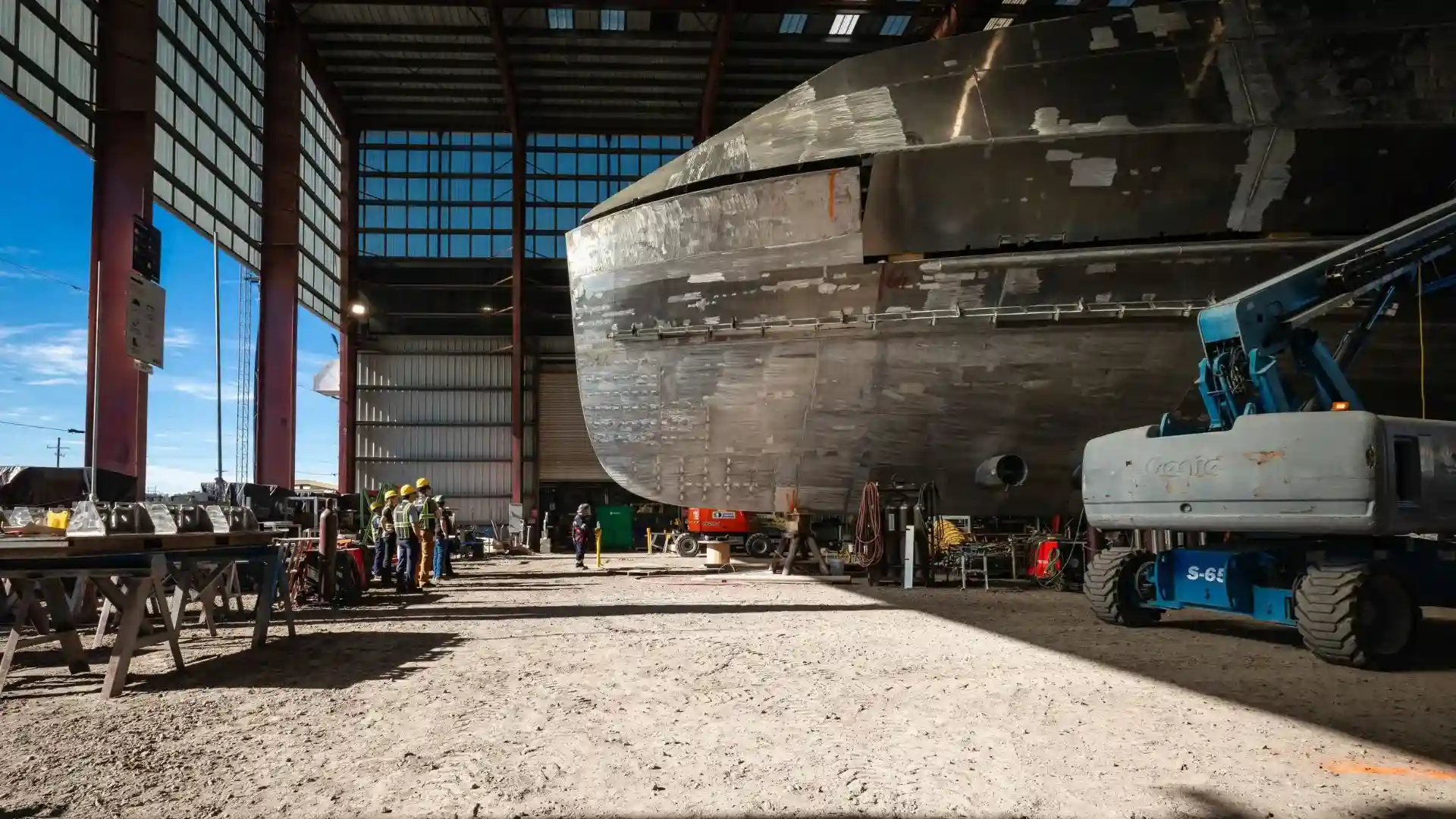
Saronic Technologies hosted the U.S. Navy’s post-award conference for the Marauder medium unmanned surface vessel (MUSV) at its Franklin, Louisiana shipyard during the week of November 2, 2026, walking the Navy program team through the production line and the facilities it is expanding to build the 180-foot autonomous ship. The visit comes roughly five weeks after the Navy awarded the Austin, Texas-based company a production agreement for 10 Marauder hulls.
The award is part of the Navy’s first production buy of medium uncrewed surface vessels. On September 29, 2026, the service announced production Other Transaction Authority (OTA) agreements with Galliano Marine Services, HII and Saronic, each covering 10 MUSVs at an average procurement cost of $40 million per vessel, or roughly $1.2 billion across 30 hulls. The Navy launched the MUSV Marketplace in March 2026 as a faster alternative to a traditional program of record, sending seven companies to at-sea testing before selecting three producers. First deliveries are expected by the end of fiscal 2027.
Marauder MUSV Design: Payload, Range, and Autonomy Testing
Marauder is a 180-foot (55-meter) autonomous surface vessel designed from the keel up for uncrewed operations and high-rate production. Saronic’s published specifications list a maximum payload of 150 metric tons and a mission deck able to carry four 40-foot or eight 20-foot ISO containers. Range reaches 5,400 nautical miles with a 25-metric-ton base load and 4,100 nautical miles at maximum load, at a 12-knot cruise speed; publicly available specifications indicate a sprint speed above 25 knots. Saronic has not disclosed the propulsion plant, sensor suite or installed power generation, and the Navy has not identified which mission packages it intends to field first.
The container-based architecture is the design’s central bet. The hull supplies mobility, power, communications and autonomy, while payloads ranging from logistics cargo to sensors or launchers can be swapped without redesigning the ship. Saronic and Castelion have announced plans to integrate the Blackbeard hypersonic weapon on Marauder for a maritime launch demonstration in 2027, which would test the concept against a demanding strike payload.
During the Navy’s Phase I evaluation, Marauder ran eight days of continuous operations and completed more than 140 test scenarios without failure, according to the company. The trials included autonomous tracking and maneuvering among multiple vessels, and passive-perception runs in which the ship detected, tracked and followed contacts using only onboard passive sensors, with no active radar.
Inside Saronic’s Franklin Shipyard Expansion and Production Ramp
Saronic acquired the former Gulf Craft yard in Franklin, about 100 miles south of Baton Rouge, in April 2025. In December 2025 it committed $300 million to expand the nearly 100-acre site, adding more than 300,000 square feet of production capacity and three new slips, with completion targeted for the end of 2026. The company has tied the expansion to a goal of 1,500 jobs in Louisiana.
The first Marauder launched in May 2026. At the time of the production award, Saronic said it had flipped its third hull, with several more moving through the line; the company has not published an updated hull count since. In a November 9 post on X, Saronic said Marauder went from initial design to on the water in under a year and that it is now actively building a fleet for defense and maritime customers.
Completed hulls move to a test and commissioning site of more than 30,000 square feet at the Port of Gulfport, Mississippi, where the first Marauder arrived in mid-July 2026.
Marauder is Saronic’s second Navy production program after the 24-foot Corsair autonomous surface vessel, under a $392 million production agreement awarded in December 2025.
Analysis: The post-award conference marks the start of schedule accountability rather than a ceremony. At $40 million per hull, an MUSV costs a fraction of a crewed surface combatant, but the Navy’s approach depends on three yards delivering in parallel, with first hulls due roughly 12 months after award. Saronic’s risk is concentrated: the Franklin expansion is still under construction while contracted hulls move down the line. The firm-fixed-price OTA structure places overruns on the builder, which rewards Saronic’s vertically integrated model if it works and exposes the company directly if it does not.
The next milestones are completion of the Franklin expansion by year-end, delivery of the first contracted Marauder hulls, and Navy acceptance testing at Gulfport ahead of the fiscal 2027 delivery window. Key unknowns remain the value of Saronic’s individual agreement, the mission payloads the Navy will integrate first, and whether follow-on delivery orders through the Navy’s drones.mil Maritime Marketplace, which opened a Phase II MUSV call for solutions in late September 2026, extend Marauder production beyond the initial 10 hulls.