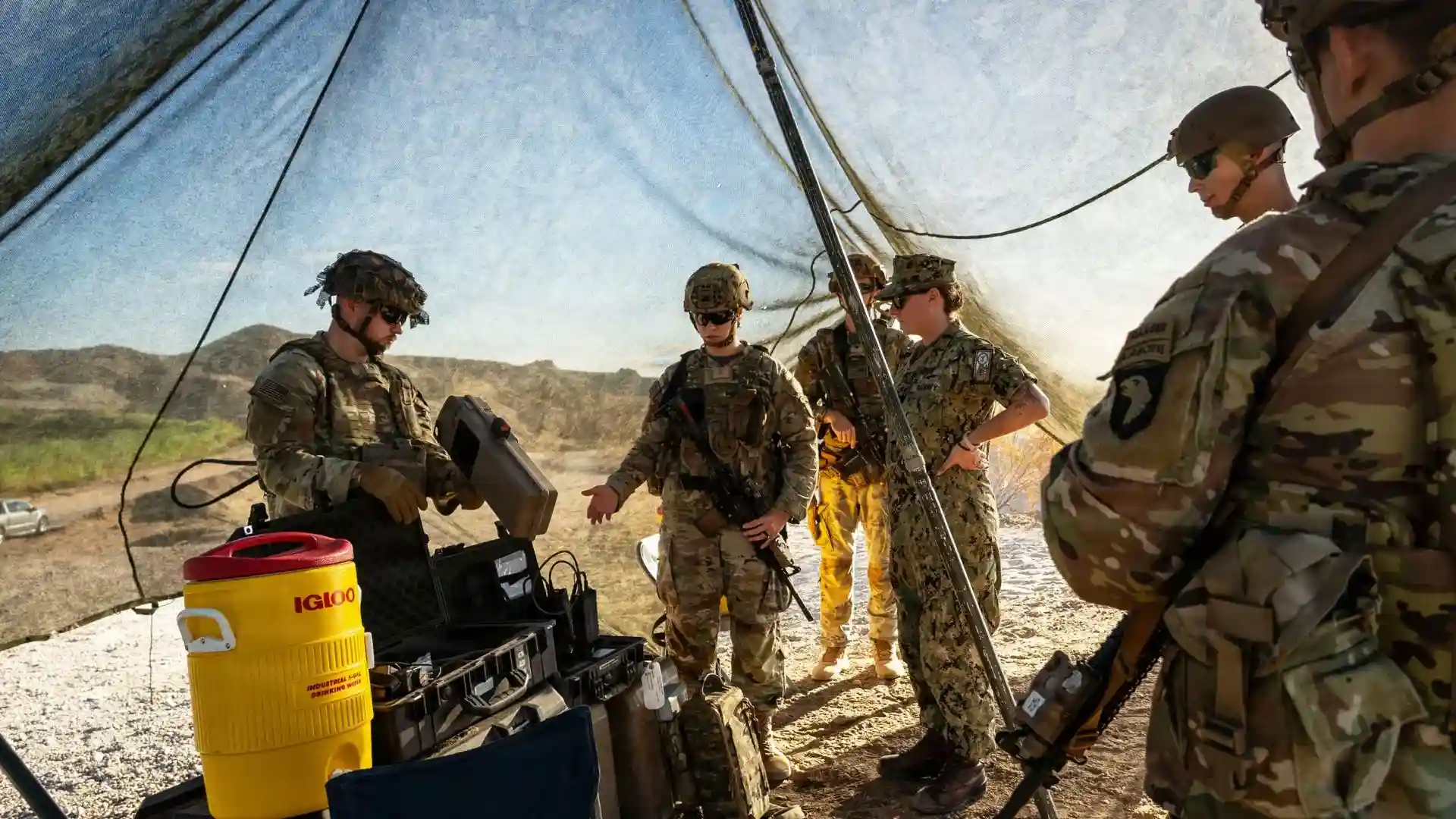
The Department of War has awarded a contract to DroneSec through Joint Interagency Task Force 401 (JIATF 401) to deliver intelligence products and threat analysis on adversary unmanned systems (UxS), the U.S. Army announced on November 10, 2026. The announcement did not disclose the contract value, period of performance, or contracting vehicle.
The award lands a little over a year after JIATF 401 replaced the Army-led Joint Counter-small Unmanned Aircraft Systems Office (JCO), created in 2019. An August 27, 2025 memorandum signed by Secretary of War Pete Hegseth disestablished the JCO, which could evaluate counter-drone systems but lacked authority to enforce purchases. The new task force reports directly to the Deputy Secretary, can approve up to $50 million per initiative, and absorbed the Replicator 2 counter-drone effort. Most of its visible activity has centered on sensors, effectors, and command and control; the DroneSec deal targets the knowledge that should drive those choices.
Inside the DroneSec Contract: Threat Intelligence on Adversary UxS
Under the agreement, DroneSec will supply intelligence products and threat analysis supporting JIATF 401’s mission to rapidly deliver counter-UxS capabilities to U.S. forces. According to the Army, the work covers three areas: emerging adversary drone technologies, the procurement networks that supply them, and the tactics, techniques, and procedures (TTPs) used to develop and employ weaponized drones.
That scope reaches past the airframe. Procurement networks cover component sourcing, intermediaries, and the commercial supply chains that allow state and non-state actors to field low-cost attack drones at volume. TTP analysis addresses how those systems are modified, launched, and massed in combat, which shapes detection thresholds, engagement timelines, and the defeat mechanisms a counter-UAS system must carry.
“Maintaining an advantage over our adversaries requires both understanding how unmanned systems are developed and ensuring our warfighters have the tools they need to defeat those threats,” said U.S. Army Brig. Gen. Matt Ross, director of JIATF 401. “Partnering with industry leaders helps us accelerate that effort and ensure our forces are prepared to meet the evolving threat.”
The Army said the contract will integrate adversary threat intelligence to strengthen situational awareness and keep fielded capabilities aligned with the threats warfighters actually face.
How OSINT Feeds JIATF 401’s Layered Counter-UAS Architecture
JIATF 401 will also draw on DroneSec’s open-source intelligence (OSINT) and unmanned systems threat intelligence capabilities to improve visibility into the global UxS threat landscape. The task force said those insights will inform capability development, operational planning, and the delivery of integrated, layered counter-UAS solutions.
DroneSec, founded in Australia, specializes in drone threat intelligence. Its Notify platform, launched in June 2020 as a software-as-a-service product for the drone, counter-drone, and UAS traffic management sectors, combines OSINT collection with a proprietary tracking engine to monitor drone incidents, threat actors, and trends. Whether Notify access forms part of the JIATF 401 award has not been disclosed.
Several other points remain unconfirmed: the classification level of the deliverables, whether DroneSec analysis will feed directly into command-and-control or test workflows, and whether the contract covers specific theaters or remains global in scope.
Analysis: The award treats counter-UAS as an intelligence problem upstream of the interceptor. Frontline drone designs, particularly in Ukraine, have iterated on cycles of weeks to months, faster than traditional requirements and test processes can absorb. Commercial OSINT on component flows and adversary TTPs can flag those shifts early, giving JIATF 401 a basis to adjust requirements, test scenarios, and buying decisions before a capability gap appears in the field. The value of the contract will depend less on the reporting itself than on how quickly the task force converts it into requirements and acquisition action.
Key unknowns include the contract’s dollar value and duration, and whether JIATF 401 will award further threat intelligence contracts alongside its hardware programs. The next indicator will be whether DroneSec reporting surfaces in JIATF 401 test events, joint demonstrations, or training through the Joint Counter-small UAS University (JCU) at Fort Sill, which JIATF 401 now oversees.