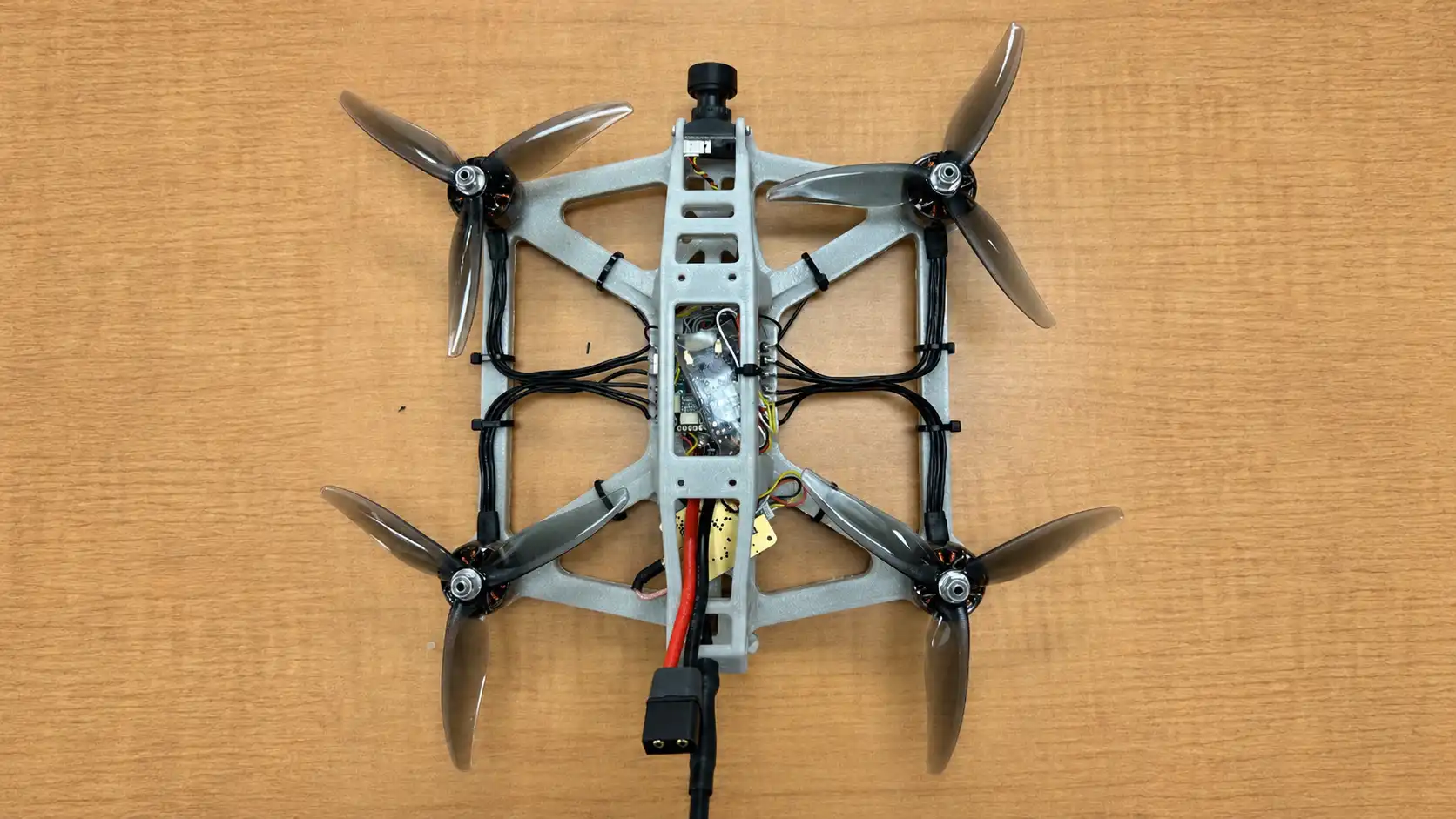
The U.S. Army Research Laboratory (ARL) is teaming with Texas-based ZYLtech Engineering to mass-produce a patented Army 3D printing filament that doubles the interlayer strength of printed parts, the laboratory announced November 24, 2026. Developed by ARL, part of the U.S. Army Combat Capabilities Development Command (DEVCOM), the dual-polymer thermoplastic filament runs on the standard-issue printers Soldiers already use in the field, letting units produce 3D-printed parts such as drone airframes and ground vehicle components at the point of need.
The effort targets a long-standing weakness in Army expeditionary manufacturing. Most field printers rely on fused filament fabrication (FFF), which deposits melted plastic layer by layer and leaves weak bonds between layers, producing parts too brittle for sustained battlefield use. The gap matters more since a July 10, 2025, memo signed by Pete Hegseth, “Unleashing U.S. Military Drone Dominance”, reclassified Group 1 and Group 2 small unmanned aircraft systems (UAS) as consumables, putting a premium on units that can repair or replace airframes without waiting on a contested supply chain.
How ARL’s Army 3D Printing Filament Doubles Interlayer Strength
ARL’s approach combines two polymers with different melting points in a single filament strand. One polymer maintains geometric stability during and after printing; the other provides strong bonding between deposited layers. “The vast majority of commercial filaments available right now contain only a single polymer,” said Dr. Eric Wetzel, an ARL mechanical engineer and one of the filament’s inventors. “Our invention puts two polymers together in a single filament, and our experiments proved that doing so results in much stronger 3D-printed parts.”
The laboratory describes two performance tiers. Loaded into an unmodified printer, the filament yields parts with twice the interlayer strength of conventional material. A post-print oven treatment within a specific temperature range, which ARL has not disclosed, raises strength further without altering part dimensions or geometry.
ARL has not identified the polymers in the patented formulation or released the patent number. Earlier ARL work, presented by the Army in 2020 and in peer-reviewed research co-authored by Wetzel, described core-shell filaments pairing acrylonitrile butadiene styrene (ABS) with a polycarbonate core, in which the higher-temperature polycarbonate keeps the part stable while the ABS is annealed. Whether the patented filament follows that architecture has not been confirmed.
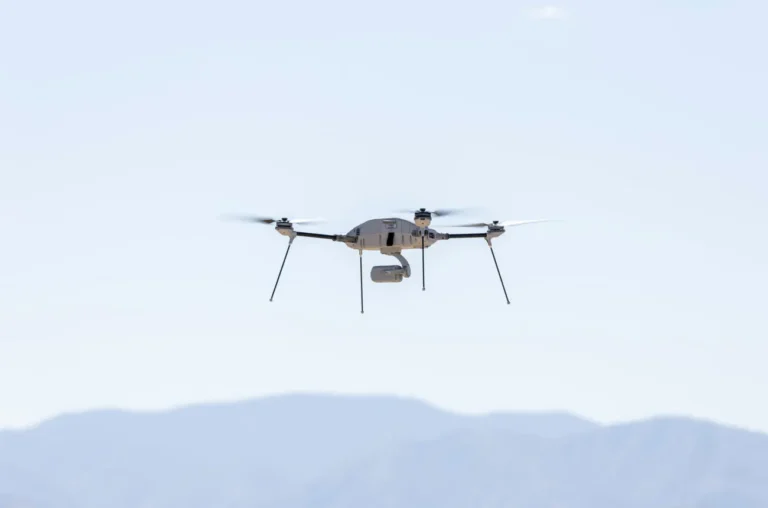
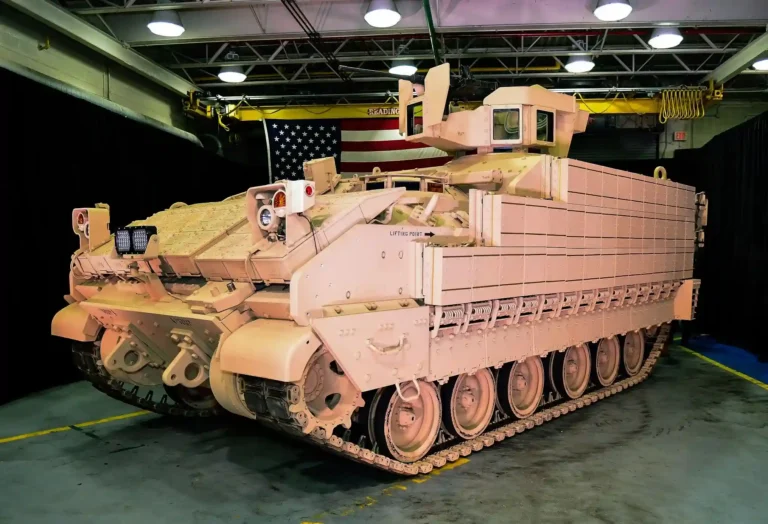
DEVCOM Ground Vehicle Systems Center (GVSC) first evaluated the filament in a ground vehicle application. “Due to the improved structural performance of the dual material filament, we were able to test and approve 3D-printed replacement parts using expeditionary printing capabilities that were previously only printable using industrial-style 3D printers,” said Matthew Ludkey, mechanical engineer and lab manager at GVSC. ARL also shipped 3D-printed quadcopter bodies to the 25th Infantry Division in Hawaii, where Soldiers fitted motors and flew durability trials. The ARL airframes outperformed those printed with conventional filament and survived being stomped on. Quantitative test data and printer models were not released.
Inside the ZYLtech CRADA and the Co-Extrusion Bottleneck
The barrier to fielding was manufacturing rather than chemistry. ARL chief scientist Dr. Dimitra Stratis-Cullum said that for much of the laboratory’s research, “the bedrock infrastructure needed to realize and scale up our discoveries doesn’t exist in industry yet.” ARL spent several years lowering mass-production costs and de-risking the technology for commercial investors.
“Our solution requires a specialized filament extrusion line that feeds multiple extruders into a single filament extrusion die,” Wetzel said. “ZYLTech was one of the only domestic vendors available with this special setup.”
ARL signed a Cooperative Research and Development Agreement (CRADA) with the company in 2025 to run pilot productions. ARL contributed expertise in material selection, the geometric arrangement of the two materials within the filament cross-section and the design of the dual-material extrusion die. ZYLtech supplied the extrusion line and the process knowledge to push output toward commercial production rates. Parts printed from pilot-run filament went to several Army units for field evaluation.
A CRADA is a research vehicle, not a procurement contract. No contract value, production volume, unit price, fielding schedule or commercial release date has been announced.
Analysis: The program’s value lies in where the improvement sits in the logistics chain. Because the gain comes from feedstock rather than hardware, the Army can upgrade printers it already owns without a new acquisition program, and GVSC’s approval of parts previously limited to industrial printers suggests some components could shift from depot-level to unit-level production. The flip side is supplier concentration: by Wetzel’s own account, ZYLtech is one of very few domestic firms with the required multi-extruder setup. If demand grows alongside the small UAS push, the Army will need additional qualified sources or a deliberate investment in that extrusion capacity, or risk trading one supply chain vulnerability for another.
ARL says work continues to raise filament quality at the highest production rates. The next markers to watch are commercial release of the filament, qualification standards for printed replacement parts, any follow-on agreement or procurement vehicle, and evaluations beyond GVSC and the 25th Infantry Division. It also remains unclear whether expeditionary kits will include the controlled heat treatment needed for the highest strength tier.