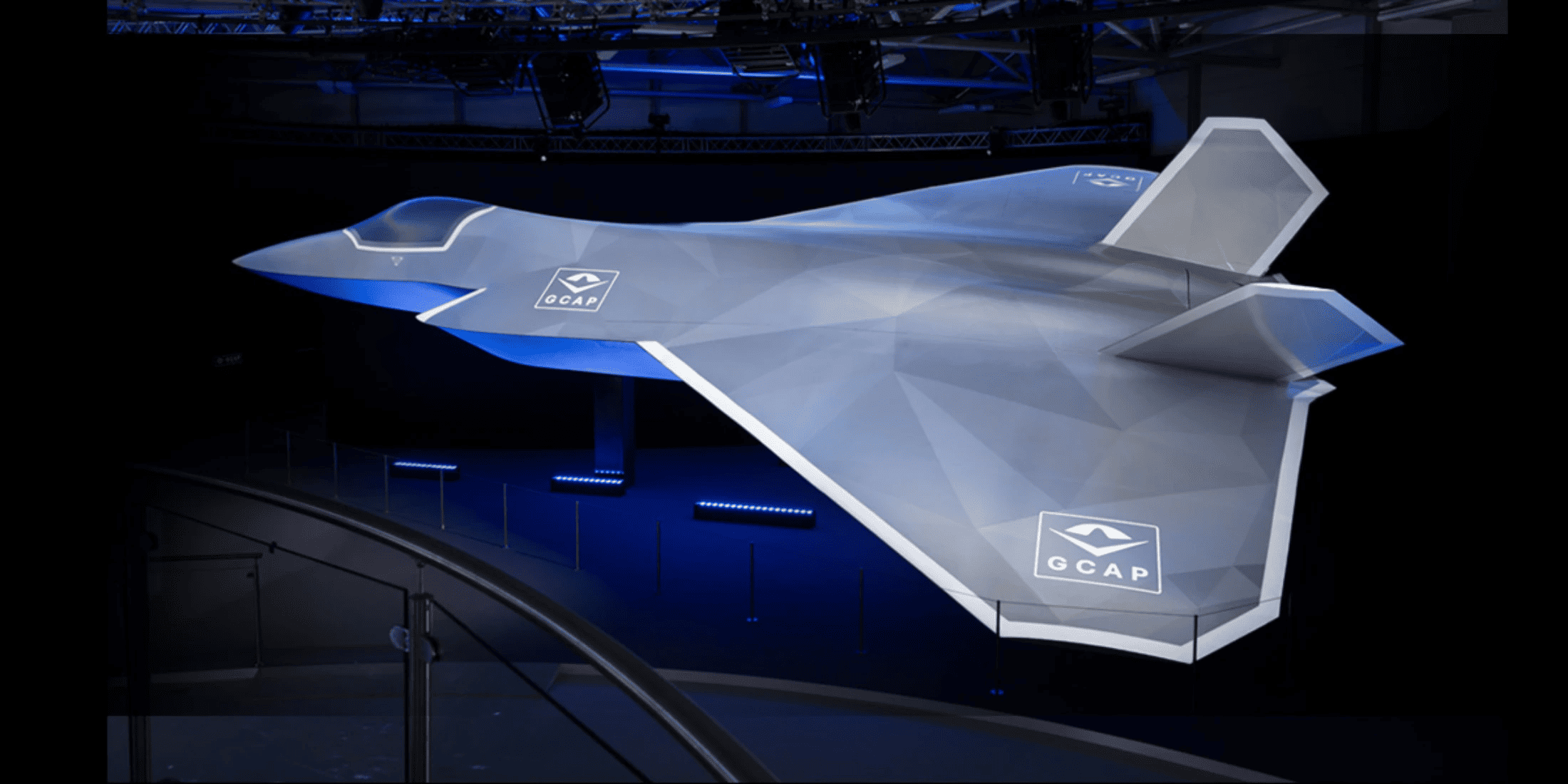
British Prime Minister Andy Burnham said on October 8, 2026, that the United Kingdom is open to Germany joining the Global Combat Air Programme (GCAP), the sixth-generation fighter effort London runs with Italy and Japan. Speaking in Berlin after talks with Chancellor Friedrich Merz, Burnham told reporters: “I’ve indicated to the Chancellor … our openness to Germany joining GCAP.” He said London would seek to progress the idea with Rome and Tokyo.
The statement came during Burnham’s first visit to Berlin since taking office on July 20, four months after France and Germany abandoned the crewed New Generation Fighter at the heart of the Future Combat Air System (FCAS). Years of deadlock between Dassault Aviation and Airbus Defence and Space over design authority and workshare, with Dassault reportedly seeking up to 80 percent of the fighter work, left the German Air Force without a jointly funded successor to the Eurofighter Typhoon. Only FCAS enablers such as the combat cloud continue. The German Defense Ministry has so far confirmed only initial coordination talks on sixth-generation requirements.
Germany Joining GCAP: Workshare Inside a Program Already Under Contract
Berlin would not be joining a paper program. On July 3, 2026, the GCAP Agency, part of the treaty-based GCAP International Government Organisation (GIGO), awarded a £4.6 billion ($6.1 billion) contract to Edgewing, the trinational prime contractor and design authority. The 18-month award runs to December 31, 2027, and covers completion of the advanced concept and assessment phase plus joint detailed design and development. It followed a £686 million bridging contract in April. Edgewing is jointly owned by BAE Systems, Leonardo and Japan Aircraft Industrial Enhancement Co. (JAIEC), the Japanese industrial vehicle through which Mitsubishi Heavy Industries participates.
The subsystem map is equally settled. Rolls-Royce, IHI and Avio Aero are developing the engine under an integrated international arrangement, while the GCAP Electronics Evolution (G2E) consortium of Leonardo UK, Leonardo, ELT Group and Mitsubishi Electric holds integrated sensing and communications. Publicly released concept models show a large twin-engine delta-wing design with internal weapons carriage, sized for the range and payload Japan needs over long maritime approaches.
That is the core difficulty. Germany’s natural contributions overlap with work already assigned: MTU Aero Engines is a partner on the Eurofighter’s EJ200 engine, Hensoldt supplies radar and electronic warfare technology, and Airbus assembles German Eurofighters at Manching. Berlin and Airbus have signaled that Germany wants a role proportionate to its financial contribution. Delivering that inside a contract already in execution would mean reopening workshare or accepting a junior position.
Cost Sharing and the 2035 Deadline: Why Tokyo Holds the Key
For London, the financial case is direct. The UK Defence Investment Plan, published on June 30, 2026, committed £8.6 billion to GCAP over four years, with the British defense budget under strain and after Tokyo reportedly voiced frustration earlier this year over delays to that plan. A fourth design partner would dilute each founding nation’s share of nonrecurring development costs. Rome has made the same argument: Italian Defense Minister Guido Crosetto said in June that a new partner would help share the bill.
Germany can pay. Core federal defense spending rises from €82.2 billion in 2026 to about €109 billion in the 2027 draft budget, and Berlin is targeting 3.5 percent of gross domestic product from 2029.
Japan is the constraint. Tokyo’s overriding priority is replacing its Mitsubishi F-2 fleet, which begins retiring around 2035, against an expanding Chinese air threat, and Japanese officials have reportedly signaled reluctance to admit any new design and development partner. Edgewing chief executive Marco Zoff told reporters at the Farnborough International Airshow in July that the 2035 in-service target would not move if another nation joined. Leonardo’s chief executive struck a more cautious note at the same show, warning that integrating another industrial bloc risked delays.
Observer, Partner or Alternative: Germany’s Options After FCAS
GCAP was designed for tiered participation. Canada became its first observer on July 21, 2026, gaining privileged access to program information without decision-making rights or financial obligations, and Saudi Arabia has long been cited as another candidate. Observer status would give Berlin a low-cost foothold, but it falls well short of the industrial leadership German officials sought in FCAS.
The domestic alternative is less mature. Team Gen 6, unveiled at the ILA Berlin Air Show on June 11, 2026, groups Airbus Defence and Space with Autoflug, Diehl Defence, Hensoldt, Liebherr, MBDA, MTU Aero Engines and Rohde & Schwarz. The group has submitted a position paper to the government, but it is not a launched program. Internal German government documents reportedly favor a partnership with Sweden and Spain, where Airbus could start on equal footing, and Airbus has courted Saab since the FCAS rupture.
In the interim, the German Air Force is bridging the gap with 35 F-35A aircraft on order to take over the Tornado’s role in NATO nuclear sharing, and 20 Tranche 5 Eurofighters contracted in October 2025 for €3.75 billion, with deliveries from 2031 to 2034.
Analysis: German accession would place three of the four Eurofighter nations behind a single sixth-generation design and could reduce Europe from as many as three competing fighter efforts to two. The price is industrial. With design authority vested in Edgewing and propulsion and sensor work already contracted, Berlin would have to accept inside GCAP the kind of junior position it refused from Dassault inside FCAS. Its main levers would be funding and production volume, not leadership. Whether Germany will trade design sovereignty for a 2035-class aircraft is the real test of Burnham’s offer.
No timeline or formal application has been announced. Tokyo’s position remains the main unknown. Berlin has yet to choose between GCAP, Team Gen 6 and a Swedish-Spanish route. The current Edgewing contract expires on December 31, 2027; a German decision that slips past the next funding phase would leave even less room to shape the aircraft.