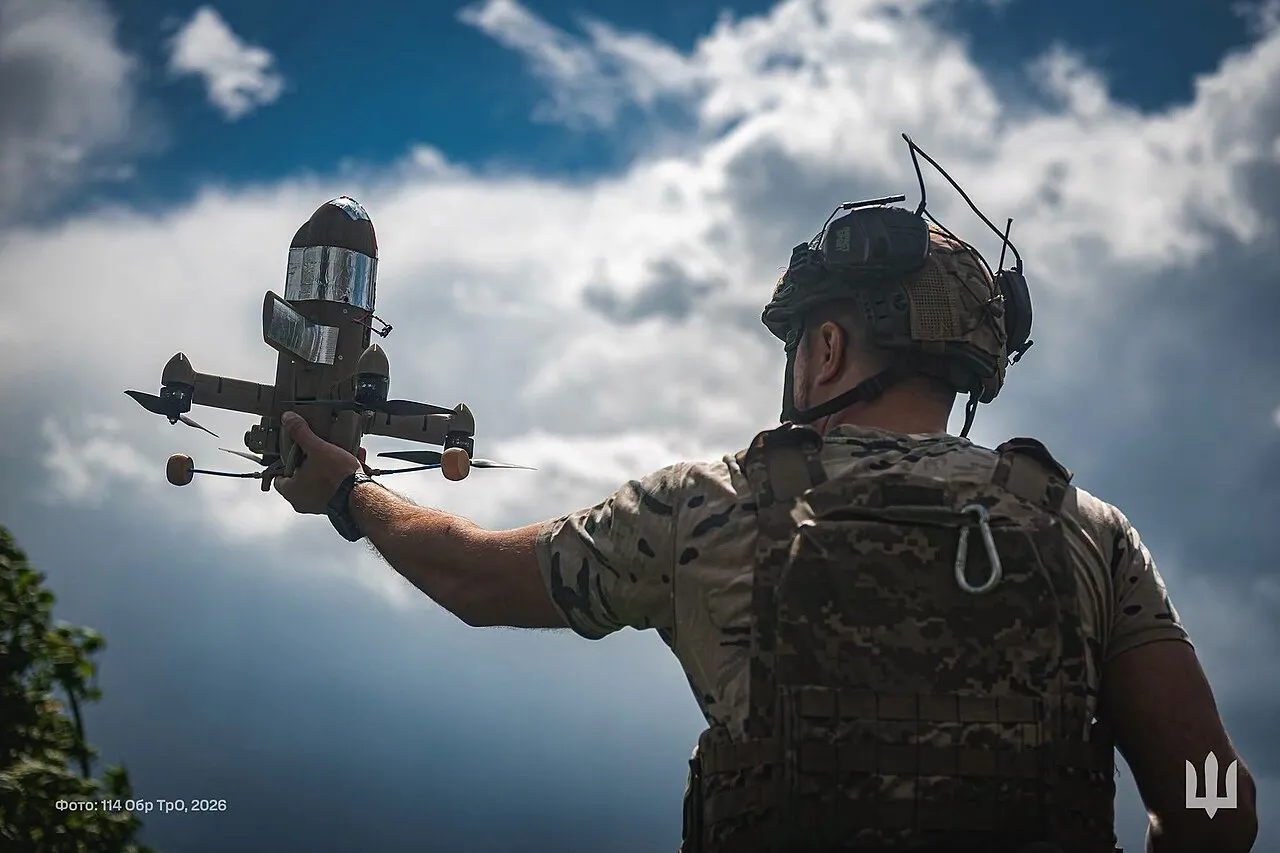
Ukrainian troops ordered more than 590,000 unmanned aerial vehicles (UAVs) on Brave1 Market, the government-run defense technology marketplace, during the first nine months of 2026, the Ministry of Defense of Ukraine said on September 25, 2026. The ministry said the average monthly value of orders has more than doubled since January and that interceptor drones are the most ordered category.
The updated ePoints program, integrated with Brave1 Market, launched on August 1, 2025, and lets combat units select their own equipment instead of waiting for centrally allocated supply. The ministry reported $1 billion in ePoints orders during the first year and a record monthly total above 5 billion hryvnias in June 2026. The latest figure follows the July 15, 2026 dismissal of Defense Minister Mykhailo Fedorov, who headed the Ministry of Digital Transformation when the program launched. The Verkhovna Rada confirmed Yevhenii Khmara as his successor on August 19, 2026.
Brave1 Market Order Mix: Interceptors Lead, Kamikaze Drones Follow
The ministry ranks interceptors first, covering both drones that hunt Russian reconnaissance UAVs and dedicated anti-Shahed interceptors. Copter-type first-person-view (FPV) kamikaze drones rank second. Fixed-wing kamikaze UAVs posted the fastest growth, with peak-period orders reaching six times the start-of-year rate, though the ministry did not name the peak month. Bomber drones take the largest share of spending, and mothership drones rank among the costliest segments. The release gives no unit counts or spending figures by category, so the ranking shows relative demand only.
Interceptor dominance follows the cost-exchange logic of Ukrainian air defense. Publicly available estimates put interceptor drones at roughly $1,000 to $2,500 per unit, against $20,000 to $70,000 for a Shahed-type one-way attack drone. The target set is hardening. According to the Ukrainian Air Force, jet-powered Shahed use rose roughly fivefold in July compared with June, and variants such as the Geran-5 can reach up to 600 kilometers per hour. Manufacturer specifications for recent interceptor designs cite top speeds of roughly 325 to 400 km/h. A slower interceptor cannot run down a faster target in a tail chase, so engagements depend on early cueing, head-on geometry, and automated terminal tracking.
The fixed-wing surge points to demand for mid-range interdiction. The ministry’s August results say Ukrainian forces keep hitting targets at depths of 20 kilometers or more along Russian supply routes, the band where fixed-wing kamikaze drones typically operate. Bomber drones, typically reusable heavy multirotors that drop munitions, absorb the largest share of budgets, which suggests units value payload capacity they can fly repeatedly.
How ePoints Tie Ukrainian Drone Procurement to Verified Combat Results
Units earn ePoints for confirmed target hits, reconnaissance, and robotic logistics and evacuation missions, then spend them on drones, unmanned ground vehicles (UGVs), and electronic warfare (EW) systems. Orders go directly to manufacturers, and the state-run DOT-Chain Defence platform handles payment and delivery. The catalog listed more than 1,100 items as of early August, and the ministry reports average delivery of in-stock items at seven days, down from 10 to 14 days previously.
Verification underpins the ledger. According to the ministry, each result is recorded on video in the DELTA combat system and checked by the Innovation Development Fund of the Ministry of Digital Transformation. In August, the program counted nearly 24,000 destroyed enemy multirotor UAVs, the highest monthly figure since it began, and more than 35,000 fixed-wing UAVs hit. Manufacturers see real-time rankings, mission counts, and which units use their products most. Units can also buy with their own funds through a Buyer’s Account, and custom drone orders currently accept only those funds.
The scale figures do not reconcile cleanly. A June release counted more than 500,000 drones ordered with combat points since launch, while the September figure covers UAVs alone over nine months and does not say how many were bought with ePoints, how many have arrived, or what they cost. The Defense Procurement Agency signed 333.6 billion hryvnias in drone contracts in the first half of 2026, twice the year-earlier amount, through several channels including DOT-Chain Defence. The ministry’s releases do not say how Brave1 Market volumes fit within that total.
Analysis: Brave1 Market gives Ukraine a granular demand signal. Because units spend points earned in combat, the order mix shows what commanders treat as scarce: counter-drone defense first, inexpensive precision strike second, mid-range fixed-wing strike growing fastest. For NATO and the US defense industrial base, the lesson concerns cadence more than volume. Manufacturers read that demand in real time through product rankings, while Western programs of record adjust across budget cycles. The limits matter too. Ordering is not delivery, ePoints reward verified unit outcomes rather than measure platform effectiveness, and the public releases carry no performance data by platform.
Several unknowns will shape the next disclosures. The ministry has not said whether it will publish order values, delivery counts, or the ePoints share of purchases, and it has not said when custom drone orders will open to ePoints. The technical test is harder. President Volodymyr Zelensky said in September that new interceptors have downed jet-powered Shaheds while refinement continues, and whether those faster designs reach the catalog at scale will decide if interceptors keep their lead. The ministry has kept publishing Brave1 Market data since the July change of leadership, which points to continuity for now.