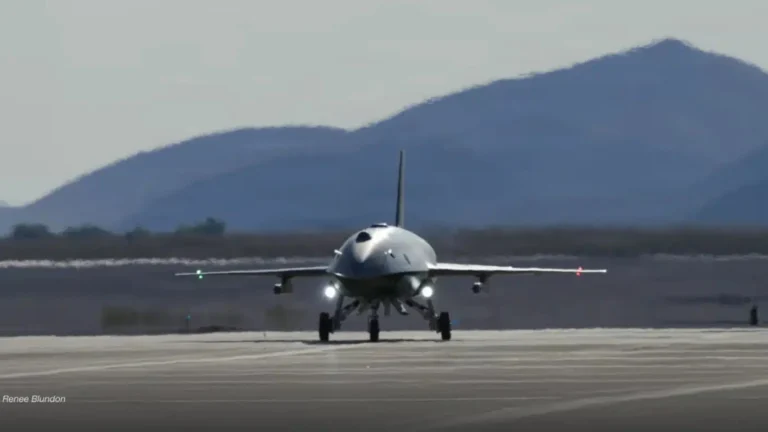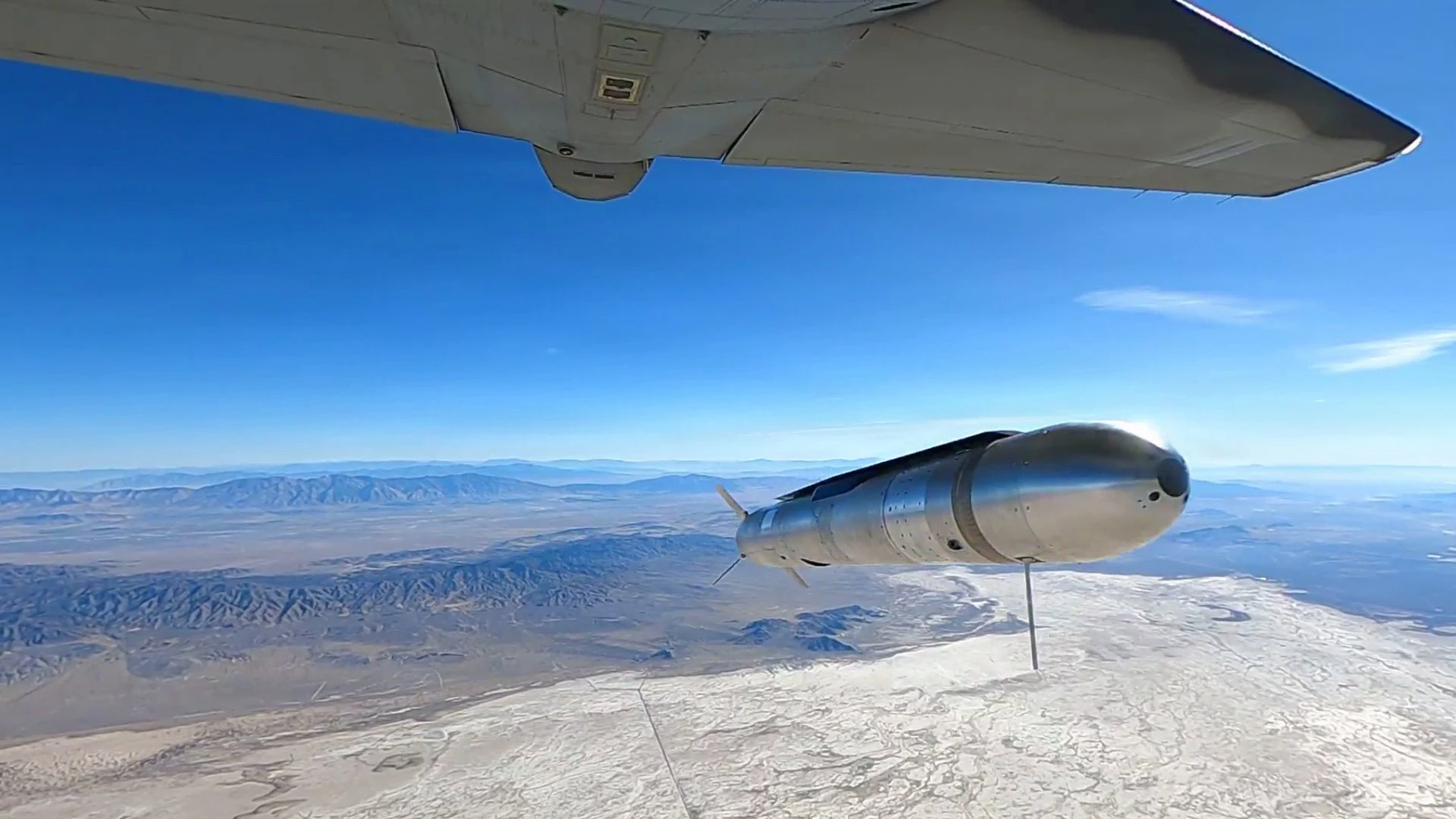
Leidos is organizing a 14-state supplier network to mass-produce two U.S. cruise missiles, the new Low-Cost Containerized Missile (LCCM) and the AGM-190A Havoc Spear, the company announced on November 2, 2026. The move follows a September 26 supplier summit at Leidos headquarters in Reston, Virginia, where component makers aligned on requirements, manufacturing capacity, timelines and delivery schedules.
The effort underpins a May 13, 2026, framework agreement between the Department of War and Leidos for an initial 3,000 LCCM weapons. Leidos is one of four companies in the Pentagon’s LCCM program, alongside Anduril Industries, CoAspire and Zone 5 Technologies; Anduril has separately committed to at least 3,000 surface-launched Barracuda-500M missiles. The agreements set terms for future firm-fixed-price production contracts but disclosed no price, and Leidos is self-funding LCCM development, in line with the department’s interest in commercially developed weapons.
LCCM Design and the Leidos Cruise Missile Production Timeline
Leidos began LCCM work in December 2025 and has reached a conceptual design with the Pentagon, according to the company. The missile is roughly twice the size of the AGM-190A, with greater fuel capacity to extend range. It uses a modular airframe and a common Weapon Open Systems Architecture (WOSA), intended to speed integration, upgrades and mission changes.
The missile will initially be ground-launched from a container, a concept intended to allow launches from mobile or dispersed positions. Leidos says the modular design could later support maritime and air-launched variants. The Pentagon began buying test missiles from all four LCCM vendors in June 2026 for an experimentation campaign led by the Office of the Under Secretary of War for Research and Engineering, which will culminate in a Military Utility Assessment by the sponsoring services.
Under the schedule released November 2, the first LCCMs will be delivered in 2027 to support test and evaluation, with full-rate production anticipated in 2028 and 2029. Production work on both missiles will be concentrated in Huntsville, Alabama, and McEwen, Tennessee. “We’re investing in our people, facilities, and supply chain to deliver proven capability to warfighters with a real sense of urgency,” said Leidos Defense President Cindy Gruensfelder. Ben Nicholson, chief commercial officer of additive manufacturing firm Divergent, said that in more than 30 years in Washington he had not seen a prime pull suppliers together this way, “at pace, with genuine urgency.”
AGM-190A Havoc Spear Moves From Combat Use to Serial Production
The AGM-190A is a 200-pound-class small cruise missile with a range exceeding 400 nautical miles demonstrated in testing, powered by the Pratt & Whitney TJ150 turbojet. Developed under a 2022 cooperative research and development agreement with U.S. Special Operations Command (USSOCOM) and Air Force Special Operations Command (AFSOC), and previously known as Black Arrow, it pairs modular hardware with open system software to allow rapid payload and mission changes.
AFSOC disclosed on September 14, 2026, that an AC-130J gunship fired two Havoc Spears, still in a test configuration, at two ground targets in the U.S. Africa Command area of responsibility in spring 2026. USSOCOM awarded Leidos a $27.2 million contract on July 8, 2026, for 45 missiles, with deliveries under that award expected to begin in fall 2027. Leidos says separate initial deliveries to AFSOC are already underway, and the command wants the weapon integrated on additional special operations and conventional platforms.
Cost remains the metric to watch. AFSOC puts the low-rate unit cost at about $600,000 and targets $200,000 to $350,000 per all-up round at scale, while Leidos says its Huntsville facilities can build up to 15,000 Havoc Spears per year. Propulsion is a pacing item. “Pratt & Whitney is investing in capacity and advanced manufacturing to strengthen the industrial base and accelerate delivery of the proven, dependable power our customers need,” said Jessica Villardi, the engine maker’s vice president of Fighter and Mobility Programs.
Analysis: The constraint on affordable mass has shifted from airframe design to the subtier base: small turbine engines, seekers, energetics and electronics needed at rates well beyond current munitions output. By convening suppliers before full-rate contracts exist, Leidos is pulling long-lead investment forward on the strength of a framework agreement rather than firm orders, which shifts financial risk onto industry. If the Military Utility Assessment or the fiscal 2027 and 2028 budgets fail to convert 3,000 planned LCCMs into funded lots, suppliers that expanded capacity will absorb the cost, and the Pentagon’s next attempt to buy mass will meet a more cautious vendor base.
The next markers are LCCM test deliveries in 2027 and the utility assessment that follows, conversion of the framework agreement into firm-fixed-price production contracts, and first deliveries under the 45-missile Havoc Spear award in fall 2027. The LCCM’s range, warhead, propulsion, unit price and launcher configuration remain undisclosed by Leidos and the Department of War.