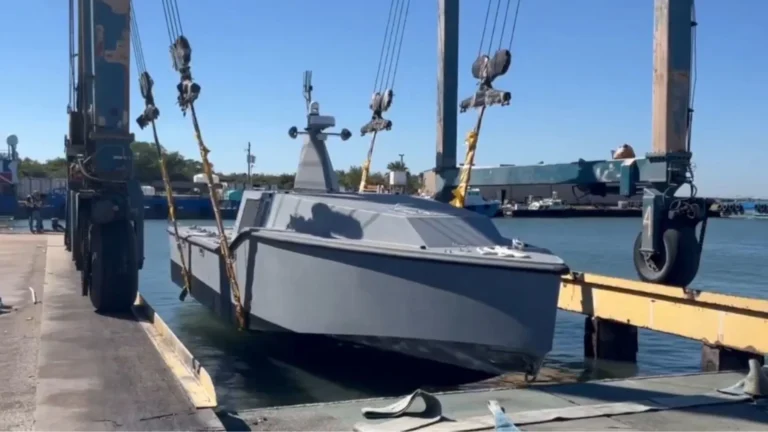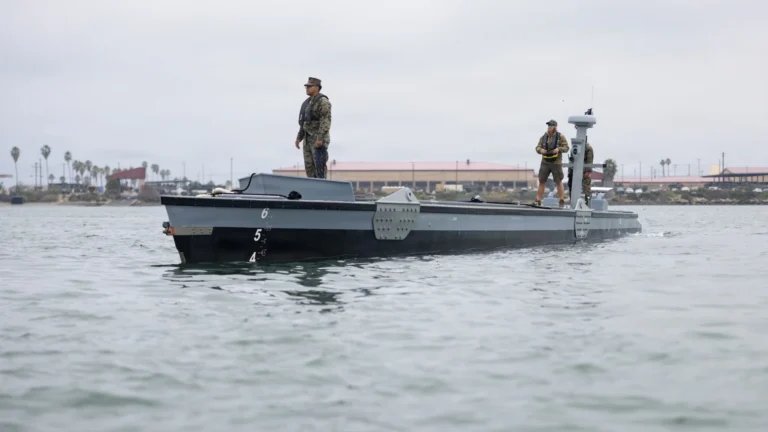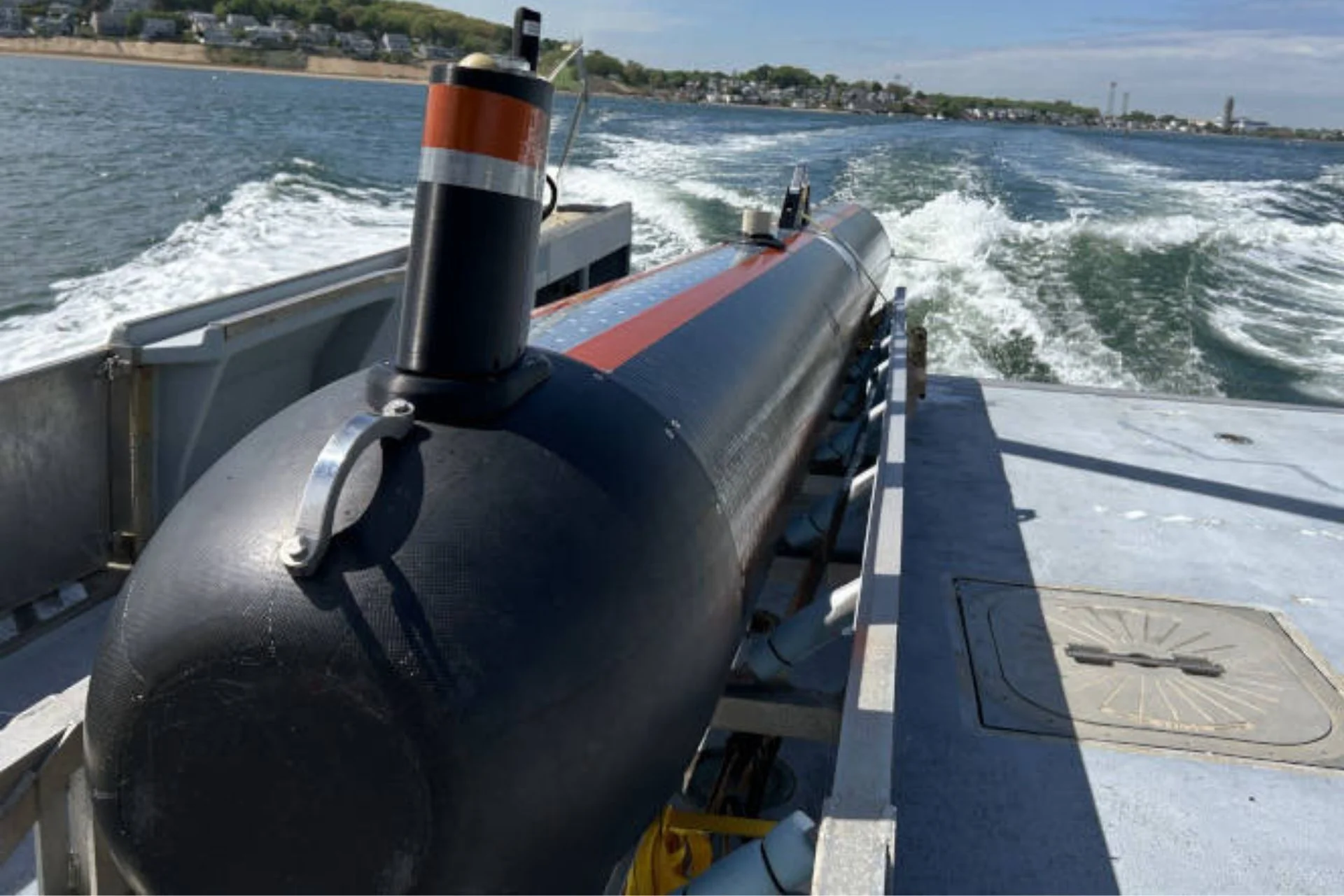
General Dynamics Mission Systems has received a $15 million contract modification from the U.S. Navy to exercise options on the Mining Expendable Delivery Unmanned Submarine Asset (MEDUSA), an expendable unmanned underwater vehicle (UUV) launched from a submarine torpedo tube to lay mines far from the boat that fires it. The company announced the award on November 2, 2026. Work began in September 2026 and runs through February 2028 at General Dynamics facilities in Quincy and Taunton, Massachusetts, with Naval Sea Systems Command (NAVSEA) as the contracting activity.
The award is the second option exercise in four months. In July 2026, the Navy funded a $14.3 million modification covering prototype systems, software development, Ashore Support Equipment and engineering services. Both actions build on the competitively awarded September 2024 base contract, valued at $15.9 million, which drew three offers. Offensive mining has climbed the Navy’s priority list as planners look for ways to contest Indo-Pacific chokepoints without matching the People’s Liberation Army Navy hull for hull, and MEDUSA is designed to give attack submarines a stand-off mine delivery option.
MEDUSA UUV Design: 21-Inch Tube Launch and Expendable Delivery
MEDUSA is a medium-class UUV sized for a standard 533 mm (21-inch) submarine torpedo tube. Navy budget documents describe an impulse-launched vehicle with long range, high payload placement accuracy and the ability to carry heavy payloads. Its software follows the Unmanned Maritime Autonomy Architecture (UMAA), the Navy’s open, modular standard for uncrewed maritime vehicle autonomy.
The expendable design is the defining choice. A submarine launches the vehicle, which transits autonomously to an assigned area and emplaces its payload; the vehicle is never recovered. That removes the hardest problem in submarine UUV operations, torpedo-tube recovery, and lets the launching boat clear the area immediately, reducing the chance that its position can be correlated with the eventual minefield. According to General Dynamics, MEDUSA can also host payloads beyond mines for other maritime missions.
Key performance figures remain undisclosed. The Navy has not published MEDUSA’s range, endurance, transit speed, payload weight, mine type or the number of mines each vehicle carries. Risk-reduction trials off Massachusetts, which General Dynamics reported complete in January 2026, focused on propulsion, navigation and what the company calls specialized autonomy behaviors.
Where MEDUSA Fits Alongside the Mk 67 SLMM and Hammerhead
The Mk 67 Submarine Launched Mobile Mine (SLMM) explains the requirement. Built on a modified Mk 37 torpedo body, the Cold War-era Mk 67 is the only submarine-launched mine in U.S. Navy service, according to publicly available information. MEDUSA is intended to push the release point much further from the launch position with greater placement precision, which matters most in shallow, heavily watched approaches such as straits and harbor entrances.
MEDUSA also complements the Navy’s other mining programs. Hammerhead, another General Dynamics Mission Systems effort, is a moored seabed weapon built around an encapsulated Mk 54 lightweight torpedo for anti-submarine work, in the lineage of the Cold War-era CAPTOR mine. The Quickstrike family remains the aircraft-delivered option, but it depends on air access over the target area that a contested Western Pacific may not allow. MEDUSA is the covert, submarine-delivered layer between them.
Navy development predates the current contract. The service began internal MEDUSA work in fiscal 2017, and the program is managed by the Unmanned Maritime Systems program office (PMS 406).
Contract Ladder and the Quincy-Taunton Path to Production
Counting the base award and both option exercises, the Navy has now committed roughly $45 million to MEDUSA against a ceiling of about $58 million if all options are exercised, with potential work extending into 2032. The base contract covered program management, design, systems engineering, fabrication, testing and submarine integration, with the Navy originally seeking four prototypes by fiscal 2026.
General Dynamics Mission Systems leads a team that includes General Dynamics Electric Boat, General Dynamics Applied Physical Sciences, Rock West Composites and Garrett Container Systems. Electric Boat brings submarine weapons handling and fire control integration expertise. The Quincy Center of Excellence for Research and Development, Prototyping, and Offshore Test handles rapid prototyping and in-water testing, while the Taunton UUV Manufacturing and Assembly Center of Excellence provides capacity to move mature designs toward full-rate production.
“This contract modification sustains the momentum behind MEDUSA as the Navy advances its undersea capabilities,” said Laura Hooks, vice president and general manager of the Maritime and Strategic Systems business at General Dynamics Mission Systems. “Our team is focused on maturing the prototype systems and applying proven undersea engineering to deliver a reliable, flexible capability for the fleet.”
General Dynamics says it is also working with key suppliers to expand production capacity, though no production quantity or procurement contract has been announced.
Analysis: The pattern of the awards matters more than their size. Two option exercises of roughly $15 million each within four months show the Navy funding MEDUSA incrementally through prototype maturation rather than committing to production. That keeps cost risk low, but the program has yet to show a funded path to fielding at scale. The operational case is clear: an expendable, tube-launched mine layer lets a single attack submarine seed chokepoints without loitering in defended waters, turning a scarce SSN into a stand-off mining platform. The constraint is the torpedo room. Every MEDUSA aboard displaces a Mk 48 heavyweight torpedo or another payload, so the size of any eventual buy will depend on how the Navy weighs mining against strike and anti-ship missions in its submarine loadout.
The next markers are delivery and at-sea evaluation of the prototype systems, including launches from a submarine torpedo tube, and any decision to transition MEDUSA into a program of record with procurement funding. Neither General Dynamics nor the Navy has disclosed whether the four prototypes originally targeted for fiscal 2026 have been delivered, or when MEDUSA could reach initial operational capability.