The Spanish Air and Space Force is executing a multi-domain modernization that spans fighters, trainers, airlifters, tankers, maritime patrol aircraft, drones and satellites, with Airbus acting as prime contractor or industrial partner in nearly every segment, according to a company update published November 5, 2026. The program set brings the Eurofighter fleet to 115 aircraft by 2035 and consolidates 46 C295 airframes into a single fleet.
The update announces no new contract. Instead, it maps existing programs against the service’s Tactical Air Transport Strategy and Future Vision, a roadmap built on five priorities: permanent availability, air superiority, space control, resilience and expeditionary projection. It comes as Spain sustains NATO fighter rotations to the Baltic states and the Black Sea region.
Spanish Air and Space Force Fighter and Trainer Recapitalization
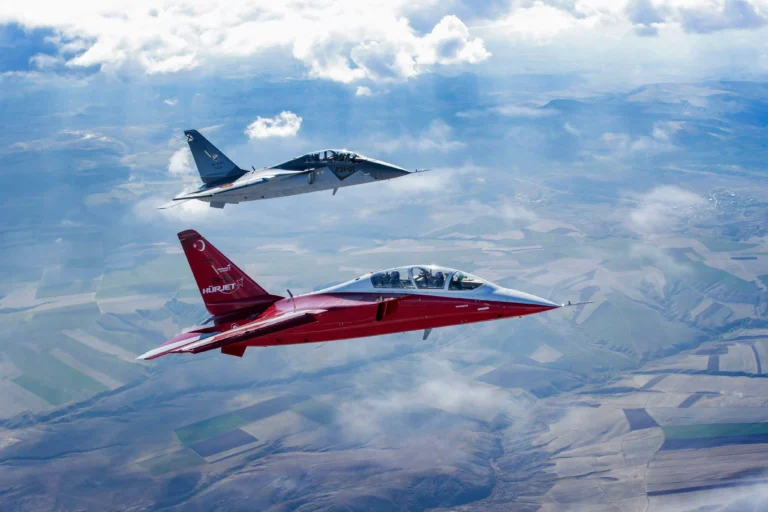
Pilot training is the first link in the chain. Under the SAETA II program, Spain is acquiring 30 two-seat Hürjet trainers to replace its aging Northrop F-5 fleet, with Airbus integrating Spanish avionics and providing operational and maintenance support. The jets will equip the Fighter and Attack School at the 23rd Wing, Talavera la Real Air Base. Airbus already manages the Transport Crew Training Centre at Matacán Air Base and is slated to run the Talavera la Real fighter training center, a contractor-operated model that is new for the service.
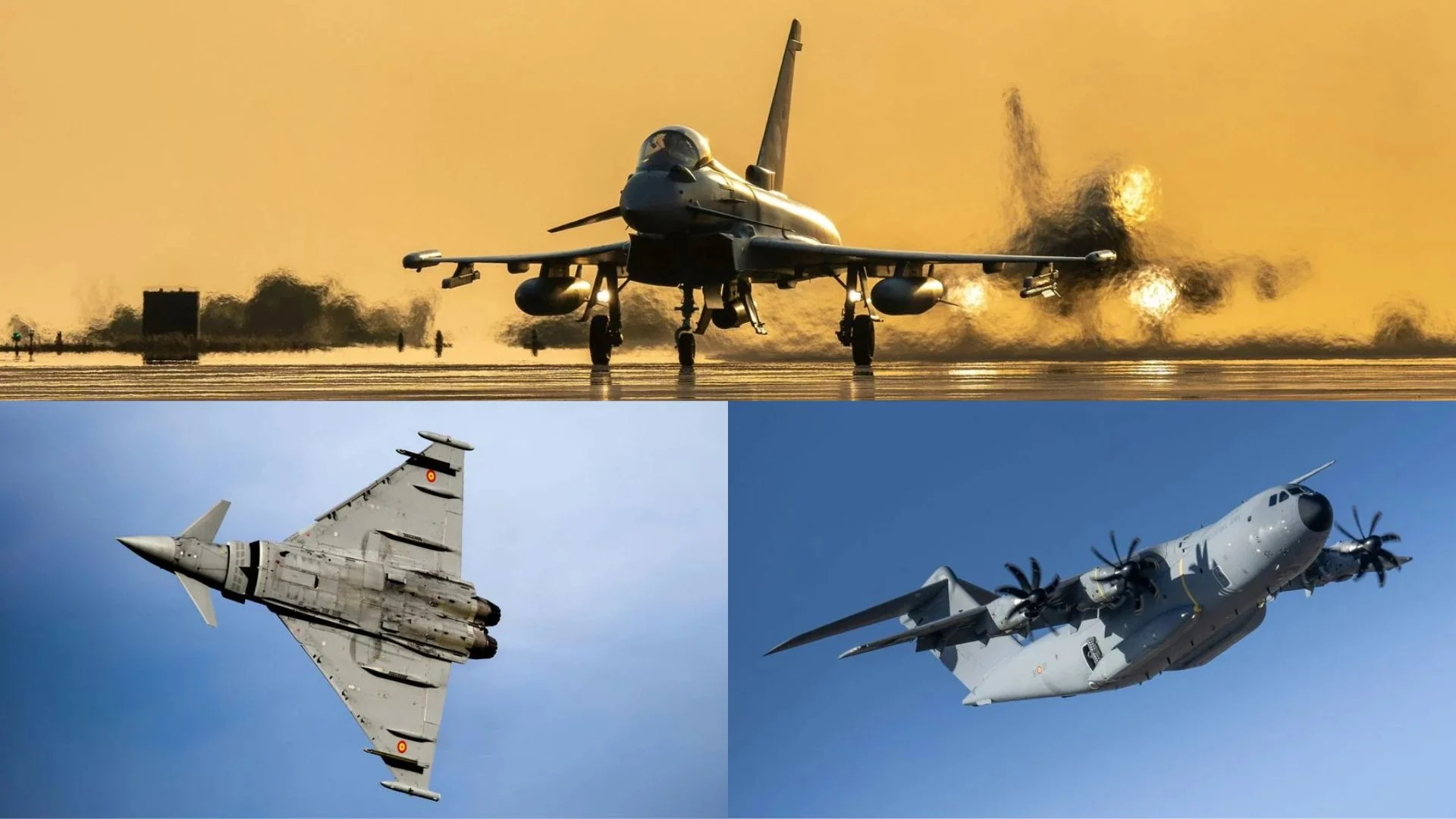
The Eurofighter remains the backbone of national air defense. Halcón I, contracted in 2022, covers 20 Tranche 4 aircraft replacing the F/A-18 Hornets at Gando Air Base in Gran Canaria, making the Eurofighter the primary interceptor on NATO’s southern flank. Halcón II, signed on December 20, 2024, adds 25 jets, 21 single-seat and four twin-seat, for delivery between 2030 and 2035 to replace Hornets at Torrejón and Zaragoza. The key upgrade is the active electronically scanned array (AESA) radar. Publicly available information identifies it as the European Common Radar System (ECRS) Mk 1, which offers longer detection range, simultaneous multi-target tracking and stronger electronic protection than the mechanically scanned Captor radar on earlier tranches.
Readiness is tested daily. “In Spain, we provide round-the-clock service 24/7, 365 days a year,” said Commander Juan Bengoechea, a Eurofighter pilot, adding that alert aircraft are ready to launch in under 15 minutes.
C295, A400M and Eurodrone: Airlift, Maritime Patrol and ISR Programs
Strategic mobility rests on two Airbus platforms. Spain has 27 A400M aircraft on order, 14 of them in service with the 31st Wing in Zaragoza, and the type is assembled on Airbus’ final assembly line in Seville. Publicly available specifications indicate a maximum payload of about 37 tonnes, roughly double that of the C-130 Hercules it replaced. The A330 Multi Role Tanker Transport (MRTT) aircraft of Group 45, converted from civil airliners at Getafe, carry up to 111 tonnes of fuel for refueling, medical evacuation and long-range transport.
In the maritime domain, 16 C295 aircraft in maritime patrol (MPA) and surveillance and rescue (VIGMA/SAR) configurations will fill the gap left by the retired P-3 Orion and replace the CN235 fleet. They carry submarine detection systems, precision weapons, Link 22 tactical data link and secure satellite communications. With 18 additional transport C295s ordered, Spain will operate 46 aircraft of the type, sharing training and logistics across one fleet. Further NH90 helicopters assembled in Albacete will support naval and rescue missions.
For intelligence, surveillance and reconnaissance (ISR), the SIRTAP tactical drone, transportable inside a C295, will provide persistent surveillance on forward deployments, while the European medium-altitude long-endurance Eurodrone will be produced at Airbus’ Tablada facility in Seville. In orbit, the Space Command created in 2023 operates the PAZ radar satellite, with two follow-on satellites due in 2031, while the Hisdesat-operated SpainSat NG constellation secures military communications. Airbus and Telefónica flew an airborne 5G standalone network on a C295 at Albacete in 2025.
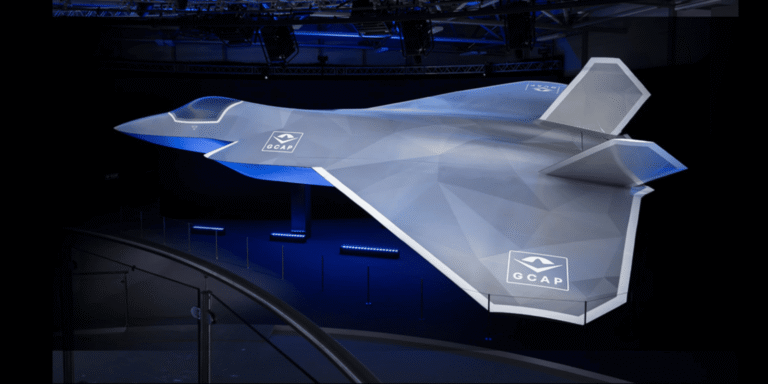
Analysis: The defining feature of Spain’s plan is industrial concentration. Final assembly, conversion or production for the Eurofighter, A400M, A330 MRTT, C295, NH90 and Eurodrone sits at Airbus sites in Getafe, Seville and Albacete, giving Madrid direct control over sustainment, upgrades and supply chain security. The trade-off is dependency: with one prime spanning combat, mobility, ISR and space, a delay in any single program, as Eurodrone has already experienced, ripples across the service’s capability timeline, and the roadmap contains no stealth fighter before a future European combat aircraft.
Near-term milestones include the first Halcón I deliveries, expected by the end of 2026 following the first rollout at Getafe on June 1, 2026, initial Halcón II deliveries in 2030 and the two PAZ follow-on satellites in 2031, with the 115-aircraft Eurofighter fleet expected by 2035. The update does not specify delivery schedules for SAETA II, the C295 MPA fleet or SIRTAP, nor the funding profile behind them; those dates will determine how quickly the service closes the gaps it has identified.