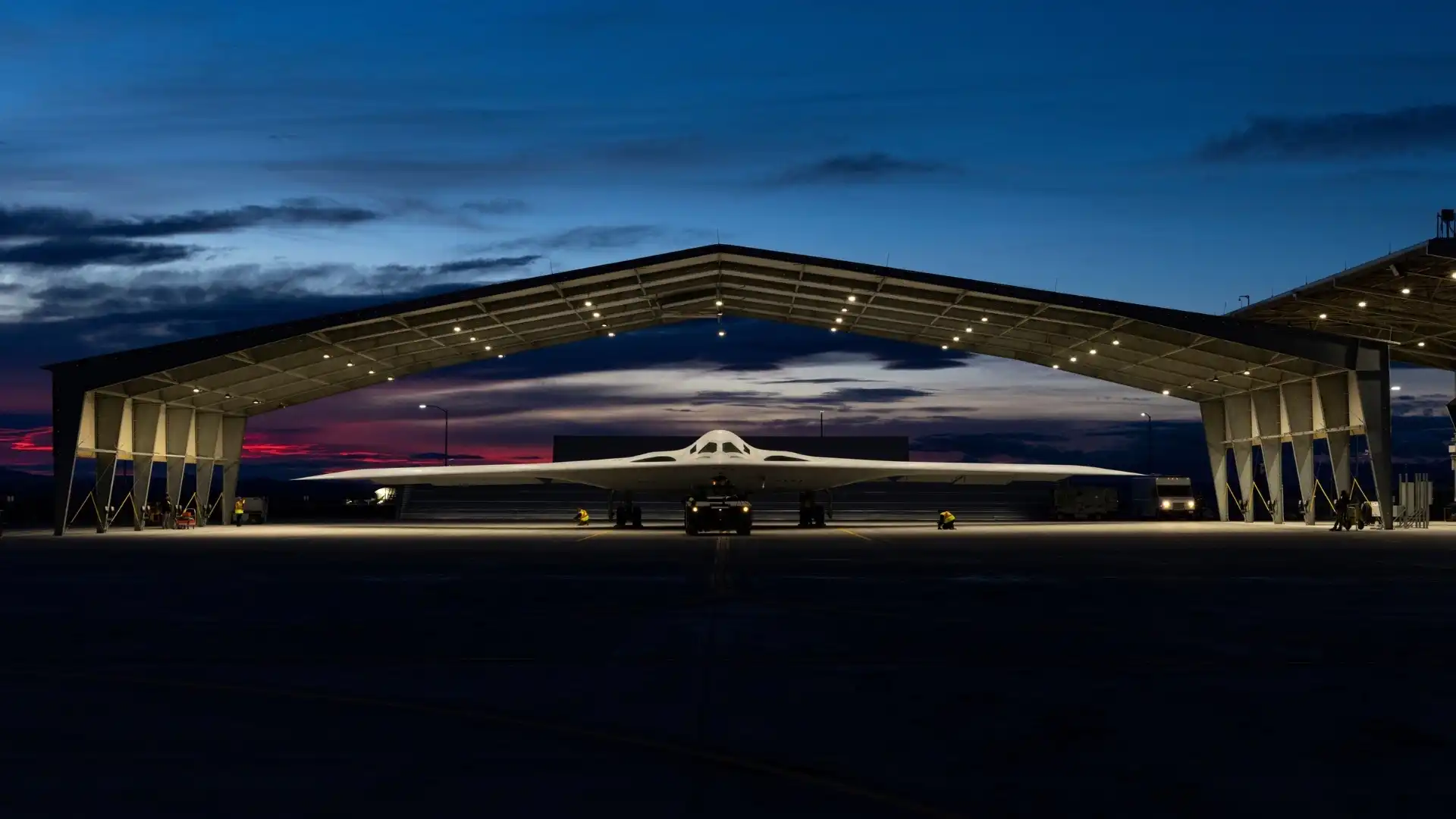
The U.S. Air Force broke ground on November 5, 2026, on a 46,000-square-foot B-21 Raider Mission Planning Facility at Dyess Air Force Base, Texas, the first structure at the installation built exclusively to support the Northrop Grumman stealth bomber. The $78 million project will provide the secure infrastructure and workspaces the 7th Bomb Wing needs to plan and generate B-21 global strike missions, according to the Air Force.
Dyess is the third of the B-21’s three main operating bases. Ellsworth Air Force Base, South Dakota, was named first in March 2019, and the Air Force confirmed Whiteman Air Force Base, Missouri, and Dyess as the second and third locations on September 13, 2024. The groundbreaking comes as the program accelerates: the Department of the Air Force and Northrop Grumman agreed in February 2026 to expand annual B-21 production capacity by 25 percent, and the first operational Raider remains on track to reach Ellsworth in 2027. The Air Force has not announced when the first B-21 will arrive at Dyess.
Inside the Dyess B-21 Raider Mission Planning Facility
Col. Robert Sturgill Jr., commander of the 7th Bomb Wing and the installation, framed the building as the operational core of the future bomber campus. “The facility we are breaking ground on today will be the nerve center of the B-21 campus here at Dyess,” Sturgill said. “It will be the heart of B-21 mission planning and generation, equipped with the most modern communication networks and security infrastructure to enable our Airmen to get after the Global Strike mission.”
That emphasis reflects the platform. Mission planning for a penetrating, low-observable bomber typically draws on classified threat data, route planning against integrated air defense systems and secure links to higher headquarters, work that requires accredited facilities the base’s legacy B-1B Lancer infrastructure was not designed to provide. The Air Force has not disclosed the contractor, accreditation level or completion date.
The project anchors a broader buildout. The Air Force describes the groundbreaking as a key milestone in a projected $1.6 billion Dyess modernization roadmap covering more than 24 military construction and renovation projects over the next decade. Sturgill offered a higher figure, calling the facility “the cornerstone of a broader nearly 2 billion-dollar modernization effort that will touch every facet of our base, from airplane hangars to dormitories, childcare and support infrastructure.” The Air Force has not reconciled the two figures.
B-21 Raider Program Status: Flight Test, Production and Crew
The B-21 was unveiled at Northrop Grumman’s Palmdale, California, facility on December 2, 2022, and made its first flight on November 10, 2023. A second test aircraft joined the flight test campaign at Edwards Air Force Base, California, in September 2025, and the program has since demonstrated aerial refueling from a KC-135 Stratotanker. On July 9, 2026, the Air Force confirmed the bomber will operate with a two-pilot crew.
Production is ramping in parallel. Following the February 2026 capacity agreement, Northrop Grumman disclosed a $2.5 billion company investment in additional B-21 production capacity, and the service and contractor broke ground on a new final assembly line in October 2026. The Air Force plans at least 100 aircraft to replace the B-1B and B-2 Spirit. At Ellsworth, the service activated B-21 Integration Detachment 1 on September 9, 2026, and Air Force Secretary Troy Meink has said a current test aircraft will be the first Raider assigned there.
Technical detail remains tightly held. Publicly available information indicates a flying-wing design smaller than the B-2, powered by Pratt & Whitney engines and built on an open systems architecture meant to accelerate software and sensor upgrades, with both nuclear and conventional missions. The original average procurement unit cost target was $550 million in fiscal 2010 dollars. Range, payload and dimensions remain classified. Under Secretary of the Air Force Matt Lohmeier called the aircraft “the world’s first and only next-generation bomber, representing the future of American strategic deterrence.”
How Dyess Will Transition From B-1B Lancer to B-21 Raider
The 7th Bomb Wing currently flies the B-1B, and Dyess also hosts the 317th Airlift Wing and its C-130J fleet. The B-1B force stands at 45 aircraft, split between Dyess and Ellsworth, after the Air Force retired 17 airframes in 2021, and service leaders have told Congress they will hold that inventory until enough B-21s are on hand to replace it.
Lohmeier tied the milestone to the base’s partnership with Abilene. “We are deliberately investing, once again, in the people and partnerships that have bound us together since the 1940s,” he said.
Sen. Ted Cruz, R-Texas, who helped secure military construction funding for Dyess through the National Defense Authorization Act, delivered the keynote and called the base the “crown jewel of the Air Force.” “With the arrival of the B-21 Raider, Dyess will play a central role in the future of American air power and our nation’s strategic deterrence for decades, and even centuries, to come,” Cruz said.
Analysis: Infrastructure, not airframes, is likely to set the pace of the Dyess transition. As the third base in sequence, Dyess will receive aircraft only after Ellsworth and Whiteman, but the 25 percent production increase could pull that date forward, and bombers cannot bed down ahead of the secure planning, maintenance and hangar facilities they require. Starting with mission planning signals that the classified communications backbone is the long-lead item. A price tag of $1.6 billion to nearly $2 billion at a single installation, repeated across three bases, creates a construction bill that will compete with production funding. Until the Raider arrives, Dyess B-1Bs, including those armed with the AGM-158C Long Range Anti-Ship Missile, remain central to the conventional long-range strike force.
Key unknowns remain: the facility’s completion date, the award schedule for the remaining roadmap projects and the year the first B-21 reaches Dyess. Near-term markers include the first Ellsworth delivery in 2027 and Dyess construction lines in upcoming defense bills. A Dyess arrival date will also set the clock for retiring its B-1B squadrons.