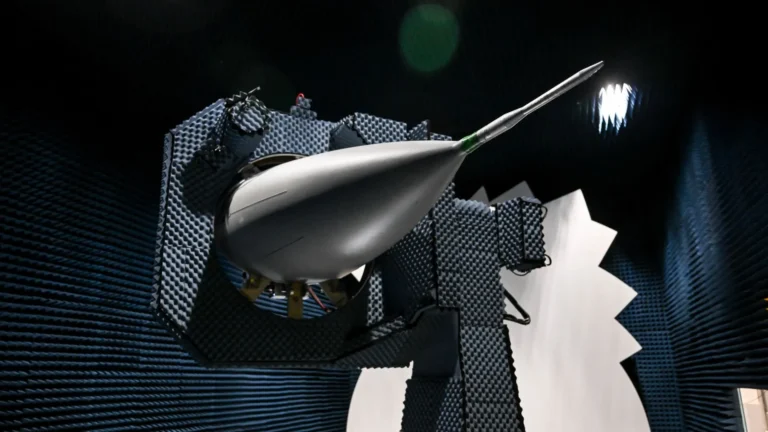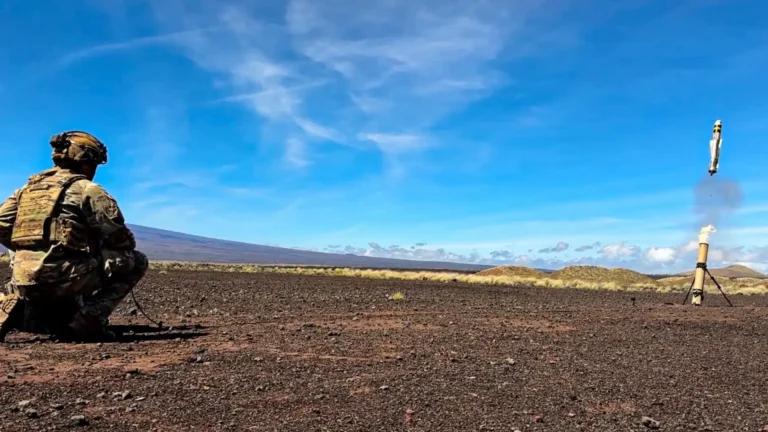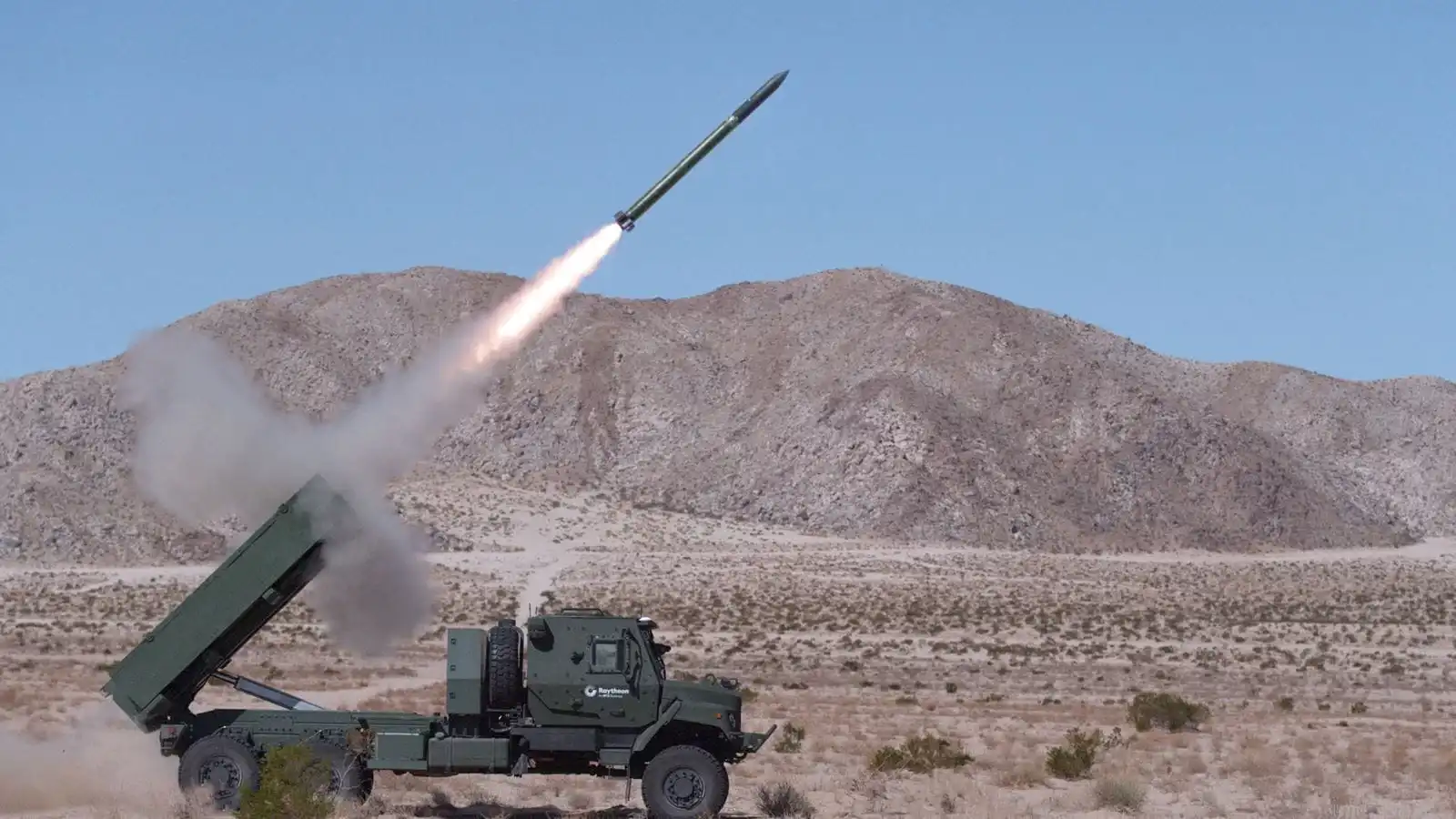
Raytheon, an RTX business, announced on November 9, 2026, that its DeepStrike JR3 rocket completed a third successful flight test at Yuma Proving Ground, Arizona, as the company competes to replace the U.S. Army’s aging Reduced Range Practice Rocket. During the test, Raytheon rapidly fired multiple rounds and evaluated launch pod reusability and maintainability, range, trajectory, accuracy and the visibility of the rocket’s marking solution.
The test falls inside a narrow acquisition window. Army fiscal 2027 budget documents schedule competitive prototype flight demonstrations from the fourth quarter of fiscal 2026 through the third quarter of fiscal 2027, with a down-select to one Joint Reduced Range Rocket (JR3) design in that final quarter. The urgency stems from supply: remaining launch pod containers and rocket motors cannot sustain production of the Low Cost Reduced Range Practice Rocket (LCRRPR) beyond fiscal 2030. That round’s solid rocket motors were last built in the mid-1990s, and it supports annual qualification and pre-deployment training for Active and National Guard M142 High Mobility Artillery Rocket System (HIMARS) and M270 Multiple Launch Rocket System (MLRS) units.
How the JR3 Rocket Fits 24 Rounds in a Reusable Pod
Raytheon designed its JR3 to carry 24 rockets in the MLRS Family of Munitions (MFOM) pod, the standard container used by existing Army launchers. The legacy 227mm practice rocket loads six rounds per pod. If the design reaches the field, a HIMARS, which carries one pod, would move from six to 24 rounds per load. An M270, which carries two pods, would move from 12 to 48.
Published Army requirements set the performance envelope. The rocket must reach a minimum impact range of 7.5 km to 8 km and a maximum of no more than 15 km at sea level, preserving access to the constrained ranges served by the blunt-nosed legacy round. Accuracy must fall within 25 m to 30 m of the target point, in free-flight or trajectory-corrected form. Reliability must reach at least 0.95 across launch, flight and warhead activation, with a minimum shelf life of 10 years.
Marking visibility carries direct training value because crews need an observable effect from an inert round. The requirements call for flash, bang and smoke signatures. Pods must match the volume, mechanical interfaces and center-of-gravity limits of existing MLRS and Guided MLRS pods, require no changes to launchers or handling equipment, and be reusable or reloadable. A modular open systems interface between motor and warhead is intended to allow future payload upgrades without redesigning the full round.
Raytheon has not disclosed the rocket’s diameter, demonstrated range, demonstrated accuracy, unit cost or the number of rounds fired at Yuma. It also did not identify the launcher used or give the test date. The announcement included no Army performance data, so the results remain vendor-reported.
Joint Reduced Range Rocket Competition Heads Toward Fiscal 2027 Down-Select
Raytheon built its offer around a mixed supplier base. The team includes Combined Systems Inc., Corvid Technologies, L3Harris Technologies, Northrop Grumman and the government-owned Letterkenny Munitions Center. Raytheon said the approach uses commercial technologies to accelerate production and reduce overall cost, but it did not specify each partner’s workshare. Brian Burton, vice president of Precision Fires & Maneuver at Raytheon, said pairing a reusable pod with an affordable rocket gives the Army “a modern, sustainable way to train.”
The Army launched JR3 in fiscal 2025 as a Middle Tier of Acquisition rapid prototyping effort, using Other Transaction Authority to fund up to three candidate systems. Budget documents show $26.6 million in fiscal 2025 and $57.8 million enacted for fiscal 2026. The fiscal 2027 request falls to $16.0 million, reflecting the end of competitive prototyping and the move to qualification. Qualification and user testing run from the fourth quarter of fiscal 2027 through the third quarter of fiscal 2030, and production must begin by fiscal 2030.
Lockheed Martin is the other publicly known contender. It first flew its JR3 at White Sands Missile Range, New Mexico, in August 2025, reloading a tube to demonstrate reuse. It then fired multiple rounds from a HIMARS at Yuma in a second test disclosed in August 2026, and it has said another flight test will follow in 2026. Its design also uses a 24-round pod. Raytheon fired a JR3 program rocket from its DeepStrike autonomous launcher at the Army’s Project Convergence Capstone 5 exercise in 2025, but it has not said whether that event counts toward its three flight tests.
Analysis: With both known competitors offering 24 rounds in a reusable pod, magazine capacity alone is unlikely to separate them. The decision is more likely to turn on verified cost per round, pod reload and maintenance burden, and credible production capacity. Pod reuse also targets a specific weakness in the legacy program, since launch pod containers, not only rocket motors, constrain future LCRRPR production. A practice rocket draws less attention than the Precision Strike Missile, but a gap in this line would directly affect the live-fire certification of HIMARS and M270 crews.
Raytheon says it is preparing additional flight tests ahead of qualification. The next decision point is the Army’s down-select, scheduled for the third quarter of fiscal 2027, or April through June 2027. Key unknowns include unit cost, planned procurement quantities, whether a third candidate remains active and whether Congress sustains forecast funding of $23.1 million in fiscal 2028 and $18.0 million in fiscal 2029.