AeroVironment Inc. (AV) said on November 9, 2026, that it has received a multiyear indefinite-delivery, indefinite-quantity (IDIQ) contract with a $940 million ceiling from an unnamed U.S. customer, including an initial award of approximately $315 million for product deliveries and support. The Arlington, Virginia, company said operational security (OPSEC) guidelines prevent any specific agency or program attribution.
The AeroVironment IDIQ contract joins a book of large ordering vehicles that already includes a five-year, $990 million Army Switchblade IDIQ, an $874.26 million Foreign Military Sales vehicle awarded in December 2025, and a three-year, $500 million sole-source IDIQ for the Domestic Shield counter-drone program of Joint Interagency Task Force 401 (JIATF-401), announced in July. Unlike those three, the new vehicle names neither buyer nor program.
AeroVironment IDIQ Contract Opens With a Third of Its Ceiling
The initial award represents 33.5% of the $940 million ceiling, leaving roughly $625 million of potential ordering capacity. The first publicly announced order under the Domestic Shield IDIQ, by comparison, was an $80.5 million task order for Titan-MS multi-sensor systems at U.S. Air Force Global Strike Command sites, or 16.1% of that $500 million vehicle.
AV described the contract only as multiyear and gave no ordering period. The company also did not state the contract type, the number of systems, the delivery schedule, the contracting office, whether the award was competed, or how much of the $315 million has been obligated.
The ceiling carries no guarantee. Under an IDIQ, it sets the maximum value of orders and does not commit funding. AV’s safe harbor language states that the ceiling may not result in orders beyond the initial award, that future orders depend on the timing, amount, and availability of funding, and that the customer may modify or terminate the contract.
AV expects the award to support continued delivery through its Autonomous Systems (AxS) segment and to further advance established product lines. The company reports its business in two segments, AxS and Space, Cyber and Directed Energy (SCDE), which places the award outside its space, cyber, and directed energy reporting line.
AxS generated $346.0 million in revenue in the fiscal first quarter ended August 1, 2026, up 21% from a year earlier, while SCDE revenue fell 21% to $134.5 million. AxS revenue reached $1.358 billion in fiscal 2026, which puts the initial award at about 23% of that annual total, although AV has not said over what period deliveries will run.
Autonomous Systems Production Lines and the Capacity Behind Them
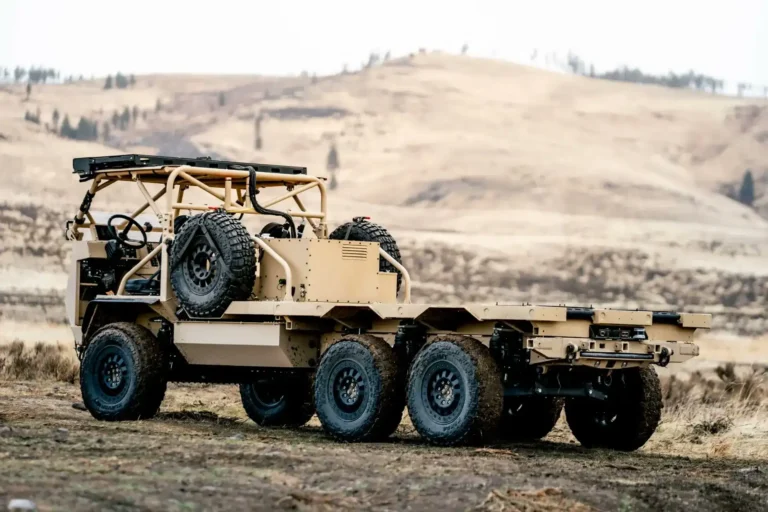
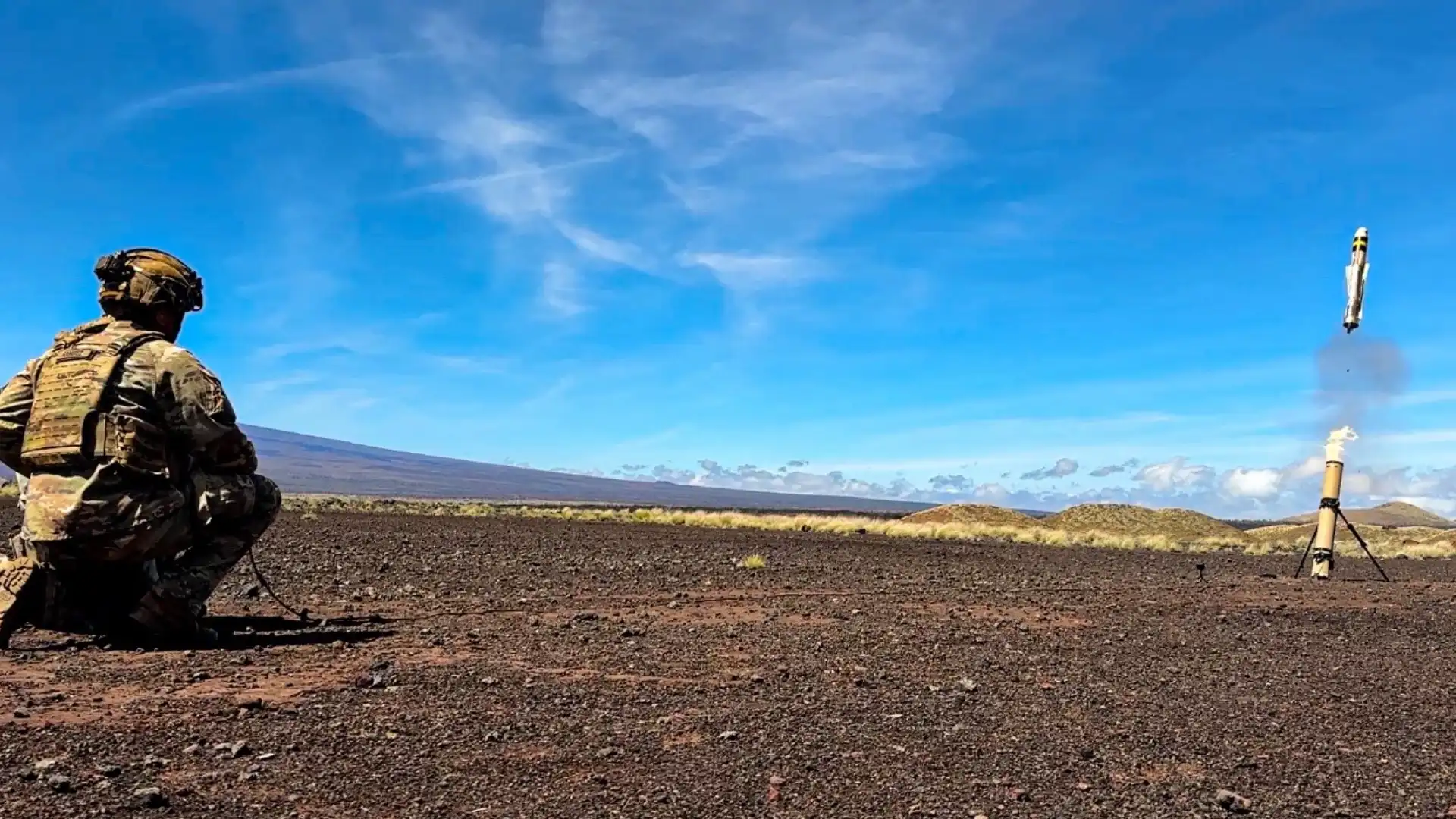
AV’s filings attribute AxS product revenue to loitering munitions, small and medium uncrewed aircraft, uncrewed ground vehicles, and its MacCready Works unit. AV has not linked any of those lines to this award; the systems below illustrate the segment, not the contract.
Recent disclosed AxS orders include a $186 million Army delivery order for Switchblade 600 Block 2 and Switchblade 300 Block 20 loitering munitions, and a $117.3 million Army contract for 82 P550 Group 2 electric vertical takeoff and landing uncrewed aircraft systems, which AV described as initial full-rate procurement. Publicly available specifications indicate a range above 40 kilometers for the Switchblade 600, up to five hours of battery-powered operation for the P550, and more than 13 hours of endurance and a 185-kilometer operational range for the JUMP 20 vertical takeoff aircraft. That spread matters to any reading of the award: $315 million would buy very different quantities of expendable munitions, reusable aircraft, or sustainment.
AV reported a record $1.5 billion funded backlog on August 1 and inventories of $410.8 million, up from $312.9 million on April 30.
Trace Stevenson, president of AxS, addressed production directly in the release: “We are not preparing to manufacture at scale. We are doing it.” AV told investors in June that it planned to bring additional Switchblade production online at its Salt Lake City facility at the start of calendar 2027, and that production there was on track to begin in spring 2027.
Analysis: The disclosed facts support a narrow conclusion: a customer AV cannot name has placed an initial award of about $315 million for products the company describes as past development, and has left room for nearly twice that amount in follow-on orders. For the defense industrial base, the near-term test is delivery. AV’s book-to-bill ratio reached 1.4 in the fiscal first quarter, and an order of this size arrives while the company is still adding capacity. The withheld customer also limits outside scrutiny, since analysts cannot match the vehicle to a budget line, requirement, or fielding plan.
AV’s next quarterly results should offer the first financial read, including any change to funded backlog and to fiscal 2027 revenue guidance, which stood at $2.125 billion to $2.225 billion in September. The release does not say when the contract was signed, so the quarter in which AV will book it remains unknown.