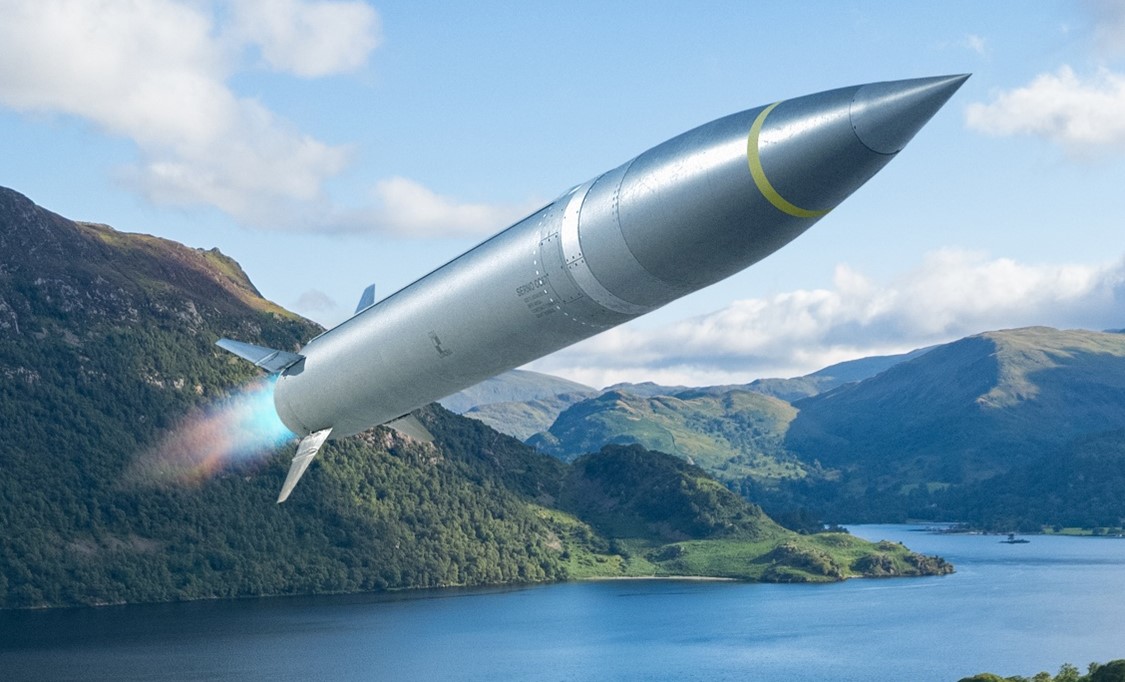
The U.S. Army awarded five separate Other Transaction Authority (OTA) agreements on September 29, 2026, to develop competing prototypes of the Precision Strike Missile (PrSM) Increment 4. Anduril, Castelion, Lockheed Martin Missiles and Fire Control, Mach Industries and RTX will each build a missile that launches from the M142 High Mobility Artillery Rocket System (HIMARS) and strikes moving maritime and relocatable land targets at 1,000 kilometers or more. The Army did not disclose the value of the agreements.
The awards follow an indefinite-delivery, indefinite-quantity (IDIQ) contract worth up to $1.2 billion that the Army placed with Lockheed Martin earlier this month for PrSM Increment 2, which adds a multimode seeker for moving land and sea targets. PrSM replaces the MGM-140 Army Tactical Missile System (ATACMS), and the baseline Increment 1 reaches about 500 kilometers. Increment 4 would double that reach from launchers already in the force, giving Army fires units in the Western Pacific a way to hold surface ships at risk from dispersed land positions.
PrSM Increment 4 Requirements and the Two-Phase Fly-Off Schedule
The Army’s Portfolio Acquisition Executive (PAE) Fires at Redstone Arsenal, Alabama, runs the effort as a rapid prototyping competition. Initial prototype development culminates in a competitive fly-off and down-select in fiscal year 2027. Vendors with mature, successful designs then become eligible for follow-on agreements and a final competitive fly-off in fiscal 2028.
The requirements, laid out at a March 2026 industry day and in an April 2026 request for solutions, center on three foundational capabilities: a range of 1,000 kilometers or greater, compatibility with the M142 HIMARS with extensibility to future launchers, and the ability to neutralize, suppress, or destroy moving maritime and relocatable land targets. Program documents also call for strikes independent of GPS inside anti-access/area denial (A2/AD) environments. The solicitation mandates a Modular Open Systems Approach (MOSA), so the Army can insert new seekers, datalinks, or payloads without locking into one vendor’s proprietary architecture.
The contracting vehicle matters as much as the requirement. Under statutory prototype authority, a participant that successfully completes an OTA prototype project can receive a follow-on production award without further competition. That provision lets the Army move from a successful fly-off directly into production, compressing the timeline a traditional program of record would require. Army planning documents target a move into production by early fiscal 2030.
Several parameters remain undisclosed: agreement values, the number of test rounds per vendor, warhead weight, seeker type, and unit cost targets. The Army has also not said whether M270A2 Multiple Launch Rocket System (MLRS) compatibility is a threshold requirement, although Increments 1 and 2 fire from both launchers.
Lockheed Ramjet, Castelion Blackbeard and Three Undisclosed Competing Designs
Lockheed Martin enters as the incumbent PrSM prime and the most transparent competitor. Its design uses combined-cycle propulsion: a solid rocket boost phase hands off to an air-breathing ramjet sustainer inside the existing PrSM form factor, and the company says it jettisons no booster stage over water or friendly troops. On June 3, 2026, Lockheed and propulsion partner L3Harris announced a Direct Connect Transition Test that validated the booster-to-ramjet handoff in a ground facility, clearing what the company called the primary barrier to flight testing planned for fall 2026. The two firms report more than $300 million invested in additive manufacturing and automation. Powered flight gives the missile higher control authority and terminal velocity than the ballistic arc of Increment 1, which Lockheed argues complicates interception.
Castelion brings its Blackbeard hypersonic missile. The Army’s fiscal 2026 budget justification described Blackbeard GL (Ground Launch) as intended to deliver approximately 80 percent of PrSM Increment 4 capability at significantly reduced cost, packaged in modified MLRS Family of Munitions (MFOM) pods for HIMARS and planned as a primary munition for the future Common Autonomous Multi-Domain Launcher (CAML). Castelion has not confirmed whether its Increment 4 entry is a Blackbeard derivative.
RTX returns to a competition it joined in 2023, when the Army selected a Raytheon and Northrop Grumman team for the Long Range Maneuverable Fires effort that became Increment 4, built around a DeepStrike-ER propulsion subsystem. RTX has not disclosed its current design or whether Northrop Grumman remains a partner.
Anduril and Mach Industries have not publicly described their entries. Both firms have invested in in-house solid rocket motor and energetics production, a capability that shapes cost and surge capacity as much as range.
Analysis: The five-way split shows the Army using Increment 4 to test acquisition reform as much as a missile. Pairing the incumbent prime and RTX with three venture-backed firms creates cost pressure on Lockheed Martin while spreading propulsion risk across ramjet, hypersonic, and still-undisclosed approaches. The industrial stakes are high: a production award without further competition would either extend Lockheed Martin’s hold on the PrSM family or create a second source for Army deep-strike missiles, as the service balances PrSM against the Mid-Range Capability and the Long Range Hypersonic Weapon for Indo-Pacific fires funding.
The next public data point is Lockheed Martin’s Increment 4 flight test planned for this fall, the first evidence of whether a HIMARS-compatible ramjet can reach near-tactical range. The fiscal 2027 fly-off will then narrow the field, and the Army has not said how many vendors will advance to the fiscal 2028 round. Agreement values, per-round cost targets, and M270A2 integration plans remain the key unknowns.