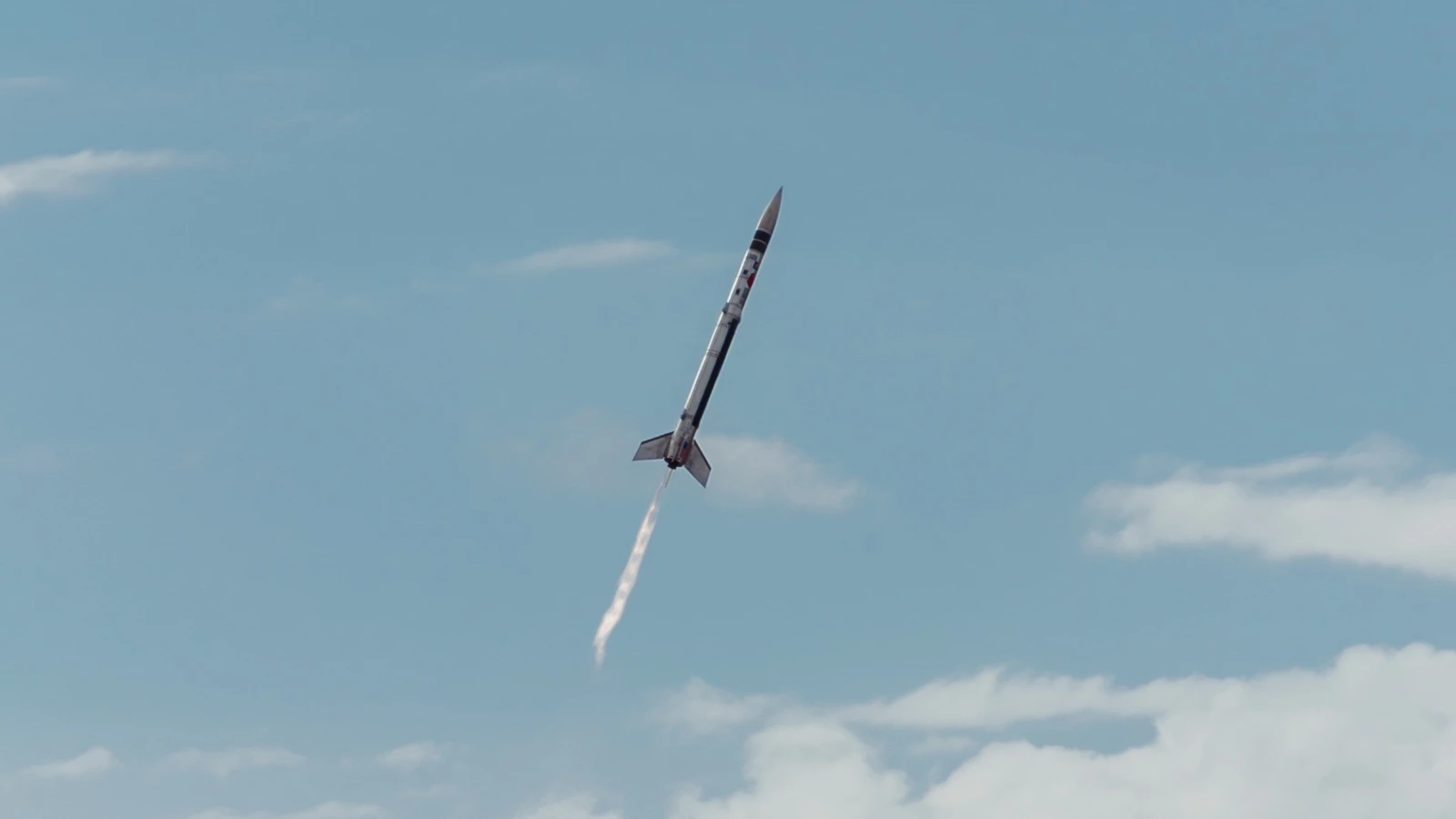
The Air Force Research Laboratory (AFRL) has exercised a $10.9 million option on its contract with Ursa Major to continue development of Draper, the Colorado company’s storable liquid rocket engine for hypersonic applications, Ursa Major announced on November 12, 2026. The option follows two flights of the Affordable Rapid Missile Demonstrator (ARMD), a Draper-powered test vehicle flown under the same contract earlier this year.
The award comes as the Department of War pushes to drive down the unit cost of hypersonic weapons and to widen a tactical propulsion base long dominated by two solid rocket motor suppliers, Northrop Grumman and L3Harris Aerojet Rocketdyne. In May 2025, AFRL’s Rocket Propulsion Division at Edwards Air Force Base, California, awarded Ursa Major a $28,565,857 firm-fixed-price contract naming the company lead integrator for a tactical flight demonstrator powered by Draper. Ursa Major did not disclose the cumulative contract value, the scope of the newly funded work, or its period of performance.
Draper Hypersonic Engine Design and ARMD Flight Results
Publicly available company specifications describe Draper as a 4,000-pound-thrust closed catalyst cycle engine burning hydrogen peroxide and kerosene. It inherits architecture and additive manufacturing heritage from the Hadley engine but avoids Hadley’s cryogenic liquid oxygen. Chief Executive Chris Spagnoletti told Air & Space Forces Magazine that Draper can be stored for five to 10 years, shipped inert, and fueled on site.
That storability is the core of the design philosophy: Draper aims to deliver the logistics profile of a solid rocket motor with the control authority of a liquid engine. Catalytically decomposed peroxide autoignites the kerosene, allowing repeated restarts without a dedicated igniter, and the same oxidizer can feed attitude control thrusters. Where a solid motor’s thrust profile is fixed when the grain is cast, Draper can throttle and relight in flight, enabling powered maneuvers late in the trajectory that complicate interceptor fire control solutions.
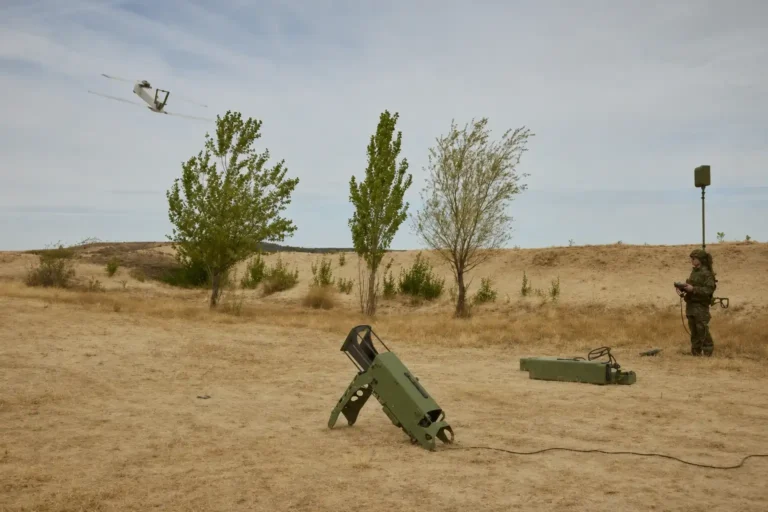
The engine completed its first hotfire in May 2024 and logged more than 200 hotfires before flight. According to the Army Space and Missile Defense Command Technical Center’s Test Directorate, which supported the campaign, ARMD-1 flew on March 6, 2026, and ARMD-2 followed on April 20, 45 days later. Both flights reached supersonic speeds, and the second expanded the vehicle’s flight envelope and mission profile. Ursa Major says it took the ARMD all-up round from contract award to flight-ready hardware in eight months. Peak Mach number, range, and altitude for either flight have not been released.
From ARMD to HAVOC: Ursa Major’s Hypersonic Strike Roadmap
ARMD is the technical pathfinder for the HAVOC Missile System, which Ursa Major unveiled on February 24, 2026, at the Air and Space Forces Association Warfare Symposium. HAVOC is a modular, medium-range hypersonic and long-range precision strike all-up round built around Draper. The company says it can be fired as a single stage from a fighter or with added stages for surface launch, operate inside or outside the atmosphere, and throttle and restart through all phases of flight. Spagnoletti told Breaking Defense that each missile could cost about $3 million and that Ursa Major could produce 80 to 90 percent of its content in-house.
The rest of the hypersonics portfolio provides the flight heritage. Hadley, a 5,000-pound-thrust oxygen-rich staged combustion engine burning liquid oxygen and kerosene, powers Stratolaunch’s reusable Talon-A, the test bed used in the Multi-Service Advanced Capability Hypersonics Test Bed (MACH-TB) program. Hadley has carried Talon-A to sustained speeds above Mach 5, and Ursa Major holds a $32.9 million contract to deliver 16 upgraded Hadley H13 engines. The company says its hypersonic systems have now flown more than a dozen times.
“Draper is at the heart of our hypersonics work, and AFRL and the United States Air Force have been partners from day one,” said Jason Meredith, President of Ursa Major. “This award keeps that work progressing, and it moves us closer to putting real capability in the hands of the warfighter.”
Analysis: At $10.9 million, the option is modest, but its timing matters. AFRL is extending Draper funding on the back of two flights, signaling that the laboratory sees the storable liquid path as worth maturing alongside solid boosters and air-breathing scramjets. A throttleable, restartable engine on storable, non-cryogenic propellants offers a third propulsion option for affordable strike weapons and threat-representative missile defense targets, plus a hedge against solid rocket motor capacity constraints. The limits are equally clear: ARMD has demonstrated supersonic, not hypersonic, flight, and HAVOC has no announced service customer or program of record.
Spagnoletti expects a full-up hypersonic booster demonstrator to fly by early 2027, according to Air & Space Forces Magazine, and has described a boosted hypersonic test flight as the culmination of the company’s planned HAVOC maturation missions. Key unknowns remain the scope and duration of the newly funded work, the performance data from ARMD-1 and ARMD-2, and whether any service commits procurement funding to a Draper-powered weapon before the end of the decade.