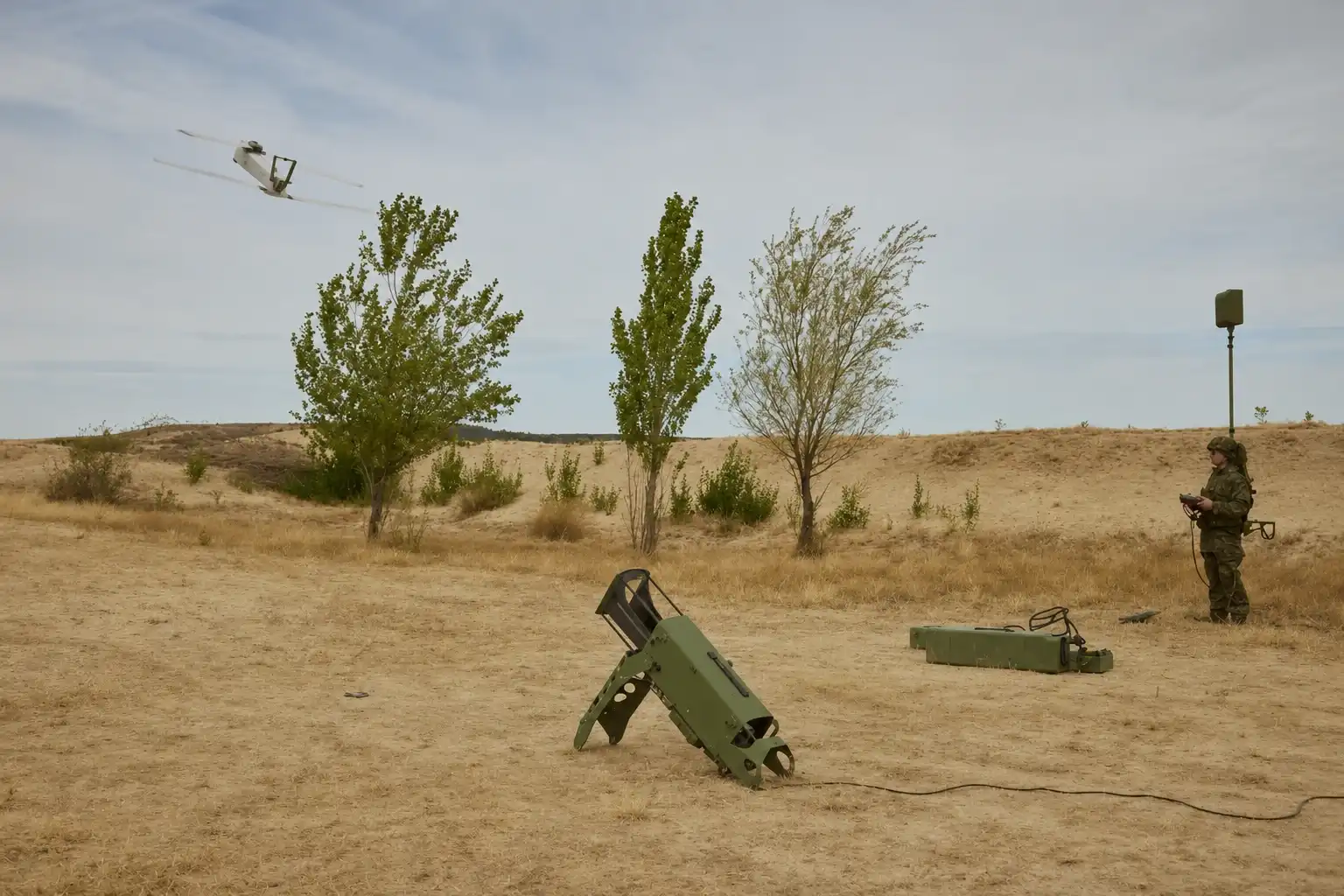
Global Ordnance Holdings and ARQUIMEA USA, the American subsidiary of Spanish technology group ARQUIMEA, signed a teaming agreement on November 12, 2026, to supply unmanned aircraft systems (UAS) and counter-unmanned aircraft systems (C-UAS) to U.S. and allied forces. Under the arrangement, ARQUIMEA USA will manufacture the systems, while Sarasota, Florida-based Global Ordnance serves as prime contractor to the U.S. Department of War, handling contracting, program management and delivery.
The deal pairs a European producer that claims capacity for up to 1,000 drones a month with a U.S.-owned prime that has spent 2026 building a drone business. Global Ordnance subsidiary Mountain Horse Solutions received a second order from the U.S. Army’s Global Tactical Edge Acquisition Directorate (G-TEAD) for its FD-1 interceptor on October 12, 2026, after an initial award for 300 units earlier in the year. “Drones have fundamentally changed modern warfare, and demand for affordable autonomous systems is outpacing what any single supplier can deliver,” said Marc Morales, chief executive of Global Ordnance.
Inside the ARQUIMEA Teaming Agreement: Q-SLAM Munitions and Interceptors
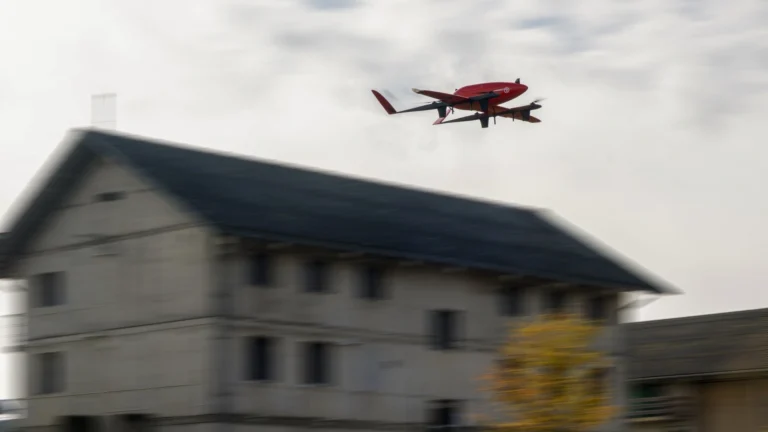
The aerial core of the offer is the Q-SLAM family of loitering munitions, which ARQUIMEA markets for reconnaissance, target acquisition and precision strike. The man-portable Q-SLAM-40 is an electrically powered munition fired from a pneumatic tube launcher with a low thermal and acoustic signature. Company specifications give it 25 minutes of endurance and a range of up to 25 km. In May 2025, Airbus Helicopters signed an agreement with ARQUIMEA to explore a technology demonstrator integrating it on the NH90 helicopter.
The larger, fixed-wing Q-SLAM-100, unveiled the same month, extends the reach to 60 km with 120 minutes of endurance and a 4 kg payload, according to ARQUIMEA. Its launcher can be fitted to ground vehicles, vessels and aircraft, and the munition can be detonated on command near a hostile drone, giving it a secondary counter-UAS role. A Q-SLAM-200 with more than three hours of endurance and a 6 kg warhead remains in development.
On the defensive side, ARQUIMEA contributes autonomous interceptors and portable radio-frequency (RF) equipment, including its man-portable Skyblock jammer. These join Global Ordnance’s existing UAS and C-UAS lines, which include the FD-1, a single-operator quadcopter interceptor that Mountain Horse Solutions rates at more than 165 mph against Group 1 to 3 drones. The announcement does not explain how the two companies’ interceptors will be positioned against each other.
Kronos Mini, S-WISE and the 1,000-Drone Production Claim
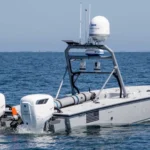
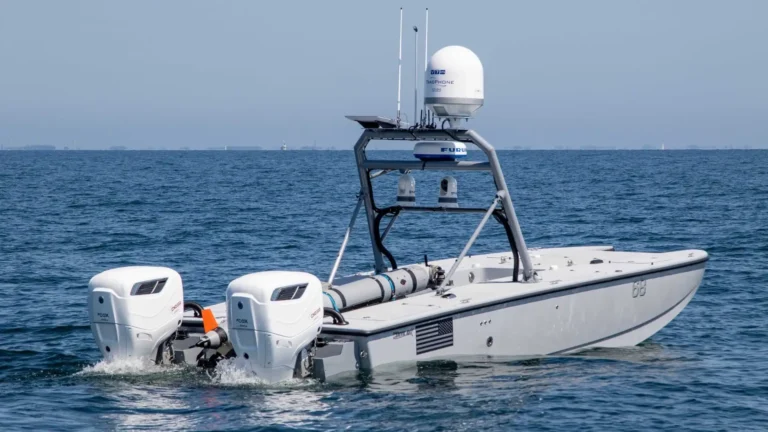
The agreement also opens a maritime line Global Ordnance did not previously offer. ARQUIMEA’s KRONOS unmanned surface vehicles (USV) and WISE autonomous underwater vehicles (AUV) target naval operations. The newest, the Kronos Mini unveiled in June 2026, is a two-meter electric craft that planes on a hydrofoil and can submerge to strike below the waterline. Published specifications cite more than 20 knots on the surface, 65 nautical miles at 4 knots and a payload of more than 30 kg, and the boat can be launched from 533 mm torpedo tubes. It was developed to STANAG 4817 for multi-domain command and control. The companion S-WISE operates as both a UUV and a USV for anti-surface warfare and mine countermeasures.
ARQUIMEA says it recently added more than 129,000 square feet of manufacturing space dedicated to high-volume production of its unmanned and C-UAS systems. ARQUIMEA has previously attached the 1,000-units-a-month figure to individual Q-SLAM models, and the release gives no breakdown by system. “For more than 20 years, ARQUIMEA has developed capabilities for defense customers internationally. We’re ready to bring those solutions to American forces as well,” said Fermin Olivan, CEO of ARQUIMEA USA.
Analysis: The structure follows a familiar route for foreign drone makers: a U.S. prime with existing contracting channels fronts the customer relationship while the original equipment manufacturer supplies the hardware. For Global Ordnance, it fills two gaps at once, a long-range strike munition tier above the FD-1 and a naval drone line. For ARQUIMEA, it offers a path into fast-moving Army acquisition channels such as G-TEAD, which uses Other Transaction Agreements to move systems from assessment to order within months. The decisive variable is where the hardware is built. The release does not say whether ARQUIMEA USA will produce in the United States or import from Spain, a distinction that will weigh heavily under domestic-content rules and the supply-chain vetting now applied to small drone purchases.
No contract, value, quantities or target program have been announced. The next markers are a first U.S. order or Other Transaction Agreement covering ARQUIMEA systems, any U.S. operational assessment of the Q-SLAM-100 or Kronos Mini, and disclosure of a U.S. final-assembly site.