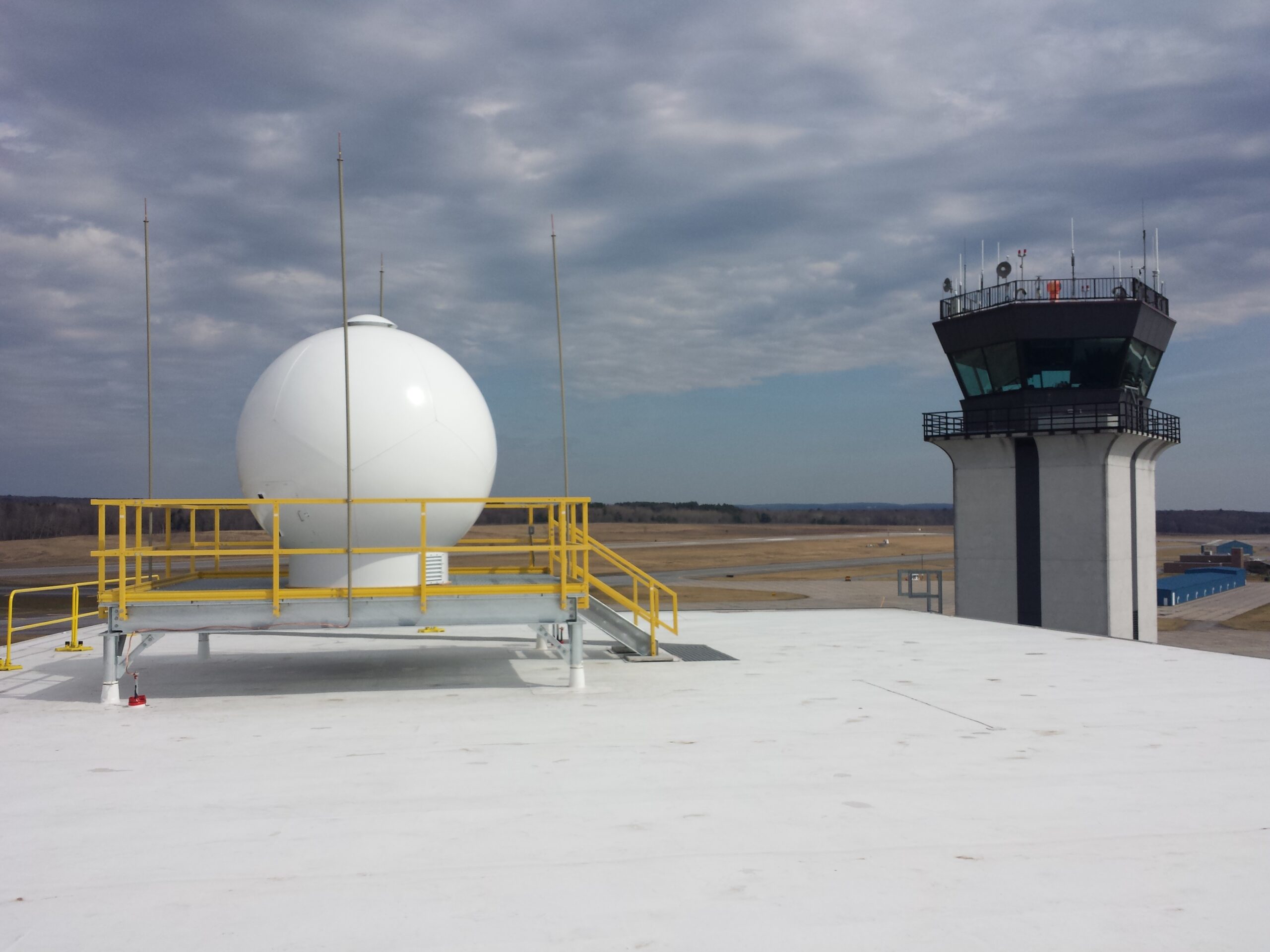
SRC Inc. has received a purchase order from General Atomics Aeronautical Systems Inc. (GA-ASI) for two AN/TPQ-49A radars configured with air surveillance software, the company announced on September 29, 2026. The radars will form the detection and tracking layer of a Ground-Based Sense and Avoid (GBSAA) system at GA-ASI flight operations sites in El Mirage and Gray Butte, California. Delivery is expected by the end of October 2026. Neither company disclosed the value of the order.
The order moves a counterfire radar family into the airspace problem that constrains every U.S. uncrewed flight test program. Under 14 CFR 91.113, pilots must see and avoid other traffic. Operators flying unmanned aircraft beyond visual line of sight (BVLOS) have traditionally met that rule with chase aircraft or ground observers, options that add cost and restrict night and low-visibility flying. GA-ASI is also expanding its high desert footprint: on January 14, 2026, it broke ground on an 85,000-square-foot MQ-9B SkyGuardian and SeaGuardian test hangar at El Mirage.
How the AN/TPQ-49A Becomes a Sense and Avoid Radar
The AN/TPQ-49 entered service as the Lightweight Counter-Mortar Radar (LCMR), a man-portable sensor that detects rocket, artillery and mortar (RAM) rounds and locates their firing points. It uses a non-rotating, electronically steered antenna that provides continuous 360-degree coverage and 3D target location. Publicly available specifications for the baseline AN/TPQ-49 list elevation coverage of 0 to 30 degrees, a system weight of 68 kilograms, an antenna assembly roughly 1.25 meters in diameter and height, and a 1,200-watt power requirement. In counterfire mode, it covers a 315-square-kilometer surveillance area. SRC has not published revised figures for the A-model.
The radar is software-defined, and that is the enabling feature. SRC’s air surveillance software, from the same family the company previously marketed as LSTAR, replaces counterfire waveforms with air surveillance waveforms and adds a dedicated tracker, classifier and display. According to SRC, the configuration detects fixed-wing and rotary-wing aircraft as well as low, slow, small radar cross-section targets such as ultralights, paragliders and Group 1 to Group 5 unmanned aircraft.
For the GA-ASI installation, SRC cites 3D target position data, track reliability above 98 percent, and remote operation over an Internet Protocol (IP) network feeding a central fusion processor. Mounting options include tripod, rooftop, tower and vehicle. The company states that the system supports an alternate means of compliance with the see-and-avoid rule and performs in low-visibility and night conditions.
SRC did not disclose the Q49A’s instrumented range in air surveillance mode. The larger AN/TPQ-50, running the same class of software, is rated at more than 35 kilometers. Detection range against small, non-transponding aircraft will depend on radar cross-section and will shape the protected volume around the test areas.
From Army GBSAA to FCC Part 87: The Q49A’s Civil Path
The GA-ASI order is not SRC’s first ground-based sense and avoid application. The U.S. Army’s Program Manager Unmanned Aircraft Systems built a GBSAA system around SRC’s LSTAR(V)3 radar and installed the first site at Fort Hood, Texas, on December 15, 2014, to support MQ-1C Gray Eagle transits between airfields and restricted airspace. That system fused multiple 3D radar tracks with separation algorithms and operator displays. Fort Hood was one of five installations identified to receive the system, and the Air National Guard later bought the same architecture as Ground-Based Detect and Avoid (GBDAA).
The AN/TPQ-49A itself comes off a military production line. In September 2018, Marine Corps Systems Command awarded SRC a sole-source, five-year indefinite-delivery/indefinite-quantity contract with a $93 million ceiling to refresh the service’s AN/TPQ-49 fleet and produce new A-model systems. The radar family has also provided air surveillance at the 2012 London Olympics, the 2013 G8 summit in Northern Ireland and the 2018 G7 summit in Charlevoix, Quebec.
What changes now is regulatory status. SRC is pursuing Federal Communications Commission (FCC) Part 87 certification under the aviation services rules and states that the Q49A has completed all required compliance testing. Certification would allow deployment as a civil ground-based air surveillance radar and open GBSAA and detect-and-avoid (DAA) architectures outside military ranges. SRC President and CEO Kevin Hair tied the order to growing demand for ground-based sensing that lets unmanned aircraft enter the national airspace safely and at scale. SRC has not given a date for the FCC certification decision.
Analysis: The order says more about the economics of uncrewed flight testing than about radar technology. GA-ASI already fields an airborne detect-and-avoid suite on the MQ-9B, yet it is buying ground sensing for its test sites, because a surveillance volume around the airfield covers non-cooperative traffic regardless of which airframe is flying, including developmental aircraft that may not carry a certified onboard DAA suite. For SRC, converting a Marine Corps program-of-record radar through software rather than new hardware keeps unit cost and lead time low. Part 87 certification would give the company a civil airspace surveillance market alongside its military counterfire business.
Once the radars arrive, GA-ASI must integrate them into its GBSAA fusion and display chain at El Mirage and Gray Butte. Three unknowns remain: the order value, the aircraft types the system will cover, and the timing of the FCC decision. Federal rules also remain in flux: the FAA’s Part 108 BVLOS rule, proposed on August 7, 2025, entered final White House review on July 10, 2026, and had not been published as of late September.