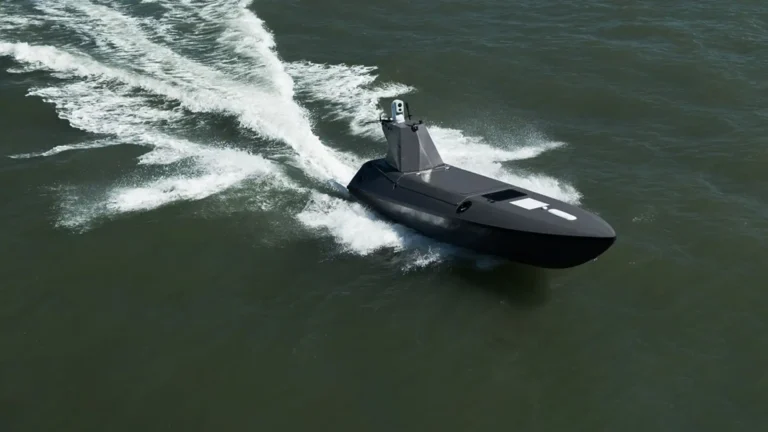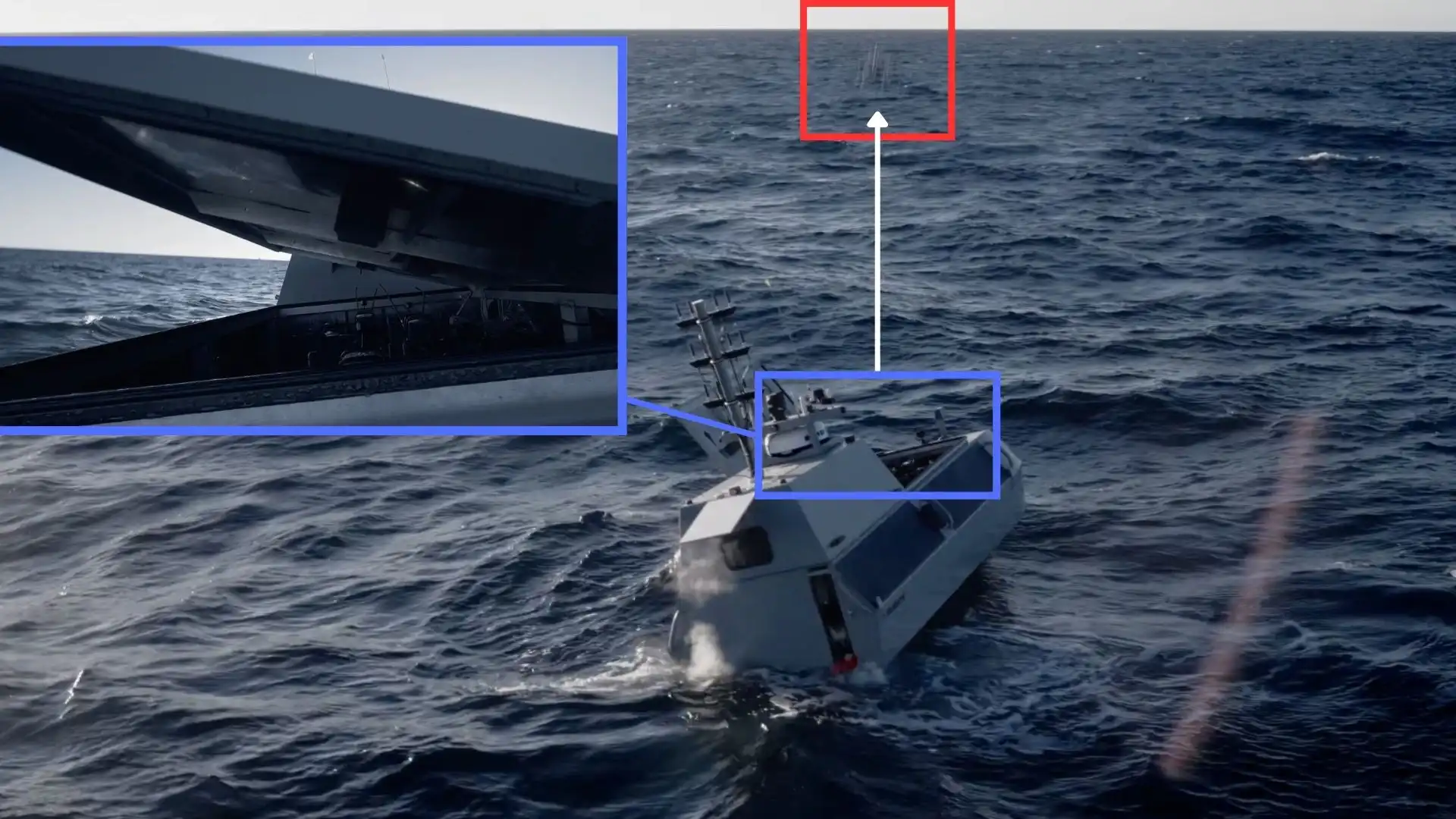
Seasats and Neros announced on November 10, 2026, that Neros’ Archer 10-inch Strike and Archer AI first-person-view (FPV) one-way attack drones will launch from the Seasats Quickfish unmanned surface vessel (USV), turning the San Diego company’s high-speed interceptor into a sea-based launcher for expendable precision strike. The companies said the integrated system has completed multiple successful launches at sea, but did not disclose test dates, locations, or participating government customers.
The pairing joins two firms that have scaled quickly on US military demand for attritable systems. Seasats reports more than $100 million in US government contracts, including an $89 million ceiling Small Business Innovation Research (SBIR) Phase III indefinite-delivery/indefinite-quantity (IDIQ) contract supporting Naval Information Warfare Center (NIWC) Atlantic and Marine Corps USV efforts. Neros holds a US Army IDIQ worth up to $500 million under the Purpose-Built Attritable Systems (PBAS) program, Marine Corps orders for Archer Strike, and, as of November 2, a conditional commitment of up to $450 million in lending from the Pentagon’s Office of Strategic Capital.
Inside the Quickfish USV: Payload Bay, Propulsion, and Endurance
Quickfish is the rapid-response member of the Seasats family, built to act on contacts detected by the company’s solar-powered Lightfish surveillance USV or other sensors. Publicly available company specifications describe an aluminum-hull craft 17 feet long with a 5.9-foot beam, weighing 1,450 pounds empty and 1,900 pounds fully loaded. Propulsion options include a 110-horsepower gasoline jet drive or a 170-horsepower diesel inboard/outboard, paired with low-speed electric propulsion for loiter. The November 10 announcement cites a 40-knot sprint speed; earlier company material gave speeds above 35 knots, and Seasats has not explained the difference. The vessel is rated for Sea State 6, completed an eight-day continuous sea trial earlier this year, and is advertised with multi-week loiter endurance.
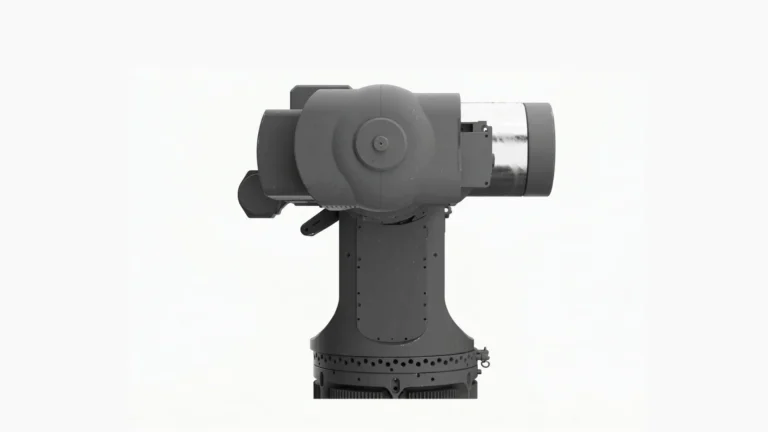
The enclosed, modular payload bay is the core of the integration. It stores several Archer drones, shelters them from spray and weather until launch, and gives a single hull multiple shots. The companies did not specify how many drones fit in the bay. Satellite connectivity and onboard control relays let pilots launch and fly the drones from anywhere in the world, stretching the FPV control chain far beyond the line-of-sight ranges typical of ground-launched drones. Onboard sensors include a long-range electro-optical/infrared (EO/IR) pan-tilt-zoom camera and an Automatic Identification System (AIS) receiver, per company specifications.
“Maritime awareness matters most when operators can act on what they see,” said Mike Flanigan, Seasats co-founder and CEO.
Archer 10-Inch Strike and Archer AI: Range, Payload, and Guidance
Neros builds the Archer without Chinese components, and the family holds Blue UAS certification. Company figures give the 10-inch Archer a range of 36 kilometers, a top speed of 80 mph, and 48 minutes of flight time. The Archer AI carries up to 7 pounds of payload and adds terminal guidance: the drone continues to an operator-selected target even if the control link drops. Neros rates its range at 35 kilometers unladen and 13 kilometers at full load. These manufacturer figures have not been independently verified, and the companies did not state which warheads are cleared for maritime use.
Terminal guidance carries particular weight at sea, where the drone depends on a relayed link across open water and a satellite path that adversary electronic warfare can target. A drone that completes its final run autonomously blunts the effect of jamming in the last seconds of an engagement against small, maneuvering boats. Neros CEO Soren Monroe-Anderson said government customers are seeking new ways to containerize strike drones while keeping operators removed from combat.
Analysis: The integration follows a pattern visible since Ukraine’s naval drone campaign in the Black Sea: low-cost unmanned systems layered into a single kill chain, with a persistent sensing node, a reusable carrier, and an expendable effector. Quickfish returns to port to refuel and reload; Archer is attritable, at a reported airframe cost near $2,000 before payload. That cost asymmetry suits US Navy and Marine Corps interest in watching chokepoints, littorals, and trafficking routes without committing crewed ships. The limit is the engagement envelope: a warhead of a few pounds can disable small craft, outboard engines, or exposed sensors, but not a larger surface combatant.
Seasats said customers can order combined USV and drone configurations, while Archer systems remain sold directly by Neros. No contract, customer, or production volume accompanied the announcement. Open questions include drone capacity per vessel, launch performance in high sea states, and whether the configuration enters a Navy or Marine Corps program of record. Neros targets production of 1 million drones per year by 2028.