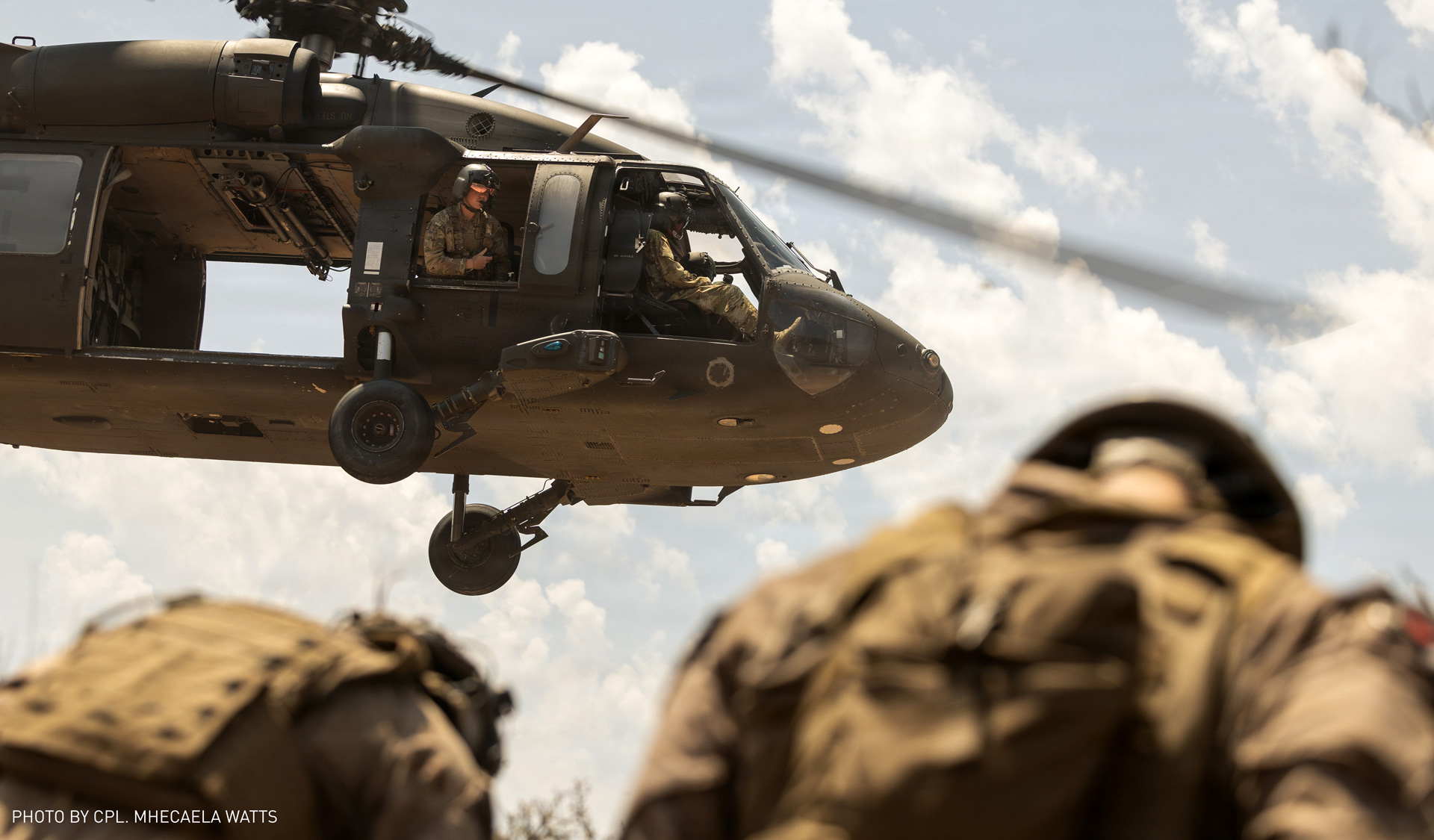
Sikorsky and the U.S. Army have reached what the Lockheed Martin subsidiary calls a Novel Production Agreement for UH-60M Black Hawk helicopters, a contracting structure that lets the service add aircraft year by year as U.S. requirements shift and allied Foreign Military Sales (FMS) cases mature. Announced September 30, 2026, it opens with 16 aircraft for the Army, with deliveries beginning in 2028, and Sikorsky expects it to grow by more than 100 aircraft in the coming years.
The deal lands as the Army’s 10th multiyear procurement contract, Multi-Year X, winds down. Signed in June 2022, that $2.3 billion agreement covered 120 H-60M aircraft, with options for up to 255 helicopters worth $4.4 billion, and concludes by the end of 2027. It also arrives against a sharp budget retreat: the fiscal 2027 request funded a single UH-60M at $39 million, against $913 million requested for fiscal 2026. The House version of the National Defense Authorization Act, passed in July, adds $250 million for six aircraft, and the House appropriations bill would add $493 million for an unspecified quantity.
How the Black Hawk Production Agreement Replaces Multiyear Buying
According to the Pentagon contract notice posted September 17, 2026, the vehicle takes the form of a $234,460,582 fixed-price-incentive, undefinitized modification, raising the cumulative value of the underlying contract to $356,250,001. Work runs in Stratford, Connecticut, through June 30, 2028. Spread across 16 airframes, the award averages roughly $14.65 million per aircraft, a contractual figure rather than a flyaway cost while pricing remains open.
The undefinitized contract action (UCA) lets Sikorsky start production before the parties settle a final price. Rich Benton, Sikorsky vice president and general manager, told reporters he expects definitization in the first half of 2027 and projected the agreement could reach as many as 150 aircraft over three to four years, including National Guard and FMS airframes.
A classic multiyear commits quantities across up to five fiscal years in exchange for economic order savings; this vehicle lets the Army adjust annual buys as budgets move and lets partner nations slot aircraft in as their FMS cases close. “This contract is not only fast but flexible,” Benton said. Sikorsky says the first 16 aircraft draw on fiscal 2025 and 2026 appropriations plus proceeds from the Black Hawk Exchange and Sales Transaction (BEST) program, under which the Army divests older airframes and reinvests the revenue; the contract notice lists fiscal 2026 aircraft procurement funds obligated at award.
UH-60M Power and Payload: The T901 Upgrade Path to the 2070s
New aircraft follow the current UH-60M standard. Publicly available specifications indicate two GE T700-GE-701D turboshafts in the 2,000 shaft horsepower class, wide-chord composite main rotor blades adding roughly 500 pounds of lift over the UH-60L, the Common Avionics Architecture System (CAAS) glass cockpit, a fully coupled digital flight control system, and an Integrated Vehicle Health Management System (IVHMS) for condition-based maintenance. Open-source data put maximum gross weight at 22,000 pounds, cabin capacity at 11 combat-equipped troops, and cruise speed near 150 knots.
Sikorsky’s roadmap targets power margin, the Black Hawk’s long-standing constraint in hot-and-high conditions. The GE Aerospace T901-GE-900, developed under the Improved Turbine Engine Program (ITEP), produces 3,000 shaft horsepower, up to 50 percent more than the T700, with better fuel efficiency. Flight testing on a UH-60M began in May 2025 and had logged almost 30 hours by May 2026, reaching nearly 6,000 feet and more than 160 knots. ITEP has not reached a production decision; testing has continued on congressional adds after the Army requested no new ITEP funding for fiscal 2026.
Companion upgrades include a main fuel cell roughly 30 percent larger for extended range, launched effects integration, autonomy, and a Modular Open Systems Approach (MOSA) digital backbone meant to make each insertion cheaper than the last. Sikorsky says this path keeps the type operational into the 2070s. Australia’s switch from the MRH90 Taipan to 40 UH-60Ms shows the export logic: allies are buying a deep sustainment base and a funded upgrade path.
Allied FMS Demand and the 230-Supplier Black Hawk Industrial Base
The structure is built to keep a mature line warm. The Black Hawk supply chain spans 230 suppliers in 43 states, and Sikorsky says it spends more than $1.5 billion a year and supports about 55,000 U.S. jobs. Ken Demaree, Sikorsky vice president for Army and Air Force Systems, argued that supplier skills take years to build and are hard to reconstitute once lost.
Demand exists on both sides of the agreement. More than 5,000 Black Hawks serve the U.S. military and over 36 allied nations, logging upward of 15 million flight hours, about 5 million in combat. At home, the Army National Guard operates 858 UH-60 and HH-60 aircraft, most of them UH-60Ls reaching or exceeding their expected useful life by 2031, according to the National Guard Association of the United States, which urges Congress to fund 24 UH-60Ms in fiscal 2027 and estimates a need for more than 200.
Analysis: The agreement turns the Black Hawk from a budget-driven program into a demand-driven production vehicle. With the Army’s own fiscal 2027 request down to one aircraft, the line now rests on three inputs: congressional plus-ups, BEST proceeds, and allied FMS cases. That keeps Stratford and its suppliers active at minimal cost to the service’s topline while the Army prioritizes the Bell MV-75 tiltrotor and unmanned systems. The tradeoff is price. Without multiyear quantity commitments, suppliers lose the economic order quantities behind past savings, and a 16-aircraft lot barely dents a Guard recapitalization need measured in hundreds of airframes. The model preserves industrial capacity; it does not, by itself, modernize the fleet.
The next decision points are UCA definitization in the first half of 2027, the fiscal 2027 conference outcome on the House plus-ups, and an ITEP production decision that will determine whether new-build aircraft receive the T901. Still unknown are the definitized unit price, the annual production rate, and which FMS customers move first.