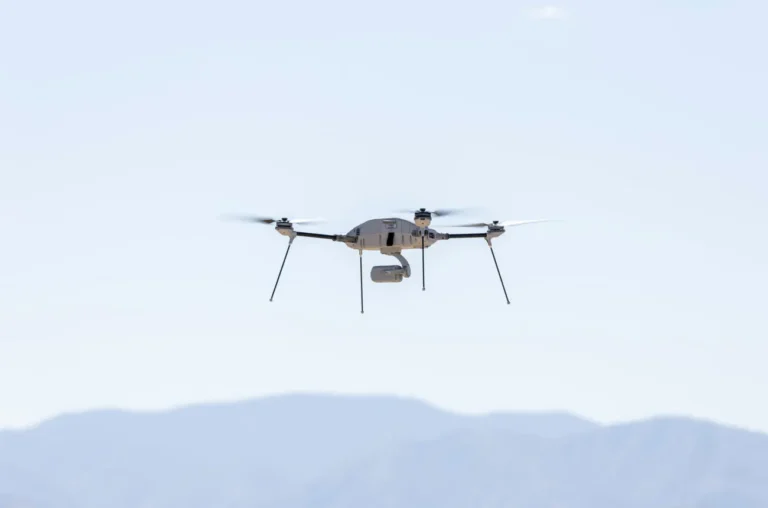
The U.S. Army’s Maneuver Battle Lab (MBL) tested four types of counter-drone shotgun ammunition against small unmanned aircraft systems (sUAS) at Fort Benning, Georgia, on September 21 and 22, 2026. The two-day live-fire assessment pitted one government-issued 12-gauge target round against three commercial loads to explore physical drone defeat options for frontline troops.
The event, conducted with the Maneuver Future Capability Directorate (MFCD) Lethality Team and Product Manager Small Caliber Ammunition (PdM SC), follows a rifle baseline fired in August and feeds a report due to Army leaders before the end of 2026, according to the Army. “On today’s modern battlefield, the biggest threat is drones, and we need a way to defeat them,” said Master Sgt. Jonathan Gallogly, noncommissioned officer in charge of the MBL. “That’s why we’re doing persistent experimentation on defeating drones using different types of rounds.”
How the Army Tested Counter-Drone Shotgun Ammunition at Bryant Range
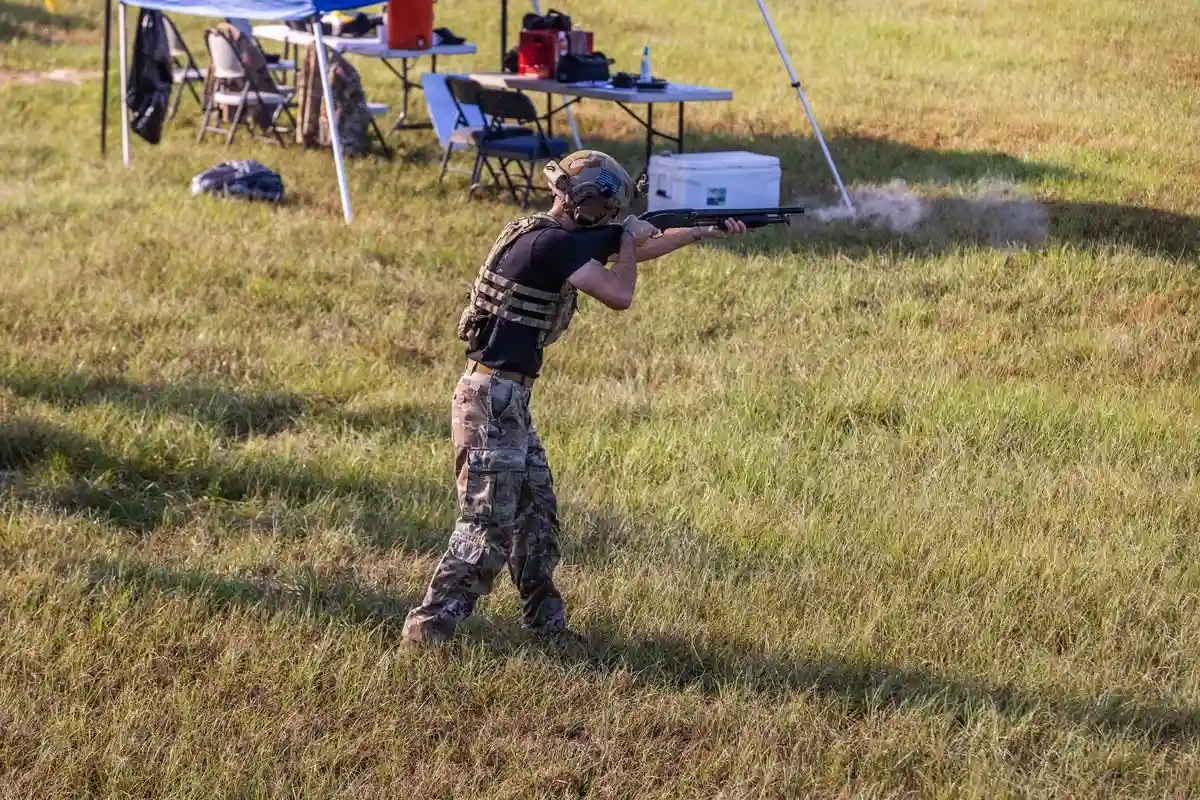
The MBL’s Live Experimentation Branch designed and executed the evaluation at Bryant Range alongside MFCD and Project Manager Maneuver Ammunition Systems (PM MAS). Marksmanship instructors from the Rifle Squad Master Trainer Course, Charlie Company, 1st Battalion, 29th Infantry Regiment, served as primary shooters and evaluators. Gallogly said the event had been in planning for about a year.
Four loads were tested: one government-issued 12-gauge target round, traditionally used for skeet and trap training, and three industry-procured models. Each featured different recoil dynamics, pellet spread patterns and shot materials, chosen to vary penetration and pattern density at extended ranges. The Army has not identified the commercial manufacturers, shot sizes, payload weights or pellet materials, nor the shotgun platform used during the trial.
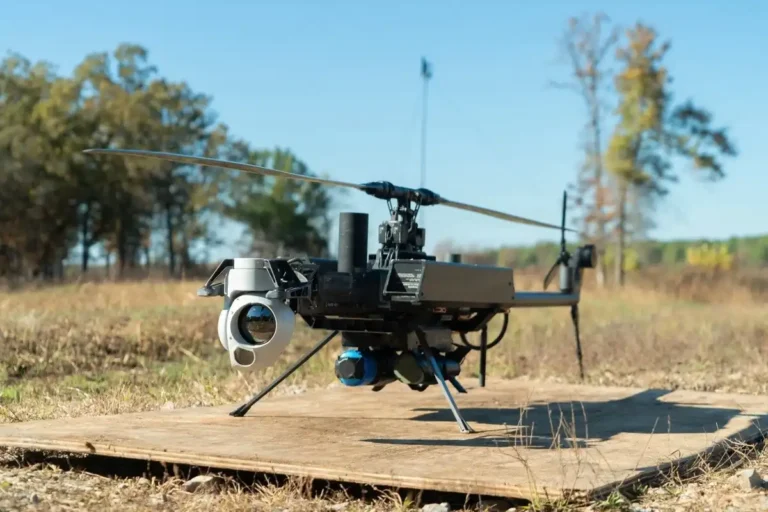
Soldiers first patterned each shell during a controlled familiarization phase before engaging live targets. The 3D-printed target drones, flown by operators beyond line of sight, entered the range from altitude and replicated three engagement profiles:
- Horizontal crossing runs from left to right, 25 meters in front of the shooter
- Low-altitude, straight-in shallow runs toward the firing line
- High-altitude dives from 100 feet, roughly 30 meters, plunging directly at the shooter’s position
The profiles were designed to mimic realistic flight behaviors, forcing shooters to track and engage targets across varied approaches. MBL analysts recorded time to hit, rounds fired and the distance of each successful hit. “It helps us understand how hard it is to track and shoot down a drone and see the distance where we can properly engage and defeat it,” Gallogly said. Target drone dimensions and airspeeds were not released.
Rifle Baseline, Soldier Enhancement Program and Next Decisions
Before switching to shotguns, the MBL fired a rifle baseline on August 18 and 19, 2026. Soldiers using standard M4 carbines tested an experimental, specialized 5.56mm drone round alongside M855A1 Enhanced Performance Round ball ammunition. The M855A1 is a single-projectile, 62-grain general-purpose round that the Army describes as lead-free, with a copper slug and an exposed hardened steel penetrator.
The Army did not name the experimental 5.56mm round. Multi-projectile 5.56mm cartridges have already appeared elsewhere in the force: XVIII Airborne Corps soldiers trained with one at Oak Grove Training Center, North Carolina, on April 9, 2026, and the Marine Corps has bought 400,000 such rounds and plans to purchase another 1 million in fiscal year 2027, a Marine Corps spokesperson told Task & Purpose. The August rifle baseline gives the MBL a reference point against which the shotgun results can be measured.
The shotgun trial runs under the Soldier Enhancement Program (SEP). “We nominate commercial off-the-shelf items, bring them in, evaluate them and see if they can be useful as-is or if we can do additional engineering to make them more effective,” said Brian Dutton, MBL contract project officer for the assessment.
Analysis: The core question is less which shell patterns best than what a squad should carry. If the government target load proves competitive, the Army gains a cheap, immediately scalable option from an existing supply chain. If commercial loads with alternative shot materials deliver longer effective range, the gain comes with a new procurement line. Either way, a shotgun is an additional weapon, with weight, training and basis-of-issue implications that a multi-projectile rifle round avoids. The recorded engagement distance matters most, because it determines whether a soldier can defeat an FPV before it reaches terminal attack. Because the shooters were master trainers, the results likely represent near-best-case marksmanship rather than the average rifleman.
The MBL will compile its data and submit findings to the MFCD Lethality Team and PdM SC before the end of 2026, giving leaders a basis to decide between commercial technology and government-standard solutions. Hit rates, rounds-per-defeat figures and the best-performing load have not been disclosed. “Drone warfare is not an emerging threat: it’s here,” Dutton said, adding that future work will look at how the squad itself is equipped and trained to defeat sUAS.