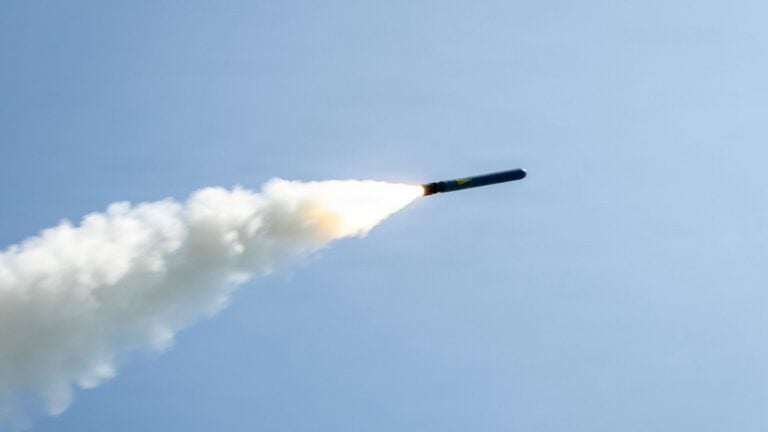
The Senate Appropriations Committee’s defense subcommittee has proposed $41.6 billion for Navy shipbuilding in its draft Fiscal Year 2027 defense spending bill, released November 17, 2026, a level $18.5 billion below the Navy’s budget submission. The draft zeroes out the $1 billion requested in advance procurement for the first Trump-class battleship, strips more than $12 billion from the Columbia- and Virginia-class submarine programs, and declines to fund two submarine tenders and the Landing Ship Medium.
The Senate panel was the last of the four congressional defense committees to release its proposal. Its bill provides nearly $1.1 trillion in discretionary funding, well short of the administration’s $1.5 trillion request split between a base budget and a reconciliation package. The Navy’s own shipbuilding request followed the same split: $60.2 billion in discretionary funds and $5.6 billion through reconciliation. Senate appropriators folded nearly $69 billion of the requested mandatory spending into the discretionary bill, and prioritized munitions, with $47.2 billion for procurement and acceleration. The committee also raised funding for Army and Air Force weapons purchases, giving them priority because missile stocks were depleted during the war with Iran.
How the Senate Navy Shipbuilding Bill Reshapes Submarine and Amphib Lines
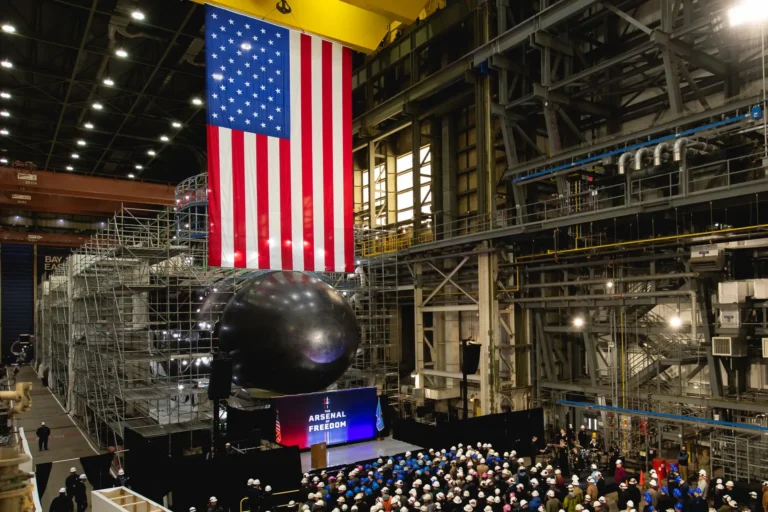
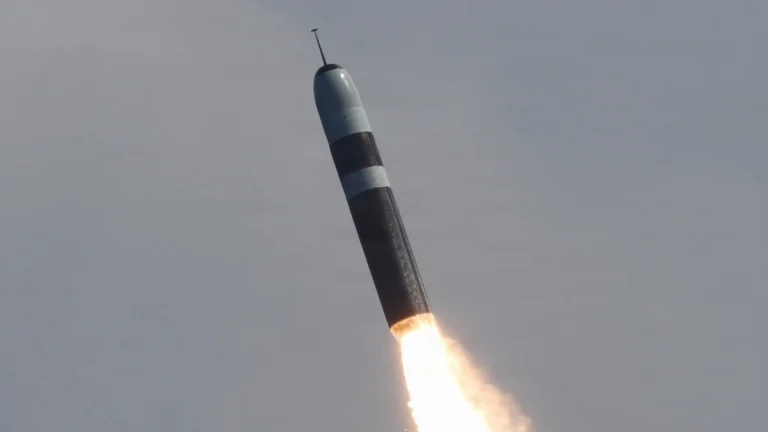
The largest reductions fall on the undersea fleet. According to the explanatory statement accompanying the bill, the committee cut $5.6 billion from the Columbia-class ballistic missile submarine program and a further $788 million in advance procurement. The Virginia-class attack submarine line lost $4.6 billion, plus $1.77 billion in advance procurement.
Those figures do not translate directly into cancelled hulls. The committee applies incremental funding authority to one Columbia-class boat, two Virginia-class boats, one mid-life aircraft carrier refueling, one FF(X) frigate derived from the Coast Guard’s National Security Cutter, and one San Antonio-class LPD Flight II amphibious transport dock. Incremental funding spreads a ship’s procurement cost over more than one budget year, lowering the FY2027 appropriation without removing the ship from the plan. The committee justified the approach as a “more effective use of funds for multiyear munitions and other higher priority investments in fiscal year 2027.”
Amphibious programs still absorb direct cuts: $875 million from the San Antonio class and $1.6 billion from the America-class amphibious assault ship program. The Marine Corps’ Landing Ship Medium, for which the Navy sought six hulls in the reconciliation portion of its request, receives no funding. Appropriators also zeroed out the $4.4 billion requested for two submarine tenders, which support forward submarine maintenance.
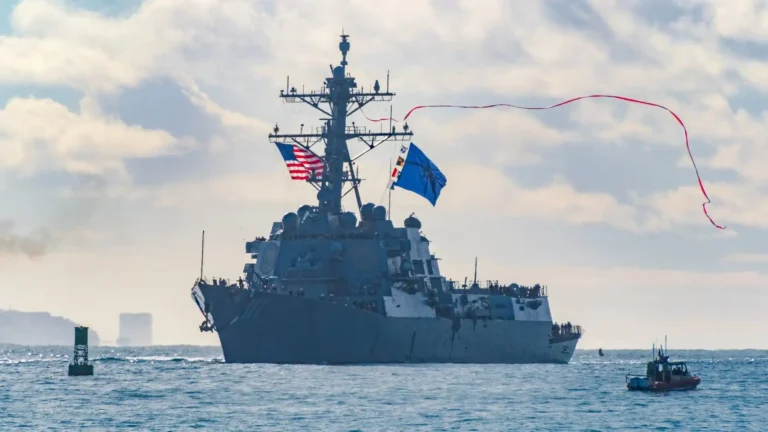
The committee moved in the opposite direction on surface combatants, adding $1.9 billion for a second Arleigh Burke-class (DDG-51) guided-missile destroyer; the Navy had requested only one. Other additions include $390 million for three used sealift vessels, $200 million for economic order quantity purchasing in the Ship to Shore Connector program, $162 million for Yard, Repair, Berthing, and Messing barges, $329 million for the Submarine Industrial Base, and $595 million for the Surface Ship Industrial Base. Like the other three defense committees, the panel included language barring shipbuilding and conversion funds from paying for warships built in foreign yards or for “major components” of U.S.-built vessels sourced from foreign sites.
Trump-Class Battleship BBG(X) Left With $80 Million for Design
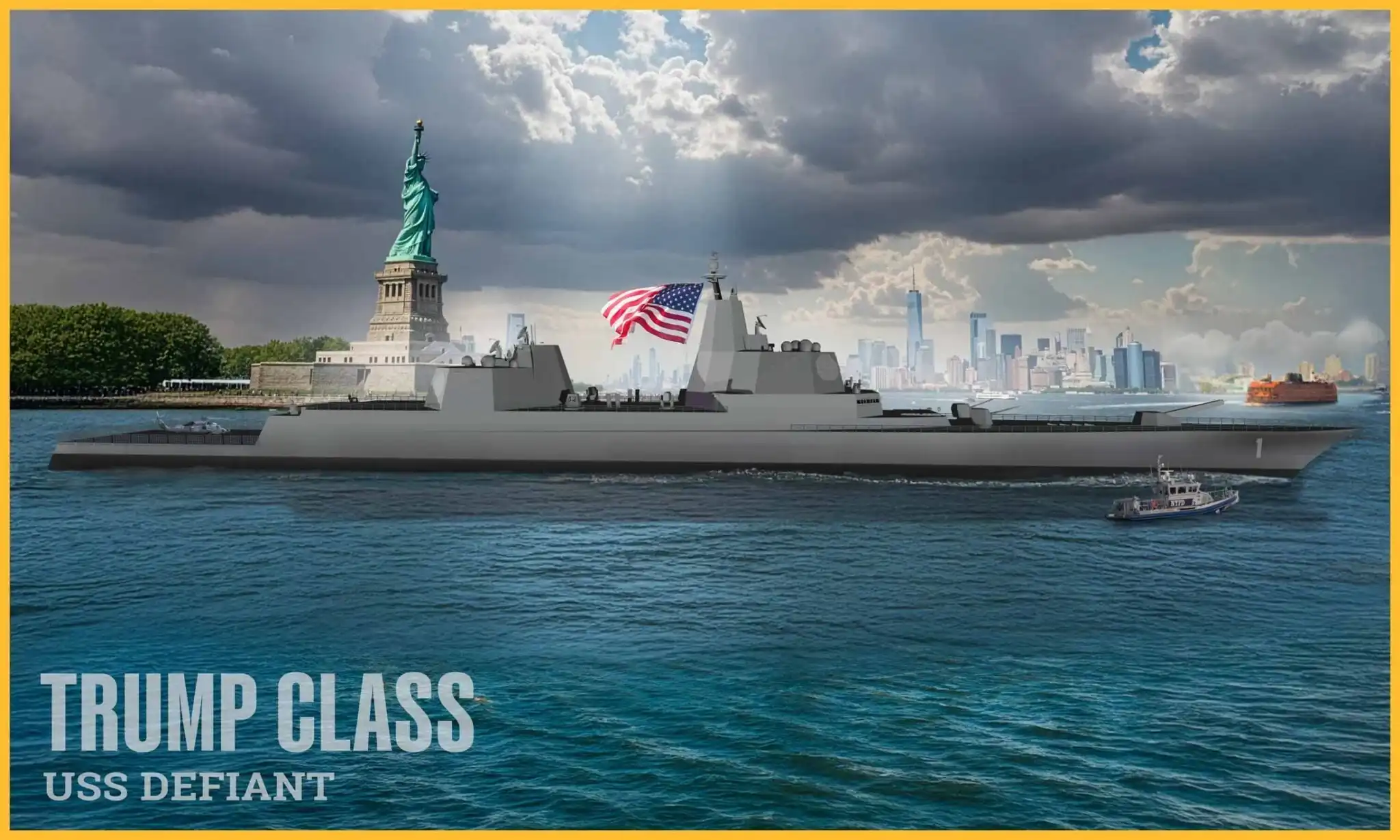
The battleship program takes the steepest proportional hit. Beyond the $1 billion in long-lead advance procurement for the lead ship, the planned USS Defiant (BBG-1), which the funding tables label “early to need,” the committee removes $836.9 million from research and development, including preliminary design and advanced propulsion work. The total reduction approaches $1.84 billion and leaves roughly $80 million for design, less than 10% of the design funding requested.
The BBG(X) concept, one of the most prominent projects in President Donald Trump’s Golden Fleet initiative, calls for a missile battleship displacing roughly 34,000 tons, armed with guns, a large missile load including hypersonic weapons, and directed-energy systems. Its scale and technological complexity have raised questions over the Pentagon’s cost and schedule estimates, and it remains unclear how far the residual $80 million can carry the design beyond its conceptual stage.
Analysis: The Senate draft separates the Navy’s request into programs ready to build and programs still on paper. Destroyers, industrial base accounts, and sealift gain money; the battleship, the tenders, and the Landing Ship Medium lose it. The submarine reductions look severe in isolation, but by placing Columbia and Virginia boats under incremental funding, appropriators defer cost rather than drop hulls, while freeing near-term dollars for munitions replenishment. The trade-off is less funding certainty for submarine yards. For BBG(X), the signal is plainer: the committee is unwilling to commit long-lead funds before the design matures.
The bill must still pass the full Senate and be reconciled with the House version, which the House Appropriations defense subcommittee set at $56.7 billion for shipbuilding in June. The current continuing resolution expires December 11, 2026. The fate of the reconciliation package, which carried part of the Navy’s shipbuilding request, is uncertain after Democratic gains in the midterm elections. Deputy Defense Secretary Steve Feinberg met with lawmakers on Capitol Hill on November 18, 2026.