The Royal Netherlands Army can now acquire Piorun MANPADS through EU SAFE joint procurement after Poland’s Armament Agency and MESKO S.A. signed an annex to the Piorun framework agreement on November 23, 2026, in Skarżysko-Kamienna. The annex makes the Netherlands the fifth member of the EDIRPA VSHORAD consortium, alongside Poland, Lithuania, Latvia and Norway, with deliveries of the man-portable air defense system due by 2030.
The annex extends a framework signed on August 24, 2026, which Poland’s defense minister called the largest Piorun contract in history, covering several thousand missiles and several hundred launch units. More than 80 percent of that volume is earmarked for the Polish Armed Forces. The Dutch accession comes as European armies expand very short-range air defense (VSHORAD) stocks and SAFE, the EU’s 150 billion euro defense loan instrument, moves into signed contracts.
How the Piorun MANPADS Annex Folds the Netherlands Into SAFE
Major General Artur Kuptel, head of the Armament Agency, signed the document with MESKO management board members Marcin Ożóg and Krzysztof Marwicki. The annex does not itself place an order. It widens the August framework so that the Armament Agency, acting on behalf of every consortium state, can conclude executive contracts covering launch units, missiles, and training and logistics packages for the Dutch, financed through SAFE.
The combined value of the executive contracts under negotiation will exceed PLN 8 billion net, roughly €1.8 billion or $2 billion. That is the same headline figure announced in August, and officials did not say whether the Dutch requirement raises the ceiling or fits within it. Quantities per state will not be disclosed, to protect national interests. Deliveries conclude in 2030. The first executive contract was signed on September 11, 2026, at the MSPO defense exhibition in Kielce.
Kuptel called framework agreements a flexible, extendable tool; the annex tests that claim, with one national agency contracting for allied armies instead of parallel national negotiations.
Production capacity is the binding constraint. On November 13 and 16, 2026, MESKO concluded co-financing agreements with Poland’s Capital Investment Fund (FIK) for a project to expand missile output, including Piorun and the follow-on Piorun 2. The project totals PLN 400.35 million, with PLN 368.75 million from FIK and PLN 31.6 million from MESKO’s own funds. Completion is planned for December 2028, after which the line should reach about 2,500 missile sets per year and be able to switch to Piorun 2 production.
Piorun Seeker, Engagement Envelope, and the Stinger Comparison
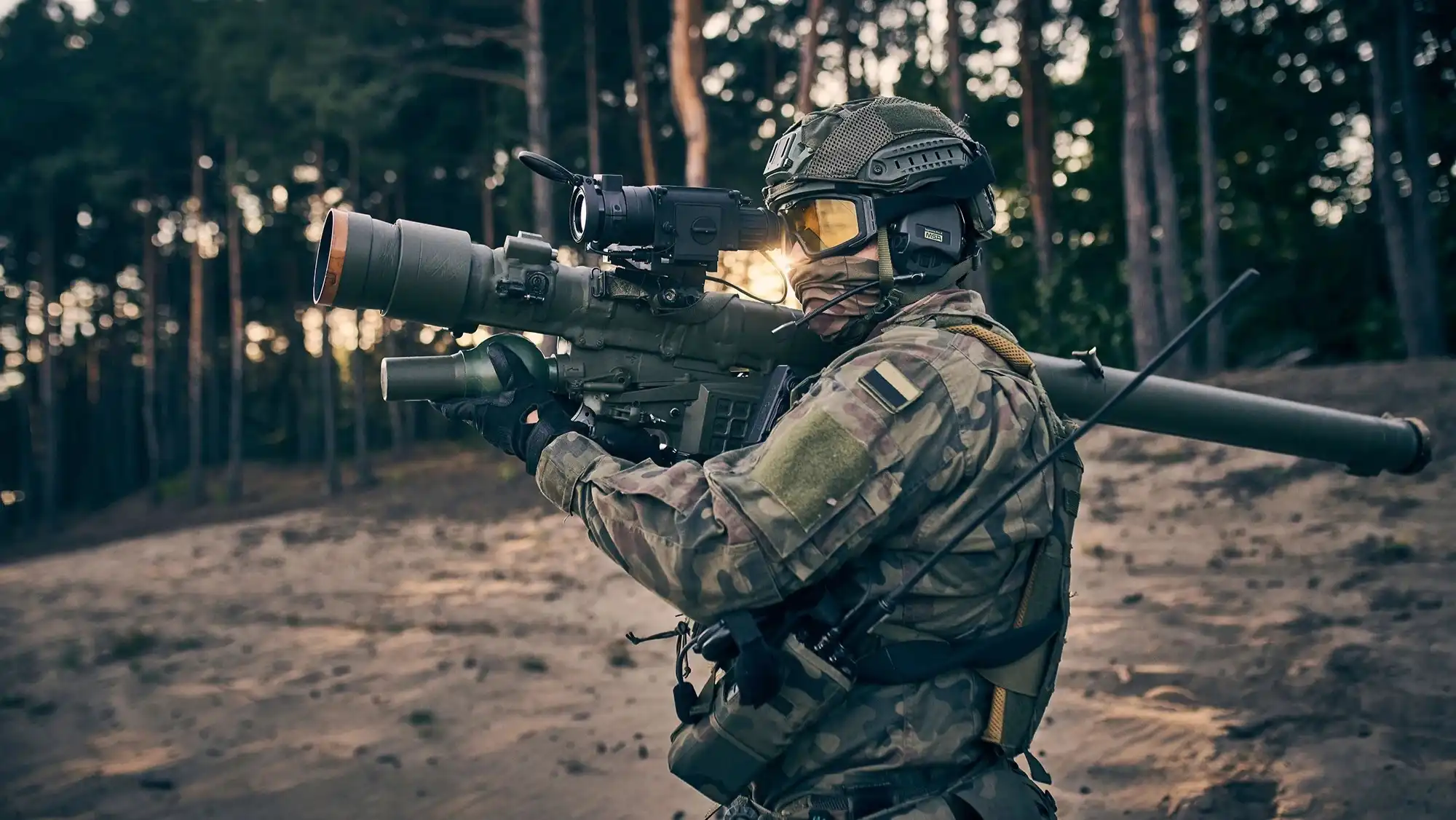
Piorun, also known as Grom-M, is a single-operator, shoulder-launched system derived from the earlier Grom. Manufacturer data give an engagement envelope of 400 m to 6.5 km in range and 10 m to 4,000 m in altitude, against 5.5 km of range for the Grom. The missile uses a cooled infrared seeker with counter-countermeasure logic and carries a high-explosive fragmentation warhead with impact and proximity fuzing. Publicly available specifications put the warhead at 1.82 kg, the missile at 10.5 kg, 1,596 mm long and 72 mm in diameter, and maximum speed at about 660 m/s. MESKO lists the complete set at 19.5 kg, while older open-source figures cite 16.5 kg.
The proximity fuze is central to the requirement. It allows Piorun to engage small unmanned aircraft that a contact-only fuze would struggle to hit, in addition to the aircraft, helicopters and cruise missiles the system was designed to counter.
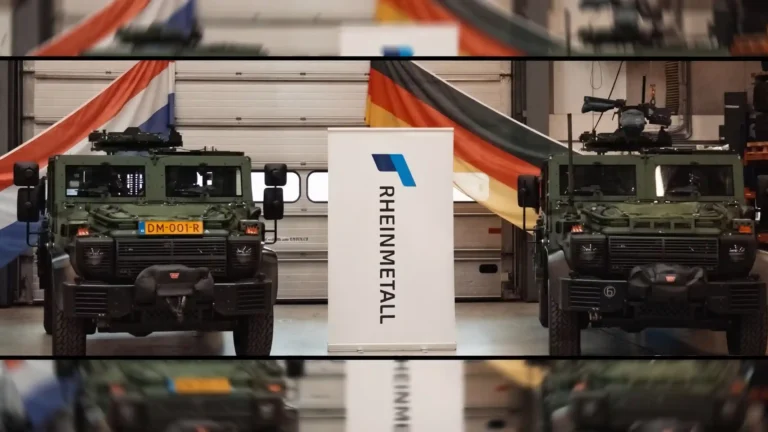
The Netherlands currently fields the FIM-92 Stinger, which publicly available figures credit with about 4.8 km of range and 3.8 km of altitude, giving Piorun a wider envelope on paper, though Stinger carries a longer combat record. Dutch Stinger teams belong to the Defence Ground-based Air Defence Command (DGLC), which also operates Patriot and NASAMS and works closely with German air defense units under the Apollo cooperation. The Netherlands also ordered Rheinmetall Skyranger 30 gun systems in December 2025, with final deliveries due before the end of 2029. Where Piorun will sit in that architecture, and whether it supplements or replaces Stinger in specific units, has not been announced.
Analysis: The Dutch decision matters for what it sits beside. In July 2026, RTX’s Raytheon announced plans to double Stinger output with Diehl Defence in Germany and Dutch suppliers, with final assembly and testing in the Netherlands. Buying Piorun in parallel suggests The Hague is treating MANPADS as a volume problem rather than a single-vendor choice. For Poland, each new consortium member turns a national program into a European supply hub, the model SAFE common procurement is built to reward. The open question is whether MESKO’s capacity ramp, not complete until December 2028, keeps pace with a customer list Warsaw says is still growing.
The next step is the negotiation of Dutch executive contracts by the Armament Agency, with values and quantities likely to remain undisclosed. Deputy Defense Minister Magdalena Sobkowiak-Czarnecka said the buyer list would keep growing and that “this is not yet the end.” Milestones to watch are the first Dutch executive contract, completion of the FIK-funded production line in December 2028, and the 2030 delivery deadline for all five consortium states.