Ukraine’s Minister of Defence Evgeniy Khmara offered the UK-led Joint Expeditionary Force (JEF) access to Ukrainian interceptor drones, detection systems, and real-time air picture integration on October 2, 2026, proposing a deeper Enhanced Partnership to counter Russian drones, hybrid threats, and attacks on undersea infrastructure. Khmara made the pitch by video link to JEF defence ministers meeting at Keflavik Air Base, Iceland.
The JEF, created in 2015 at British initiative, groups Denmark, Estonia, Finland, Iceland, Latvia, Lithuania, the Netherlands, Norway, Sweden, and the United Kingdom, and operates below NATO’s Article 5 threshold across the Baltic Sea, the High North, and the North Atlantic. Ukraine attended a JEF defence ministerial for the first time in 2025 and received Enhanced Partnership status, a track reaffirmed by JEF leaders in Helsinki in March 2026. Khmara, a former commander of the Security Service of Ukraine’s Special Operations Centre A, was confirmed by the Verkhovna Rada on August 19, 2026.
Ukraine JEF Partnership Targets Drones, Sensors, and Undersea Threats
Khmara argued that Ukraine’s operational experience maps directly onto the JEF mandate: countering unmanned aerial vehicles (UAVs) and hybrid threats in the Baltic and North Atlantic, protecting undersea infrastructure, and confronting Russia’s shadow fleet. Russia, he said, uses drones for reconnaissance, sabotage, and strikes on infrastructure, and Ukraine has “already built solutions that work in real combat.”
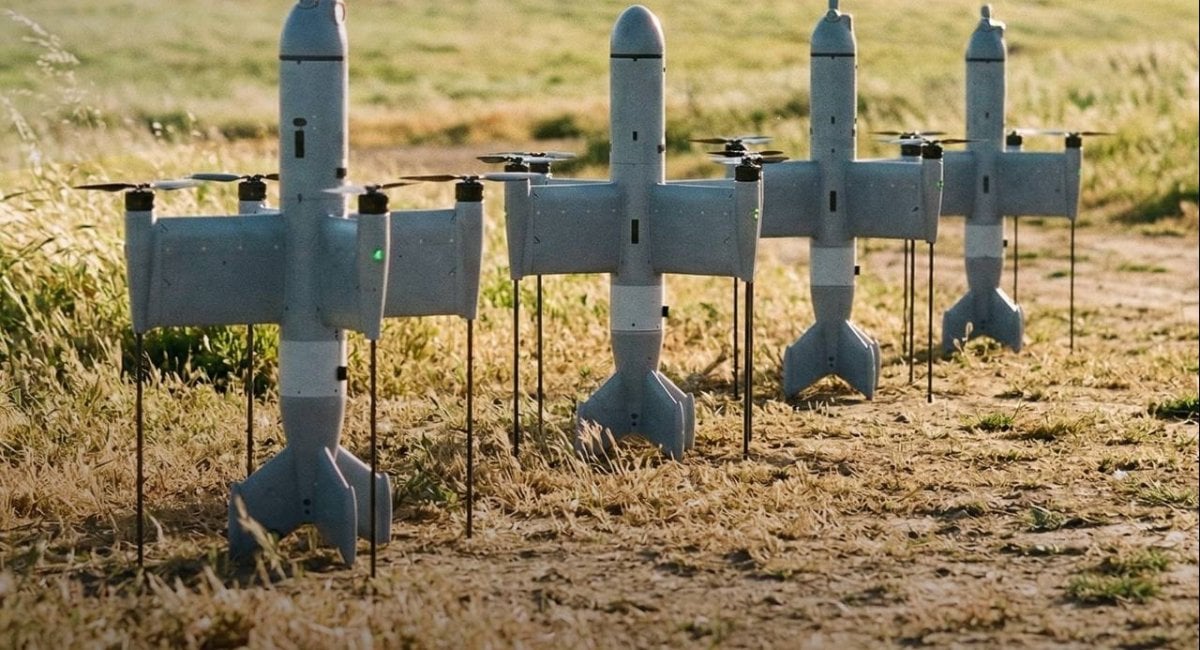
He identified three capability areas: mass-produced, low-cost interceptor drones; detection systems; and the fusion of data from multiple sources into a single real-time air picture. The ministry did not name specific systems. The most visible export candidate is the Octopus-100 interceptor, developed by Ukraine’s Armed Forces to destroy Shahed-type one-way attack drones, designated Geran in Russian service. Ukrainian officials describe an AI-assisted control system and day-night, low-altitude employment under electronic warfare conditions. Kyiv has not published speed, range, or warhead data. Serial production began in Ukraine in late 2025, and a November 2025 license agreement extended production to British facilities, with Ukrainian officials targeting 1,000 units per month from February 2026.
For JEF nations, the relevance is the cost-exchange problem. Defeating cheap drones with surface-to-air missiles does not scale, a lesson reinforced by the drone sightings that disrupted Danish and Norwegian airports in September 2025. Sensor fusion matters as much as the interceptor: without a shared air picture, a low-cost effector cannot be cued in time.
The maritime track is already operational. For the first time, Ukrainian mine countermeasure vessels joined the JEF’s flagship Lion Protector 26 exercise. Ukraine’s five-ship mine countermeasures force, comprising the Sandown-class Cherkasy and Chernihiv and the Alkmaar-class Melitopol, Mariupol, and Henichesk, remains based at Portsmouth until the war ends. In July 2026, the headquarters of the Ukrainian Navy’s 1st Mine Countermeasures Division passed a NATO Level 2 evaluation, the first Ukrainian unit integrated into NATO’s standing mine countermeasures command structure.
Drone Deal and Build with Ukraine: Scaling Co-Production in Northern Europe
Khmara proposed expanding the partnership through models already working bilaterally: Drone Deal agreements, which open Ukrainian drone technology to export; the Train with Ukraine program; and Build with Ukraine, which covers joint production of drones and counter-drone systems. According to the ministry, several such projects are already under way with JEF participants.
The Drone Deal footprint overlaps heavily with the JEF. As of the end of June 2026, Ukraine had signed agreements with the Netherlands, Lithuania, and Latvia, with implementation also under way with Denmark; agreements with Germany, Canada, and the United States were in preparation. A procedure approved by Ukraine’s Cabinet of Ministers on July 1, 2026, gives signatories export permits from the State Service for Export Control within 30 days. Technology is transferred for use only, without intellectual property rights. Re-export requires Kyiv’s written authorization, and 20% of the value of products supplied to third countries goes to Ukraine’s state budget.
Build with Ukraine has a JEF footprint too. The United Kingdom builds Octopus interceptors under license, and Norway agreed in late 2025 to open a joint combat drone production line in 2026, pairing Ukrainian design and combat data with Norwegian industrial capacity and research institutions.
JEF ministers are running a parallel industrial track. Their joint statement noted two meetings of JEF National Armaments Directors since NATO’s Ankara Summit and asked for concrete collaboration proposals before the next ministerial. Ministers also agreed to deepen Ukraine’s involvement in JEF activities and advanced work on a recommendation to leaders regarding Canada’s application to join the framework, with Canadian Defence Minister David McGuinty in attendance.
Analysis: Kyiv is repositioning the Enhanced Partnership from a channel for support into a supply relationship. The fit is strongest where the JEF is designed to act: below the Article 5 threshold, against drones, sabotage, and shadow fleet activity. Ukraine offers what Northern European militaries largely lack: counter-UAS architectures validated against sustained Russian attack and a production base that iterates on frontline data. Drone Deal terms, however, keep intellectual property in Kyiv, subordinate exports to Ukrainian frontline demand, and levy 20% on third-country sales, limiting how far JEF partners can build sovereign capacity on Ukrainian designs.
No contracts, funding, or JEF procurement of Ukrainian systems were announced at Keflavik. Iceland will host the JEF Leaders’ Summit in Reykjavik in spring 2027, the next decision point on Canadian membership and Ukraine’s expanded role. Pending Drone Deals with Germany, Canada, and the United States will show whether the model scales beyond the Baltic states and the Netherlands.