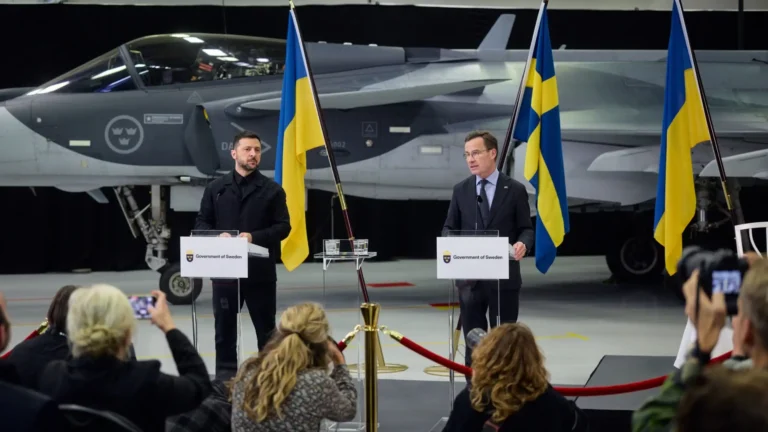
Norwegian defense group Kongsberg has joined Brave Prime, the industrial partnership initiative run by Ukraine’s government-backed defense technology cluster Brave1, after signing a Memorandum of Understanding (MoU) with the cluster in Kyiv, the company announced on November 19, 2026. Kongsberg becomes the third foreign defense company to enter the program, following Airbus Defence and Space and Saab, which signed on when Brave Prime launched on June 30, 2026.
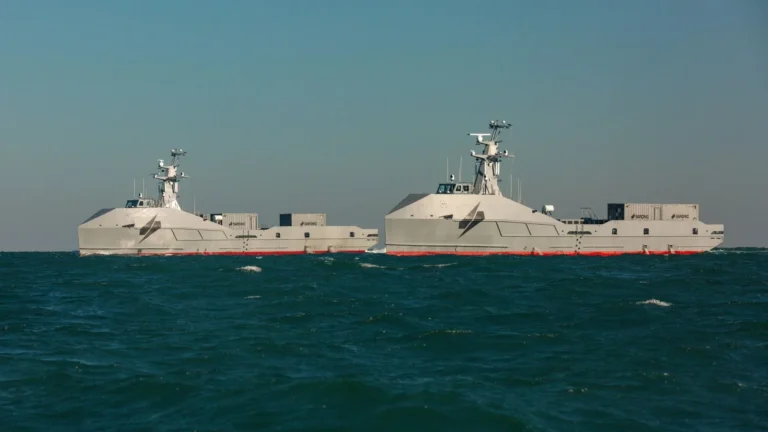
Brave1 created Brave Prime to bring established global manufacturers into Ukraine’s defense-tech ecosystem and move cooperation down to the product level. For Kongsberg, the MoU formalizes a relationship that has deepened steadily since its National Advanced Surface-to-Air Missile System (NASAMS) entered service in Ukraine in 2022. In June 2025, the company opened a permanent office in Kyiv and signed two Norwegian-funded MoUs with unnamed Ukrainian firms, one for low-cost, high-volume air defense missiles and one for unmanned surface vessels (USVs) armed with Kongsberg PROTECTOR remote weapon stations.
What the Kongsberg Brave Prime Agreement Covers in Practice
According to Kongsberg, the partnership has four strands. The first is an assessment of which Kongsberg technologies and solutions are relevant to Ukraine’s current defense needs. The second opens testing opportunities for those solutions through Brave1’s Test in Ukraine framework. The third is matchmaking with Ukrainian defense technology companies to explore integrating domestic technologies and components into Kongsberg products. The fourth is the identification of areas for joint research and development.
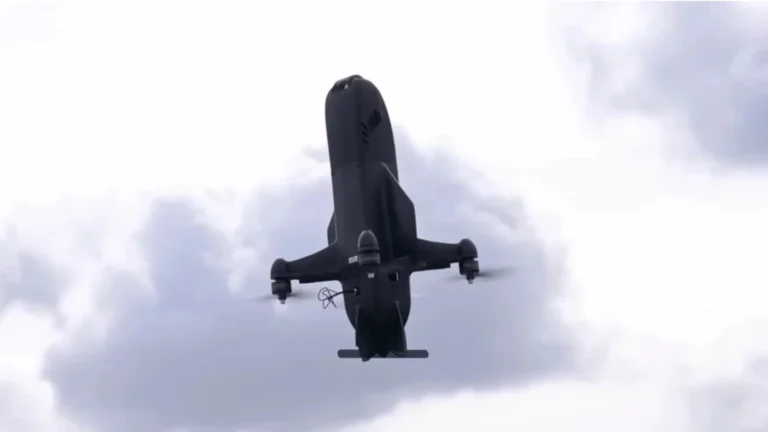
Test in Ukraine, launched by Brave1 in July 2025, gives foreign manufacturers structured access to combat conditions. Companies can test on site and adjust their systems in real time, or hand equipment to Brave1 specialists, who run the trials after a remote briefing and return a results report. The program was initially built around drones, ground robots, electronic warfare and AI-enabled systems, which places counter-drone and maritime technologies squarely within its scope. For a prime of Kongsberg’s size, the framework offers something domestic ranges cannot replicate: performance data gathered against live Russian threats and fed directly back into the development loop, with Ukrainian troops providing the operational feedback.
The MoU leaves several points undefined. Kongsberg has not named the products it intends to test, the Ukrainian companies involved in matchmaking, the funding attached to joint work, or a timeline. Brave1 Chief Operating Officer Iryna Zabolotna framed the agreement as a step toward “lasting industrial relationships” with leading defense companies and “new opportunities for joint development and production,” though no production commitment has been announced.
NASAMS and Low-Cost Interceptors Anchor Kongsberg’s Ukraine Footprint
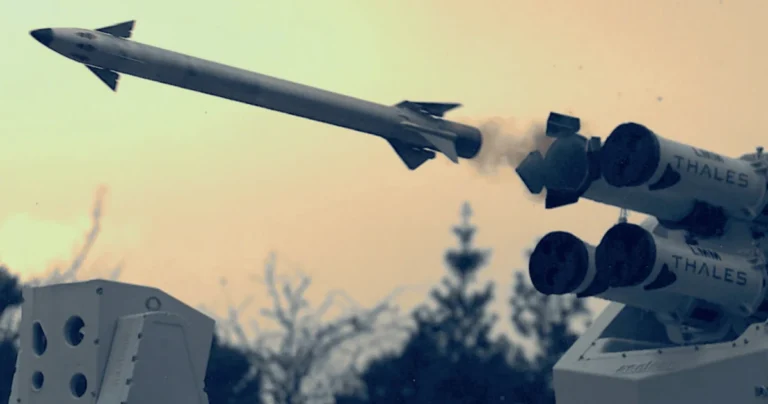
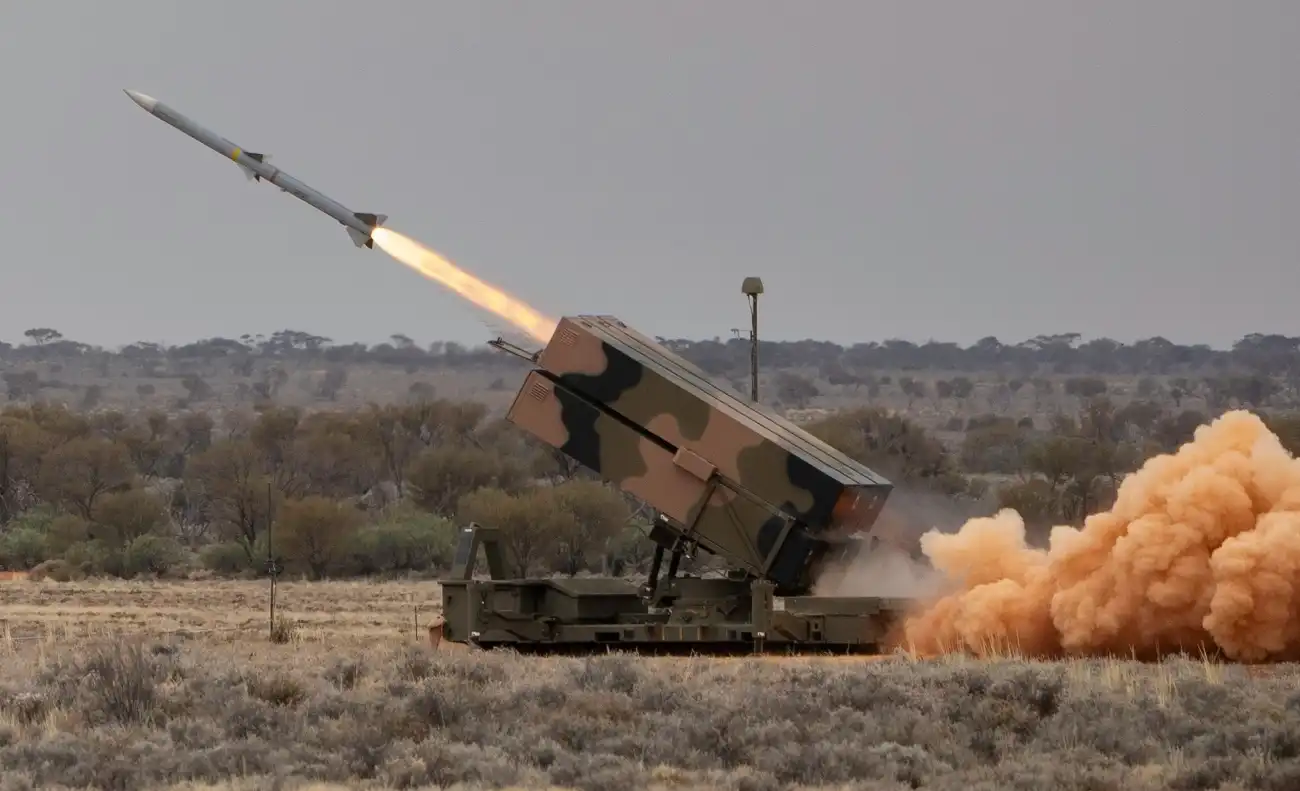
Kongsberg’s standing in Ukraine rests on NASAMS, which the company says has protected people and critical infrastructure against drones, cruise missiles and aircraft since 2022. Publicly available specifications describe a networked architecture built around the Raytheon AN/MPQ-64F1 Sentinel radar, a Fire Distribution Center for battle management, and canister launchers carrying up to six missiles. The system fires the AIM-120 AMRAAM, the AIM-9X Sidewinder and the extended-range AMRAAM-ER.
That interceptor mix is the system’s central constraint in Ukraine. An AIM-120 AMRAAM costs about $1 million, while the Shahed-type one-way attack drones Russia launches in large salvos are widely estimated at $20,000 to $50,000 each. The 2025 MoU on a low-cost, high-volume missile designed for integration with NASAMS was Kongsberg’s answer to that imbalance. Its development status has not been publicly disclosed, and the Brave Prime announcement does not mention it.
Brave Prime’s component-integration track could still feed that effort by connecting Kongsberg with Ukrainian suppliers of seekers, propulsion or airframes, but that link is not stated in the MoU. Aslak Sverdrup, head of Kongsberg in Ukraine, said joining the initiative “can be an enabler for faster innovation to benefit Ukraine and Europe.”
Analysis: Brave Prime changes the direction of the transaction. Western primes have mostly supplied finished systems to Ukraine; this framework asks them to plug into Ukrainian supply chains and combat feedback loops instead. For Kongsberg, the main return is access to engagement data from one of the densest counter-drone environments in the world and to Ukrainian components built for cost and volume, both relevant as European demand for ground-based air defense grows. With Saab and Kongsberg now both inside the program, two of the Nordic region’s largest primes are treating Ukraine as a development partner rather than only a customer. The caveat is that MoUs are not contracts, and the program’s value will depend on whether testing and matchmaking produce funded joint products.
The next indicators are the first named Ukrainian partners under the Kongsberg agreement, any Kongsberg system entering Test in Ukraine, and an update on the NASAMS-compatible low-cost interceptor. Brave1 has not said which foreign company it expects to join Brave Prime next.